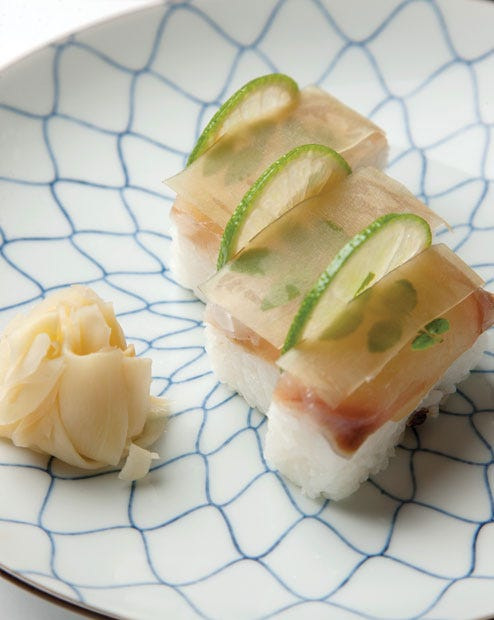
Though he responds with little more than an uneasy grin when it’s suggested, make no mistake, chef Ryuji “Mike” Kimura is nothing if not a perfectionist. His collection of Japanese knives is the envy of the city. Local chefs often make the pilgrimage to his restaurant, Kihachi, to admire the razor-sharp hone he vigilantly maintains and to ask for advice on sharpening their own knife sets. With his precision tools, limes are sliced into slivers so thin as to take on the appearance of stained glass, and hunks of marbled o-toro tuna yield to the mere weight of the blade.

Kimura’s Kihachi has been lauded for its quality and authenticity by no less of a culinary icon than Anthony Bourdain, and Kimura and his staff have been satisfying well-heeled and discerning Japanese diners for more than 20 years. Kihachi offers almost no sushi.
It’s a fact of intercultural exchange that once a culinary tradition is transplanted elsewhere, certain dishes or preparations become so popular as to almost represent the whole. Chicken tikka masala stands in for Indian in England, the doner kebab (basically a gyro) for Turkish in Germany and sushi for Japanese in the United States. The latter seems particularly egregious, since Japanese food has a history, breadth and discipline in preparation that may well be the equal of French culinary tradition. (The French seem to agree-Japan has more Michelin 3-star restaurants than France.)
Since Columbus is home to a significant Japanese population that supports a surprising number of Japanese restaurants offering a wide range of traditional preparations, further exploration is in order.
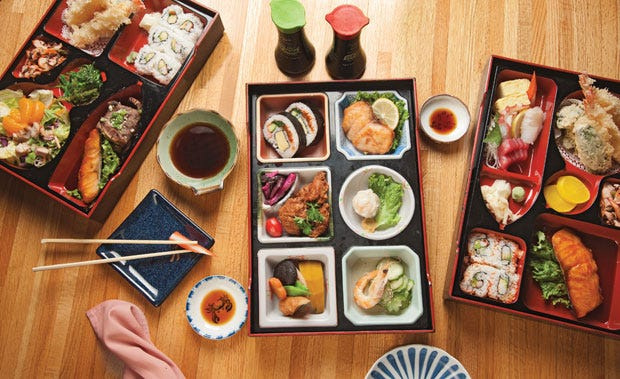
Perhaps the easiest way to get your bearings with Japanese cuisine is to try one of the bento options at Akai Hana. Presented in compartmentalized lacquerware boxes, bento typically consists of a variety of preparations including grilled meat or fish, pickled vegetables, tempura and more. Rice, miso soup and a salad generally come as sides. The Japanese Box at Akai Hana is a solid standby offering nine unique bites, but daily and weekly boxes also make for tempting options and are usually displayed by the entrance for your inspection.
Akai Hana also has a wide selection of donburi-rice bowls topped with any of a variety of sauced proteins. Popular options include: katsudon, deep fried pork cutlets with onion and egg; ten-don, tempura (usually shrimp and vegetables); and unadon, barbecued freshwater eel. If eel’s your thing (or if you’re looking to try it done well), then Sapporo Sushi Factory’s unaju-essentially unadon in a square box instead of a bowl-is easily a favorite of the eel preparations I’ve tried.
At Ba Sho, look for the use of “yaki” on the menu, either as a prefix or suffix. Directly translated, yaki means grilled, and the restaurant boasts a wide variety of flame-kissed delectables. There’s teriyaki, sure, but also kamo shioyaki (salt-grilled duck), hamachi kama shioyaki (salt-grilled yellowtail collar) and gyu-tan miso-yaki (miso-grilled, thin-sliced beef tongue). The hamachi kama, in particular, is a revelation-some of the most tender fish flesh comes from the collar, and its flavor needs for nothing more than the simple salt grilling. The ika geso shioyaki (salt-grilled squid) exhibits a similar honest simplicity. Ba Sho also offers one of the greatest comfort foods of Japanese cuisine-kani zosui, a savory stew of rice and crab. It’s not listed on the menu but is generally available.
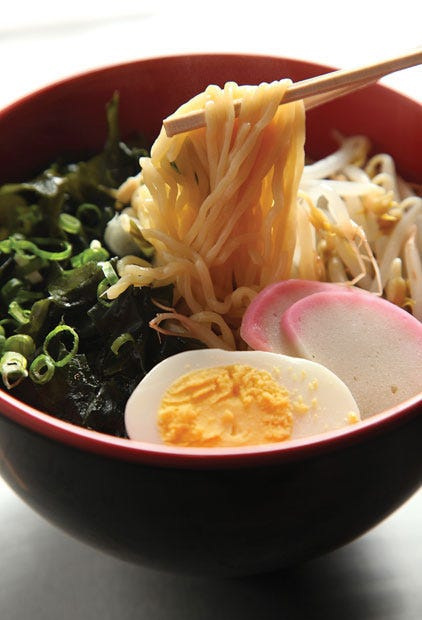
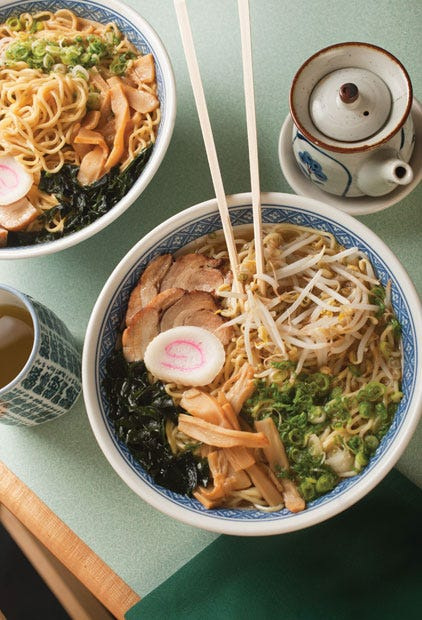
While Yoshi’s features a wide range of small plates not found elsewhere (and experimentation for the adventurous is encouraged), the restaurant also carries the widest variety of noodle bowls in the city, from soba (buckwheat noodles) to udon (thick, chewy rice flour noodles) and ramen (thin, Chinese-style wheat noodles). While I’ve barely scratched the surface of their multi-page noodle offerings, their nabeyaki udon-noodles in a dashi-miso broth with tempura shrimp and a soft-boiled egg-is a consistent crowd pleaser.
Yoshi’s is also one of the only places in town to find okonomiyaki-a large savory pancake sauced and topped with bonito flakes. It’s not a listed menu item, and it’s not always available. But when it is, get it.
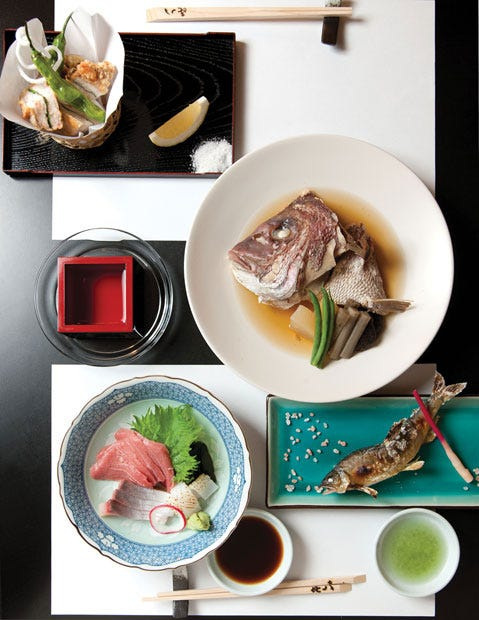
Then, of course, there’s Kihachi. Favorites from the regular small plates menu include the deep-fried burdock (thin crispy sticks served with dipping salt) and the savory steamed egg custard (chawanmushi). While we may not commonly think of custards as savory, this dashi-based dish is luxurious and smooth as silk; hidden beneath the surface, you’ll find shrimp, chicken and mushrooms. One of the other dishes commonly found as a special is the grilled Berkshire pork cheeks, and it’s always a hit. The usually available tempura fried lotus root stuffed with shrimp pate makes for an excellent starter and is hard to resist.
Kihachi’s lauded small-plates special menu changes often to reflect the chef’s exacting standards for seasonal vegetables and fish. Frequent changes make recommendations tough, though it’s hard to go wrong. While quality of this level inevitably comes at a price, you can get by on less than $30 per person by ordering an appetizer or two and a noodle bowl (the nabeyaki udon is great here, too, as is the duck soba).
That said, Kihachi also offers one of the peak dining experiences in the city in the form of its omakase. Essentially a chef’s-choice meal, it consists of eight to 12 meticulously presented courses and serves as an overview of the absolute best of what the restaurant has to offer at any given moment. It’s steep, at approximately $110 per person (alcohol excluded), and requires 24 hours advance notice but makes for an absolutely unforgettable experience that has wowed more than one seasoned out-of-town diner.
Speak the language
Daikon: A large, mild, white radish used in many Japanese dishes that may be pickled, braised or eaten raw
Dashi: A stock most commonly made from dried fish, seaweed or mushrooms
Miso: Fermented soybean paste made with soybeans, malt and salt. Miso comes in many different varieties and is used to make soups as well as marinades.
Omakase: The chef’s choice menu-instead of ordering a la carte dishes, here you leave the selection up to the chef.
Onigiri: Rice balls usually shaped into a triangle and wrapped in a strip of nori (dried seaweed), then filled with fish or, more traditionally, pickled plum
Ponzu: A mildly citrusy dipping sauce
Sake: Rice wine with an alcohol content around 14 to 15 percent that can be enjoyed warm or cold
Shio: Salt
Shoyu: Soy sauce
Soba: Thin, light brown noodles made from a combination of buckwheat and wheat flour that can be served in a soup or with a dipping sauce
Tare: A sweet, thickened soy sauce often used for grilling
Tempura: Seafood or vegetables fried in a light crisp batter. It’s typically served with a dipping sauce and salt.
Udon: Thick, white noodles made of rice flour, salt and water that is most commonly served in a soup but may be pan fried or served with a dipping sauce
Wasabi: A plant with a thick green root and a horseradish-like flavor most commonly served as an accompaniment to Japanese dishes, especially raw fish. Fresh wasabi is hard to find and expensive, so what is commonly served is a paste made from horseradish, mustard and food coloring.
Belle’s Bread
Located in the same shopping plaza as Akai Hana and Tensuke Market, you’ll find Belle’s Bread. This Japanese bakery and cafe offers an intriguing selection of sweet and savory pastries from curry doughnuts to mango mousse cake. In addition to the pastries and soft-serve ice cream, you’ll find Japanese families enjoying hashed beef rice, a Japanese spin on beef stew, cod fish roe spaghetti or yakisoba noodle sandwiches.
Fish Terminology
Aji: Spanish mackerel
Ebi: Shrimp
Hamachi: Yellowtail
Ika: Squid
Kaki: Oyster
Kani: Crab
Maguro: Tuna
O-toro: Fatty tuna
Saba: Mackerel
Sake: Salmon
Tai: Sea bream
Tako: Octopus
Unagi: Freshwater eel
Uni: Sea urchin
Off to Market
Columbus has two Japanese markets, both on the Northwest side of town. Tensuke is the better-known of the two-a busy store with an attached restaurant and takeout sushi counter. The restaurant offers a selection of noodle dishes and sides with daily specials, and sushi sold in the market can also be eaten there. They also offer a wide selection of grab-and-go prepared dishes. Tensuke has a high turnover, so it’s a good place to buy sashimi-grade fish, and you can have your fish cut to order. There’s a small produce section as well as refrigerated, frozen and dry goods and plenty of snacks. Sign up for the mailing list to find out about their biannual sales. Koyama Shoten is a small market located on Sawmill Road. It’s usually less busy than Tensuke, and at lunchtime they have a wide selection of bento and donburi dishes available for takeout.
This article originally appeared on Columbus Monthly: Guide to Japanese Dining in Columbus: Sample Bento, Noodle Bowls, Sushi and More
Reporting by Bethia Woolf / Columbus Monthly
USA TODAY Network via Reuters Connect