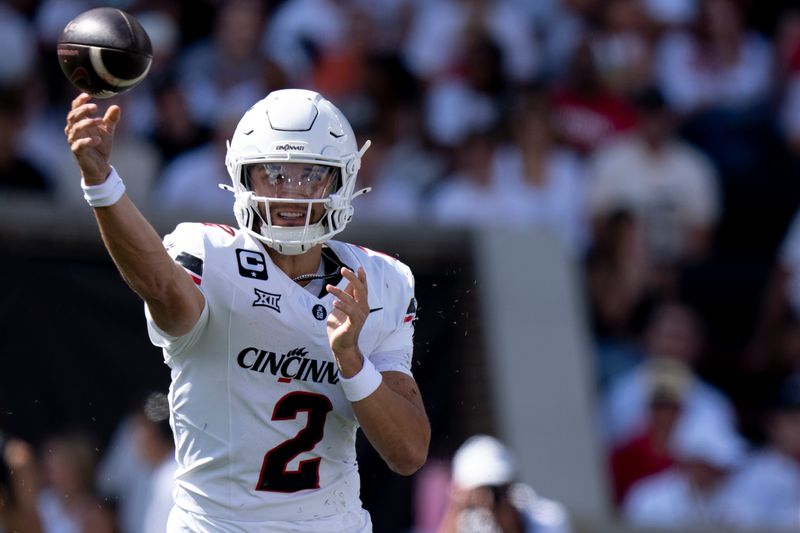
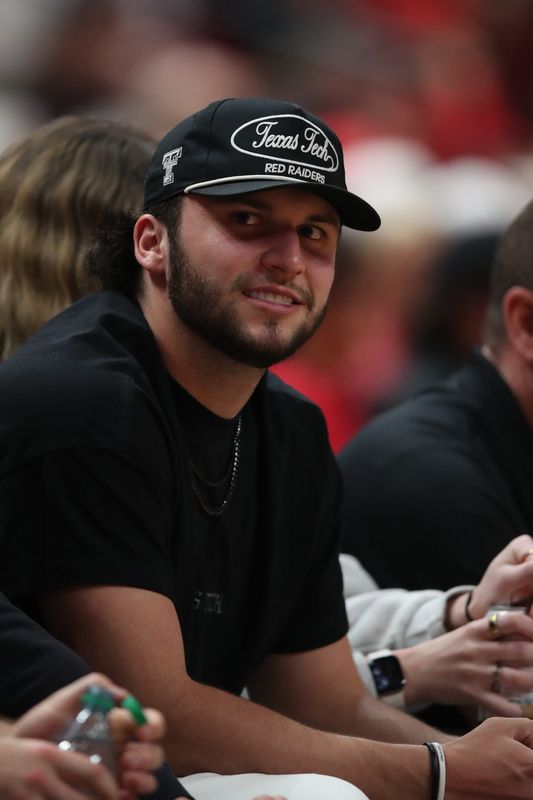
As former University of Cincinnati quarterback Brendan Sorsby seeks to have his eligibility restored so he can play football this year for Texas Tech, new information has emerged about his gambling while at UC.
Sorsby, who transferred to UC from Indiana University in 2024, already had an undiagnosed gambling problem when he arrived on Cincinnati’s campus, according to his own admissions.

His “wagering only intensified after the transfer,” attorneys for the NCAA said in documents filed as part of a court battle over Sorsby’s eligibility.
From Jan. 7, 2024, through September 2024, during his first year at UC, Sorsby says he placed at least 165 impermissible bets on college and professional sports, totaling at least $38,000.
Sorsby also began relying on others to place bets. Between December 2023 and June 2025, according to the documents, Sorsby provided more than $60,000 to a friend to deposit in a FanDuel account registered to his brother-in-law. Sorsby shared the account with the friend.
Sorsby – UC’s starting quarterback for the 2024 and 2025 seasons – has now admitted placing thousands of bets while at all three universities he has attended, including Texas Tech where he transferred this year.
Sorsby says he only bet on the football team at Indiana, during his first year there in 2022, when he didn’t play in most games.
At UC, Sorsby says, he did not bet on his own football team or individual players on the team. His betting since enrolling at Texas Tech in January, which adds up to about $5,000, was “solely on professional sports,” according to court documents.
What Brendan Sorsby bet on at UC
Sorsby’s strategy appears to be near-complete transparency – acknowledging behavior that he says was caused by a gambling addiction at the same time as he cooperates with the NCAA’s investigation. He also voluntarily spent more than a month in a residential treatment center for gambling addiction.
A stipulation of facts filed as part of the court battle in Lubbock County, Texas, says that Sorsby did bet on the UC men’s basketball team. But it says the bets were on the basketball team and/or individual players to exceed the odds, and Sorsby never wagered on underperformance of the basketball team or its players.
Sorsby, who has been ruled ineligible to play football by the NCAA because of his gambling, is now asking a Lubbock County judge to intervene, so he can play this season. Attorneys for Sorsby and the NCAA presented their arguments in Lubbock County on June 1.
Sorsby has one year of eligibility remaining. He transferred to Texas Tech this year and is reportedly being paid $5 million.
Documents filed by the NCAA say that UC’s athletic department’s compliance office received an alert about Sorsby’s possible involvement in gambling – in August 2024.
An app called ProhiBet, which is installed on every student-athlete’s cellphone, alerted the compliance office about Sorsby’s activity on the betting app, PrizePicks. Sorsby was interviewed by compliance office staff, according to the documents and told staff he was denied access to PrizePicks “and had not placed any wagers on anything.”
UC’s senior associate athletic director Zach Stipe declined to comment on the information in the new filings, saying in a statement that “the matter involves active litigation to which the University of Cincinnati is not a party.”
Stipe added: “No one in the school’s athletic department or football staff was aware of any impermissible wagering, nor has our compliance office been alerted to any impermissible wagering from student-athletes in the past two years by the ProhiBet system.”
Gambling since he was 18
In a letter to the NCAA, Sorsby, 22, said he has been a compulsive gambler since he was 18.
What started as “a seemingly harmless and fun activity gradually developed into a daily habit and compulsion that I could not control,” Sorsby wrote in the letter that was part of his request to have his eligibility reinstated.
Sorsby started his college career in the summer of 2022 at Indiana University. And in the first few months of that season, when he was not a starter and only part of the “scout team,” he admitted placing “small bets” on sports – including on his own team.
In his statement, Sorsby said the bets made him feel like he was supporting the team when he wasn’t playing in games.
“I always bet on Indiana to succeed,” he said.
But gambling, he said, became a habit.
“My betting became a compulsion which made it virtually impossible to resist the constant notifications I received from the betting apps,” he said. “I lost complete control of my addiction.”
Sorsby said he never bet to make money and that he never kept track of his betting. He said he lost more than he won.
Court hearing in Lubbock, Texas
At the June 1 hearing in Lubbock County, Sorsby’s lead attorney Jeffrey Kessler said prohibiting Sorsby from playing football would “hurt his mental health and will actually impede the progress of his recovery.”
NCAA attorney Taylor Askew wondered whether putting Sorsby back into the same situation that triggered his gambling behavior − being the starting quarterback on a high-profile team − would be helped by going back to the environment where the problem began.
Askew also addressed the claim by Sorsby’s attorneys of “irreparable harm.”
“The irreparable harm piece is, ‘I’m going to miss out on what it’s like to be Texas Tech’s quarterback,'” Askew said. “Well, respectfully, he should have missed out on what it was like to be Indiana’s quarterback and Cincinnati’s quarterback. And now, because he got those two benefits, he’s going to go figure out what the benefit of being an NFL quarterback is.”
Sorsby’s attorneys have asked the judge to make a decision by June 15. The deadline to apply for the NFL Supplemental Draft is a week later, June 22.
This article originally appeared on Cincinnati Enquirer: Details about Brendan Sorsby’s gambling emerge as he seeks ruling
Reporting by Kevin Grasha and Scott Springer, Cincinnati Enquirer / Cincinnati Enquirer
USA TODAY Network via Reuters Connect