Many of us may not think much about the tangles of pipes and conduits carrying water, electricity and other modern necessities beneath the ground we live and play on.
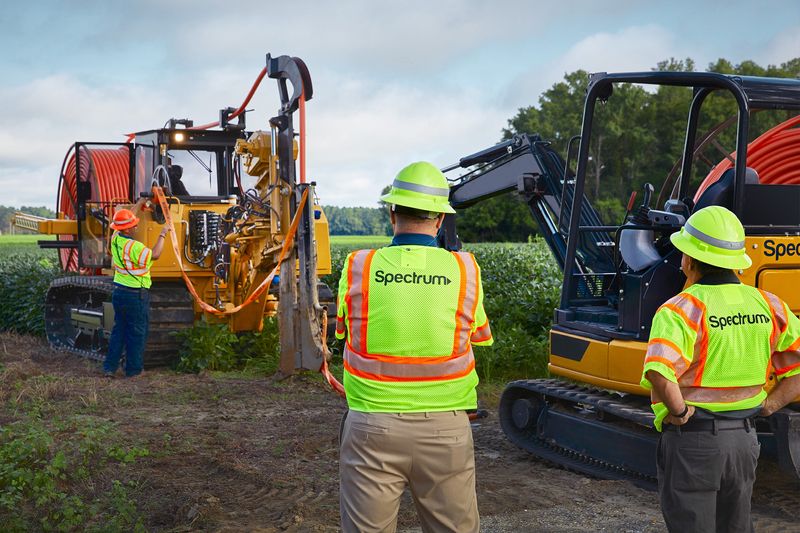
But a recent boom in businesses bringing high-speed internet cables across the country has also led to booms of another kind: Explosions after digging crews inadvertently slice through gas lines.

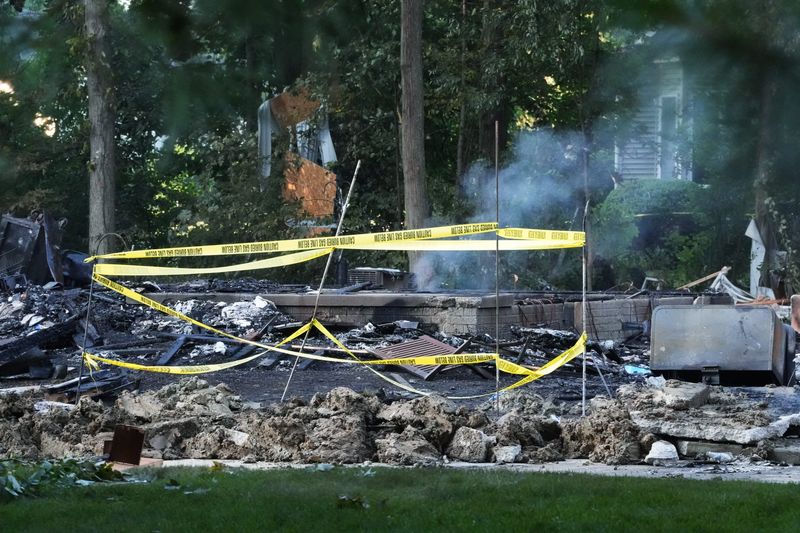
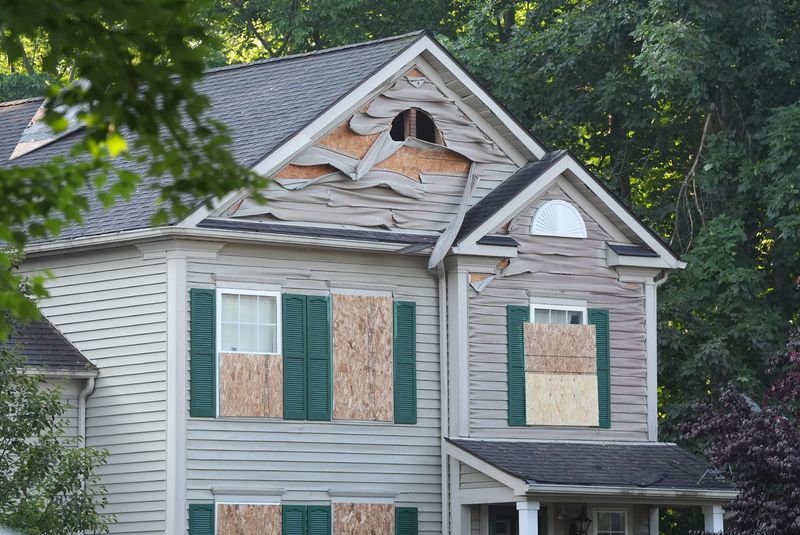
Locally, three Twinsburg Township homes were decimated and 36 others damaged when contractors struck a gas line June 25 on Hiram Lane in the Woodlands neighborhood.
Nationally, Common Ground Alliance – a nonprofit trade association dedicated to protecting underground infrastructure – reported that this kind of work was the second-leading cause of underground utility damage in the U.S. in 2024. (Excavation/construction stakeholders are the current leading cause of damage, the report says.)
Common Ground is still working on its 2025 report, but industry watchers expect telecom work to overtake the top spot, driven in part by a massive rollout of fiber optic lines, some of which will soon be government funded.
Northeast Ohio is amid the first wave of that work, said Roger Lipscomb, CEO of Ohio811, a nonprofit public safety organization dedicated to protecting both people digging in Ohio and the underground utilities they could hit.
A second wave of installation work is expected to begin this fall or spring 2027, when $42.45 billion of federal grants begin flowing through the federal Broadband, Equity, Access, and Deployment Program, or BEAD.
“It’s created a nightmare,” said Lipscomb, who has led Ohio811 since 2006.
He likened this upcoming wave to the gold rush of the mid-1850s.
“No one’s following rules or regulations,” he said.
This story is about the BEAD program, how Ohio811 is trying to keep everyone safe and what you can do to make digging safer in your community.
BEAD federal program aims to bridge the digital divide
The push for universal broadband emerged out of the COVID-19 pandemic.
Before there were vaccines and other medical treatments to help people survive the virus, many – including U.S. lawmakers – suddenly realized that high-speed internet wasn’t a home luxury.
It was a modern necessity, not unlike electricity.
Remote school, telehealth, and work-from-home during lockdowns revealed millions of rural, low-income, and tribal communities were stranded outside the digital divide.
In 2021, congress drafted a bipartisan $1.2 trillion infrastructure bill, carving out more than $42 billion for BEAD.
Federal lawmakers did not want to give billions directly to internet providers, so the law named a branch of the U.S. Department of Commerce to set the rules and distribute the funds to 56 states and territories.
The Biden administration envisioned all broadband coming through fiber-optic connections, which has been considered the gold standard of broadband systems even though it requires digging or directional drilling.
It also intended to treat broadband as a utility, like power or water, and thought it should be heavily regulated.
Biden signed the law in late 2021, but there were delays and Donald J. Trump was elected before BEAD could be implemented.
The incoming Trump administration had a different vision.
It opted for a “tech-neutral” policy that allowed satellite providers like Elon Musk’s Starlink to compete for BEAD funding alongside fiber optic companies.
The Trump administration also eliminated climate, labor and government-run network requirements to cut red tape and lower overall costs.
BroadbandOhio, part of the Ohio Department of Development, had to revise its BEAD plan, which was approved last year.
Ohio was slated to receive nearly $800 million from BEAD.
The state is spending about 48% on low-Earth orbit satellite providers like Starlink, 44% on fiber-optic providers running lines underground and 7% on fixed wireless infrastructure that relies on outdoor receivers instead of cables.
That will cut down on how many new fiber optic lines will be installed, but Tom Reid, an Ohio-based consultant who advises states and counties on broadband issues, has publicly raised concerns about whether satellite broadband will work because of the state’s expansive tree canopies.
“Only about 30% of the households awarded in the state of Ohio have a clear enough view of the sky to get a good, stable Starlink signal,” Reid told Athens-based public radio station, WOUB.
“They’re celebrating the fact that they’re only spending half of the money,” he said of state officials. “The way they’re only spending half the money is by doing pretend broadband for a lot of people,” he told WOUB.
Lipscomb said the first wave of broadband installation happening now has been largely funded by private equity.
“I think you’re seeing the companies doing this work today are legit established, registered,” he said.
Lipscomb said he’s worried about the second wave because he thinks broadband companies will be competing, running two or three lines across the same area without qualified workers doing the job.
Much of Northeast Ohio will be spared the second wave because companies have already saturated most densely populated areas with high-speed internet. Ohio’s Appalachian region and a rural swaths of western and central parts of the state will be the focus of the second wave, according to OhioBroadband’s map.
Yet even during this ongoing first wave, many broadband companies can’t find enough qualified Ohio workers and have brought in crews from out of state, Lipscomb said.
“If you’re breathing and standing upright, they’re handing you a shovel and telling you to dig,” he said.
Some crews digging in Ohio don’t speak English and are unaware of the state’s safety rules, Lipscomb said.
Those crews only speak only Portuguese, several dialects of Spanish and the languages of North Africa, he said.
They often arrive in neighborhoods with nothing to identify who they work for, he said.
“They’ll have no markings on their truck. … no shirts identifying who they work for,” he said.
“That’s fine. But one member of the crew should be able to communicate with homeowners,” Lipscomb said, adding that his organization is working on legislation that would tighten the rules.
What are the digging rules in Ohio?
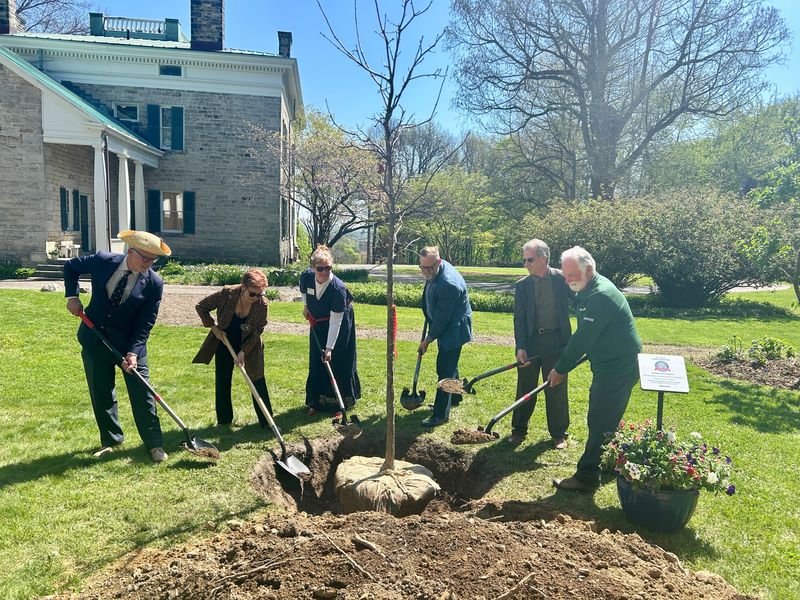
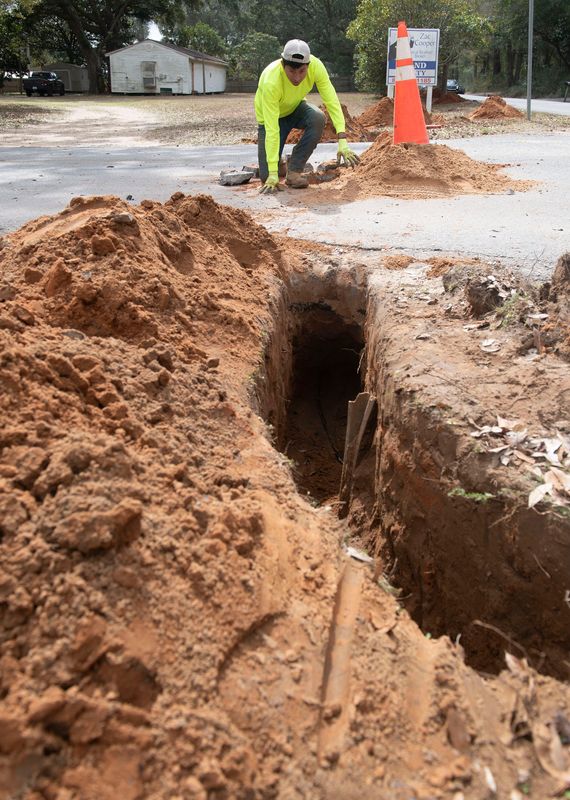
It doesn’t matter if you’re using a shovel to plant a tree in your own yard or using direction drilling to lay fiber optic lines on the devil strip in Ohio, you must first notify Ohio811 at least two business days before you start to dig.
Lipscomb explained what happens when you notify Ohio811 by phone, online form on its website or through the Ohio811 app:
Ohio811 creates a work ticket, looks up your parcel number on its maps and notifies each utility operating in your area.
Utilities employees used to mark the gas, electric and other lines. But now that work is done by utility subcontractors, he said.
The subcontractors have various ways to locate the utility lines.
There are utility maps, but some are outdated, Lipscomb said, particularly those involving small utilities that were gobbled up by larger companies.
There’s ground-penetrating radar, but that’s often too expensive for subcontractors, costing up to $40,000 per unit.
The safest way to locate utilities, Lipscomb said, is with a grounding rod and a special transmitter. Workers attach the transmitter’s red lead to a tracer wire or exposed pipe and a black transmitter lead to the ground rod.
When the transmitter is turned on, workers can see where the line is underground.
It’s not foolproof, he cautioned, particularly with Ohio’s aging infrastructure.
If a 6-inch steel line is next to a 3-inch steel line, it will hurt the accuracy, he said.
Moreover, some digging doesn’t need to hit a utility line to cause problems.
In the early 2000s, for example, Cleveland’s Playhouse Square flooded when someone was digging 30 feet away from the waterline.
“Vibration alone” was enough to burst a line more than a 100 years old, Lipscomb said.
In 2025, Ohio811 received about 1.66 million requests to dig. On average, Lipscomb said, they notify seven utilities for each request, resulting in about 10.5 million notifications.
It is free to file a dig request with Ohio811, but it charges utilities about $1 per notification and governments about 61 cents each.
Those fees and membership dues fund Ohio811, which was founded in 1972 as the Ohio Utilities Protection Service, the state’s communication link among excavators, homeowners and underground utility owners.
Ohio811 also works with state lawmakers to update state regulations to nationally accepted practices.
The most recent update is House Bill 227, which was signed into law and went into effect in June. Among other things, it changed the notification timeline so that utilities have more time to get their lines marked.
With a surge in fiber optic digging, contractors had been falling behind, he said.
The law also mandated that excavators report all damage to utilities to Ohio811.
Lipscomb said Ohio811 plans to analyze the incoming data and improve digging safety when it reveals patterns in what led to severed lines.
Common Ground’s latest DIRT report showed there were 196,977 damage reports to underground utilities in the U.S. in 2024. Gas and telecommunication lines were the most often hit, it said.
Twinsburg Township severed gas line, explosion remains under investigation
What led to the severed gas line and explosion in Twinsburg Township remains under investigation.
The parent company of Windstream, Uniti Group of Arkansas, released a statement after the explosion blaming a third-party utility locating service.
“(W)e believe this damage was the result of inaccurate markings of underground utilities,” Uniti Group said in a statement.
Lipscomb couldn’t comment on that accusation but said the work crew did notify Ohio811 and that utility companies did send subcontractors to mark the lines.
Some have speculated the digging crew failed to account for what Ohio811 calls the “tolerance zone.”
That’s the width of the marked underground utility line plus 18 inches on either side.
Once excavators reach the tolerance zone, state law mandates they switch to digging with hand tools or non-mechanical methods like vacuum excavation instead of using power equipment.
“It tells excavators that I’m getting close to the mark, I have to be more careful,” Lipscomb said.
What can you do to protect yourself?
Lipscomb is optimistic about one thing: Community involvement after the Twinsburg Township explosion.
“It’s important to be as informed as you can,” he said. “I think it’s OK to step outside your front door and ask where the foreman is.”
The foreman of the crew should be able to explain the project to you, he said. You can also ask the foreman if the company called Ohio811, a requirement under state law.
Ohio811’s website also provides residents with a tool to look up what digging tickets have been filed in their neighborhood. The tickets include a description of the project.
Lipscomb also encouraged municipal officials to notify residents that a project is about to happen before the digging starts and to use the local tools they have to limit the next wave of fiber optic cable.
“It’s hard for a community to deny a right of way for a big company like AT&T,” he said.
But cities and towns can deny access to smaller companies who are not registered with them or to impose other restrictions based on local laws.
“I’m excited to see communities say enough is enough,” he said, referring to Twinsburg, Hudson, Stow and other suburbs that have temporarily halted direction drilling after the gas line explosion.
“That makes me want to champion that cause…legislators are listening, communities are reaching out and we have to get a grip on this.”
Lipscomb, who has worked 30 years in the world of underground utilities, said the fiber optic cable rush will pass.
He saw the same rush to install telephone lines in 1996 when the federal government deregulated the industry. Suddenly, new companies popped up and raced to replace traditional telephone companies like Bell.
Many newcomers, like WorldCom, went bankrupt and the fiber lines they laid remain buried, unused, Lipscomb said.
He suspects something similar will happen with the companies now laying fiber optic lines for broadband, though he doesn’t know when.
“How many communication providers can be in one neighborhood?” he asked. “How much can the infrastructure take?
Beacon Journal reporter Amanda Garrett can be reached at agarrett@thebeaoncjournal.com.
This article originally appeared on Akron Beacon Journal: Could fiber optic boom prompt disasters like Twinsburg Twp. explosion?
Reporting by Amanda Garrett, Akron Beacon Journal / Akron Beacon Journal
USA TODAY Network via Reuters Connect
By Amanda Garrett, Akron Beacon Journal | USA TODAY Network