The Cleveland Browns have found themselves on the outskirts of an unearthed controversy. The team was enjoying a quiet offseason after the mandatory minicamp.
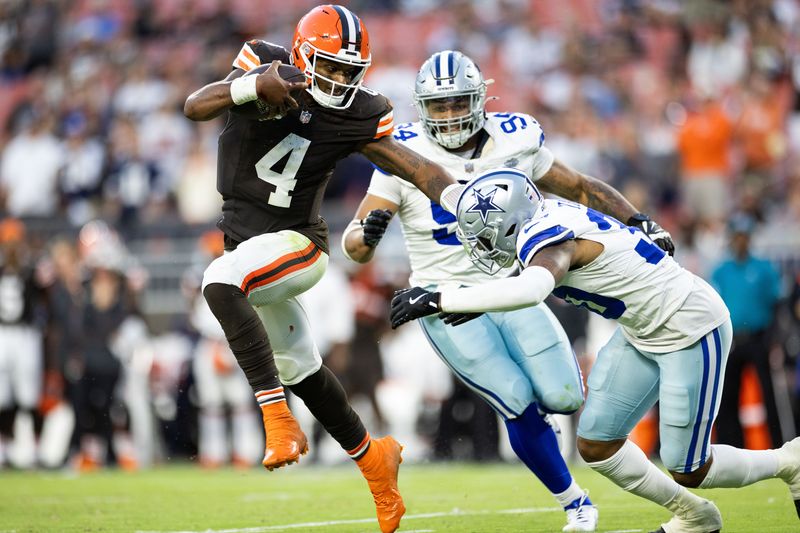
However, the Deshaun Watson trade continues to haunt the team from the grave. Pablo Torre of Pablo Torre Finds Out uncovered the “Holy Grail of NFL secrets”, or the grievance ruling relating to the allegations of collusion to prevent fully guaranteed contracts. The allegations stem from the fact that no quarterback has secured a fully guaranteed contract after the Browns fully guaranteed the Deshaun Watson contract.

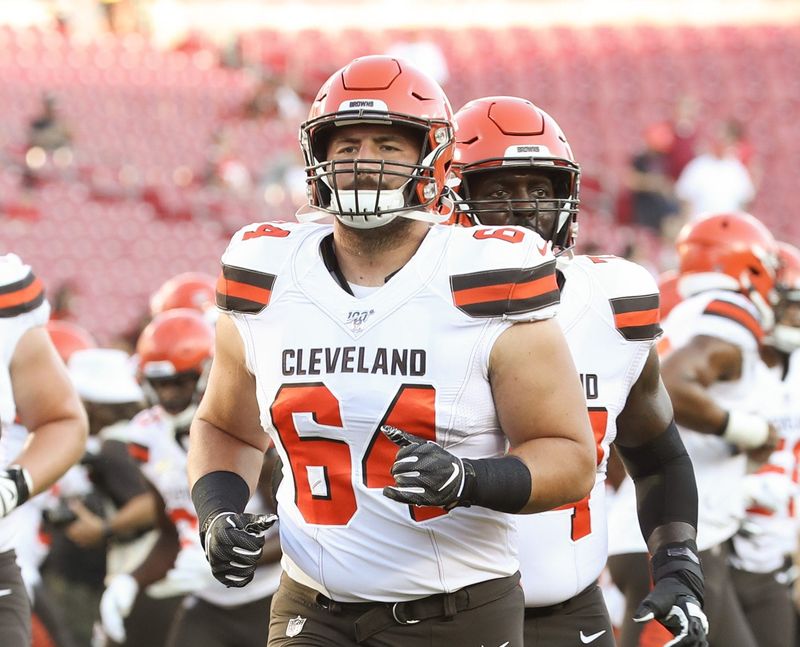
The grievance includes some testimony from Browns’ owner Jimmy Haslam. The specific cases revolve around Lamar Jackson, Kyler Murray, and Russell Wilson. Former Browns center and then-NFLPA President JC Tretter is also featured in the case. The arbitrator found the NFL was not colluding to keep guaranteed money down.
Here is a complete breakdown of the case.
The Suit
The NFLPA brought the suit, alleging that the comments made by owners at the NFL league meetings, as well as a presentation by the NFL Management Council, a group composed of owners, about limiting guaranteed money, constituted collusion. The union initially focused on the contracts of Wilson, Murray, and Jackson before alleging there were efforts to suppress guaranteed money across the league. All three of the quarterbacks signed their contracts within a year of Watson’s fully guaranteed contract.
Why it’s important
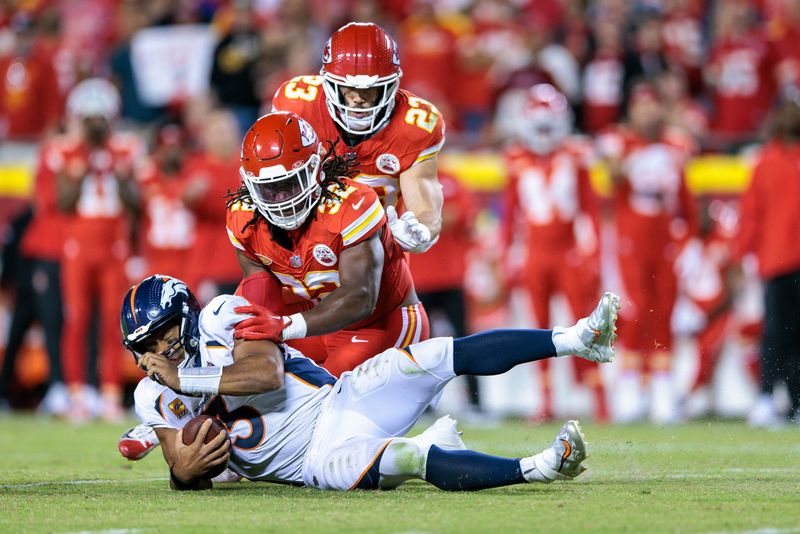
Players have been desperate for fully guaranteed contracts for decades. Some have started to complain about the lack of fully guaranteed contracts during collective bargaining negotiations. However, no professional league guarantees contracts in their collective bargaining agreement; instead, it’s part of their standard deal. NFLPA President Tretter saw an opportunity to push a precedent for fully guaranteed contracts after the Watson signing. He tried hard to get Wilson a fully guaranteed contract from the Denver Broncos. Tretter knew that if a small number of quarterbacks got fully guaranteed contracts, then soon all quarterbacks would have fully guaranteed contracts. Wilson signed a five-year, $242 million contract with $161 million in guaranteed money. Tretter was frustrated behind the scenes. He texted then-NFLPA executive director DeMaurice Smith to complain about Wilson, calling him a “wuss” for not pursuing a fully guaranteed contract. In his testimony, Wilson testified that he thought his deal was effectively fully guaranteed. The mistake cost Wilson $81 million. Watson is currently the only quarterback with a fully guaranteed contract.
NFLPA Evidence
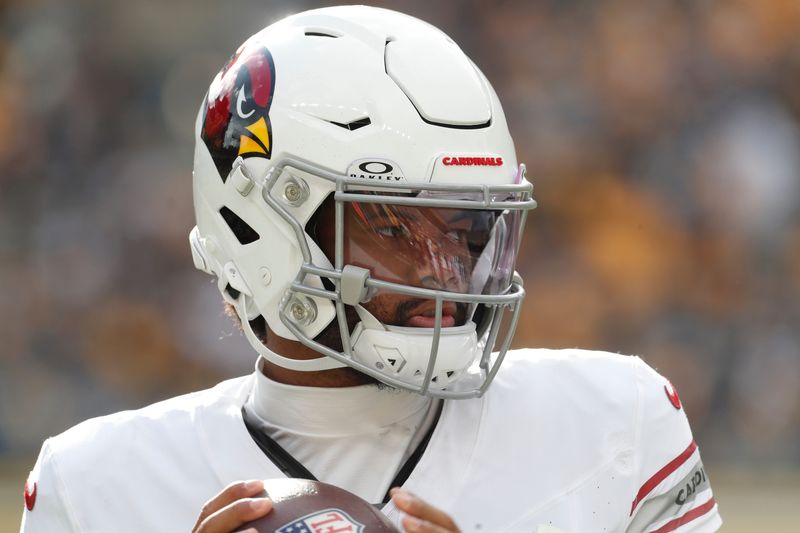
The NFLPA relied on testimony from NFL Owners and contract data to argue their case. The case seemed like a slam dunk to outsiders. The owners were very honest about their disdain for fully guaranteed contracts. They organized at the league meeting to encourage limiting fully guaranteed contracts. NFL owners privately celebrated each other’s quarterback signings: Arizona Cardinals owner Michael Bidwell received a text from Los Angeles Chargers owner Dean Spanos congratulating him on signing Kyler Murray and stating it’d help them negotiate with Justin Herbert.
Bidwell made sure to brag that the guarantees were low, and the team retained clawback language. However, the NFLPA was fighting an uphill battle in the collusion case. It’s hard to prove tacit collusion. It requires a lot of evidence. The contract data provided by the union didn’t conclusively prove that guaranteed contracts were lower than in previous years.
Owner’s Defense
Owners are very aware of how entangled their team’s financials are with each other. But that doesn’t mean they collude to keep guaranteed money down. There’s no reason for owners to collude with each other when the markets can serve that role with transparency. Price leadership is a natural phenomenon in free agency. Teams can set the price at a position if they have a talented player.
The top contracts are the model for other players’ contracts. For example, the wide receiver market has exploded. 14 of the 15 top contracts were negotiated over the past two seasons. The Minnesota Vikings signed Justin Jefferson to a $140 million contract. Within the following months, CeeDee Lamb signed a $136 million extension with the Dallas Cowboys, and Brandon Aiyuk was extended for $120 million. Ja’Marr Chase received a $161 million extension this offseason after stating he wanted more than Jefferson.
As a result, a few teams can reshape the position markets over the years. Owners don’t need to collude; they just need to wait for contract negotiations.
The Ruling
Arbitrator Christopher Droney ruled in favor of the league over the union. Droney had multiple reasons to support the league’s arguments. He found the data provided by the NFLPA to be lacking, compared to an interactive model presented by the league. Droney acknowledged commissioner Roger Goodell encouraged teams to reduce guaranteed money, stating,
“There is little question that the NFL Management Council, with the blessing of the Commissioner, encouraged the 32 NFL Clubs to reduce guarantees in veterans’ contracts at the March 2022 annual owners’ meeting. However, the evidence did not establish by a clear preponderance that the Clubs agreed to do that or participated in such a scheme.”
The NFLPA failed to provide evidence that all 32 teams were colluding against players by reducing guaranteed money. They also failed to provide evidence proving the quarterbacks would receive fully guaranteed contracts. Droney didn’t believe Wilson had the leverage to obtain a fully guaranteed contract with two years remaining on his previous contract. Droney was very skeptical of the NFLPA’s arguments.
The grievance case was a Hail Mary for a union desperate for change. They had numerous allegations to prove, but lacked a proper process to verify them. While the case has some interesting testimony, there’s not much else.
This article originally appeared on Browns Wire: Browns at the center of unearthed NFLPA drama
Reporting by Browns Alchemy, Browns Wire / Browns Wire
USA TODAY Network via Reuters Connect