Editor’s note: This story is one of four stories examining downtown Marion’s revitalization efforts over the past 50 years. This is the third story in the series.
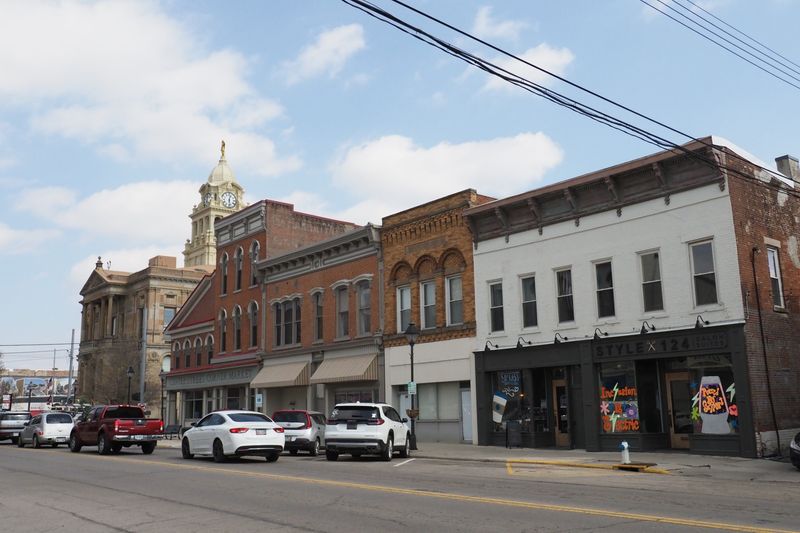
Marion’s downtown today looks distinctly different than it did 20 or even 50 years ago. There are still empty storefronts, but businesses have moved in and people wander downtown as they shop, dine or work.

Lois Fisher, a real estate developer who was involved early on in the downtown’s revitalization, commended the new generation of developers like Luke Henry, Austin Carr and James and Lily Lloyd.
“I think they’re doing a fabulous job,” Fisher said. “I think that their heart and soul is into it.”
A new generation of developers reimagine downtown Marion
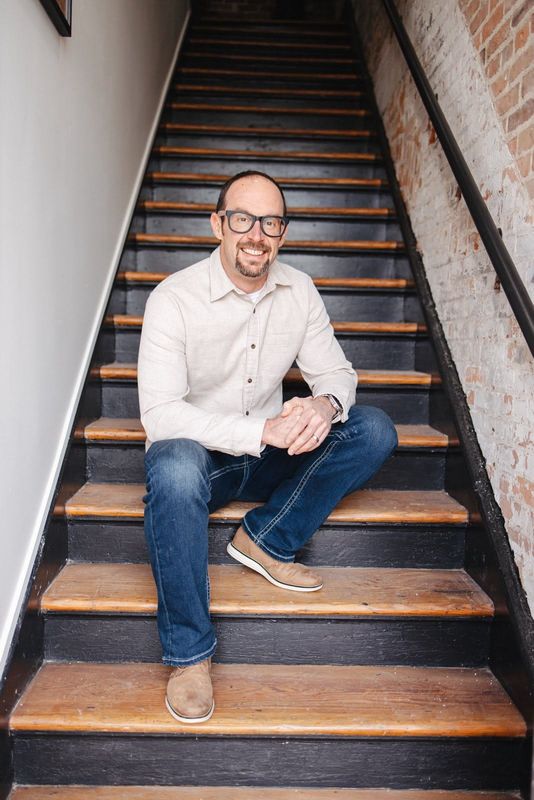
Luke Henry, owner of Henry Development Group, bought his first rental property at the age of 19, but it wasn’t until Henry’s “midlife seizure” that his attention turned to Marion.
“Just starting to kind of look at the future and thinking about was there bigger things that we could do and just make more of an impact in the world,” Henry said. “Was that somewhere else? Was it here?”
After learning about other downtown revitalization projects nearby, Henry remembered thinking, “Why not Marion?”
“I give a lot of credit to Lois Fisher, who started doing projects in the early 2000s,” Henry said. “And, really, well before there was much interest here or elsewhere. It just wasn’t nearly as in vogue as maybe it is today.”
While Fisher tackled projects one building a time, Henry had a different strategy. He had a vision for large-scale development to bring new momentum downtown.
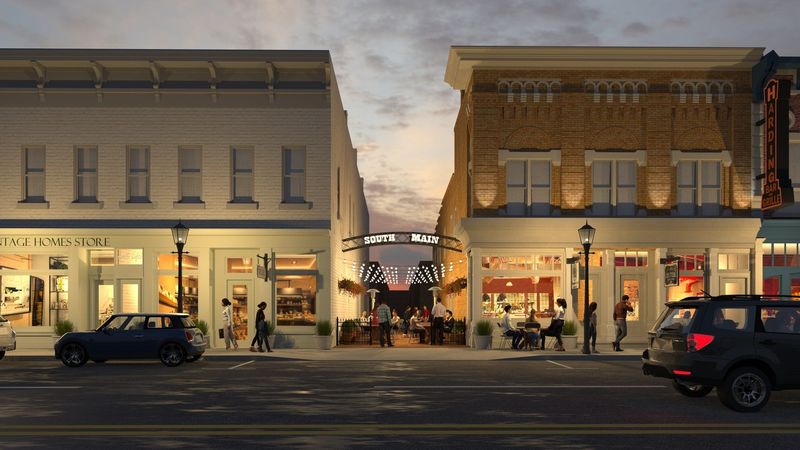
“It just wasn’t enough to really drive people downtown and get people excited, and so that’s why we took such a leap in 2018,” Henry said. “Why it was a pretty big deal that we assembled eight buildings and we wanted to focus on one block and really make a splash because then, if you’ve got a block, then you’ve got a district.”
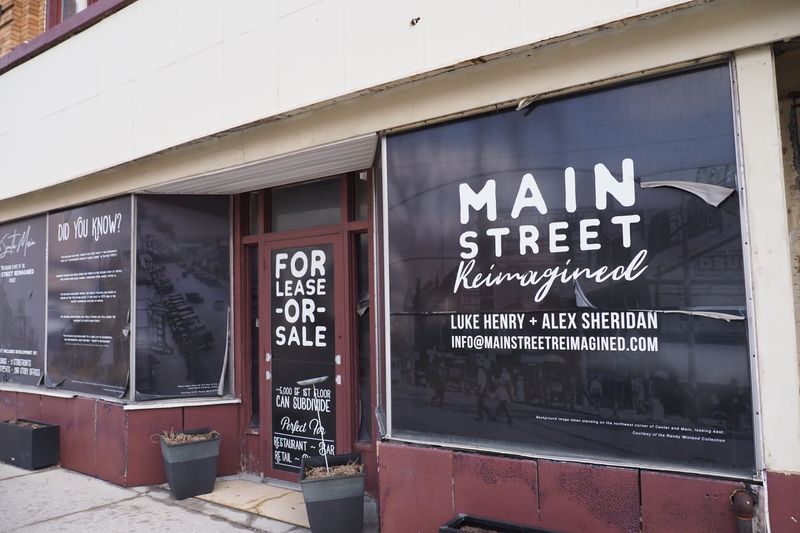
The vision of a revitalized downtown led Henry and business partner Alex Sheridan to develop Main Street Reimagined in 2018. Rather than focus on one building at a time, they bought up an entire block.
Though some buildings were renovated and filled in a short amount of time, another, the Lydia building, took more than six years.
Developers use creative funding to build
While renovating older buildings, Henry’s goal was to keep Marion’s historical charm intact. In some of its most recent projects, Henry Development Group has used historic tax credits. For keeping buildings’ original architecture the same, owners receive a 20% tax credit.
Marion County Regional Planning Director Evelyn Warr-Cummings helped developers find funding for different projects. She said unless they’re flush with cash, developers have to get creative with how they seek out funding. The historic tax credits or incentives from the Energy Special Improvement District are just “another tool in your toolbox.”
“I’m proud that the newer generation of developers are trying to utilize that,” Warr-Cummings said, “because the more they learn, then they can tell someone else, or they might be real rough on the first or second time around, but maybe, by the third time, it’s getting a little easier.”
While the credits can be an incentive to developers, they can also come with strict restrictions on how buildings are renovated and preserved. But Henry has found the work to be worth it, saying that the historic buildings carry the memories of residents and a soul of their own.
“I have a friend of mine that does development in another community, he calls buildings like that irreplaceable real estate because they’re built with materials that we can’t afford anymore, by artisans and craftsmen that don’t live anymore,” Henry said. “They have a lot of unique characteristics and they’re built just so beautifully and ornately. You don’t see buildings built like that anymore.”
Henry believes the renovations will last generations as the downtown continues to grow and evolve.
When asked when he’ll know when his dream of a revitalized downtown has come to fruition, Henry said there will always be room for improvement, but he hopes much of the heavy lifting is being completed now.
“Times are going to continue to change and we’ll have to change with them,” Henry said. “And with that will come new waves of entrepreneurs and the buildings are still going to be timeless, and they’re still going to be able to be adapted to new uses.”
New businesses open downtown
When trying to attract new business downtown, Henry relied on the blueprints of other communities to see what worked and what didn’t. At first, he just wanted to create somewhere couples could have a date night. Then he wanted to find ways to attract day-time traffic and later created a co-working space.
His goal was to find ways for businesses to complement and support one another.
Since 2018, Downtown Marion, Inc., a nonprofit group that promotes Marion’s downtown, estimated more than 50 businesses have opened downtown.
One of the newer businesses to open is Sip Easy, a coffee shop owned by Kim Bradshaw.
Bradshaw grew up in Marion and saw its downtown become a “ghost town,” but, in the past six to seven years, she’s seen businesses and residents return. As she looked to open her own business, she noticed others celebrating first-, second- and third-year anniversaries.
“It still has a long way to go, but it’s good to show there’s proof of life,” Bradshaw said.
She attributed much of the downtown’s success to the leaders who have invested in revitalization efforts to bring attention back downtown.
“They’re not just doing one project at a time, they have a whole ecosystem in mind,” Bradshaw said.
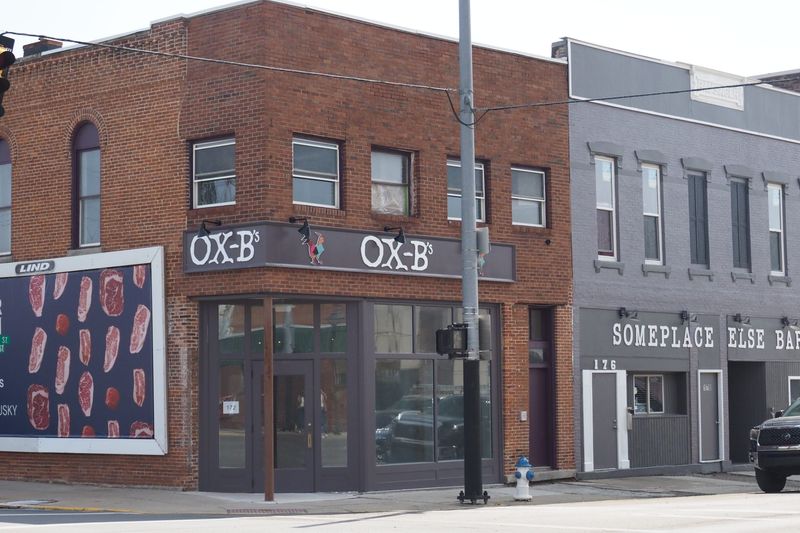
In recent months, three more businesses have announced moves to open in Marion including OX-B’s, Lazeez Grill, and Smokehouse 101.
Allen Wilson, executive director of Downtown Marion, Inc., sees recent years as a success in bringing local businesses back.
“We have made great strides in the revitalization,” Wilson said. “We still have a ways to go. There’s still some vacant buildings. There’s still some that are eyesores, but all of those take the community participating in their downtown. So, in order for us and the investors to continue moving forward with revitalization, we have to have the community support it in order for it to continue to move forward.”
As Henry and other developers continue revitalizing the downtown buildings, they hope to attract the Marion community back to the heart of the city, both as tourists and full-time residents.
The final story in this series will look at the efforts to market Marion’s downtown to both the residents of Marion and visitors from outside the county.
This article originally appeared on Marion Star: A new generation takes the reins to reimagine downtown Marion
Reporting by Abby Bammerlin, Marion Star / Marion Star
USA TODAY Network via Reuters Connect