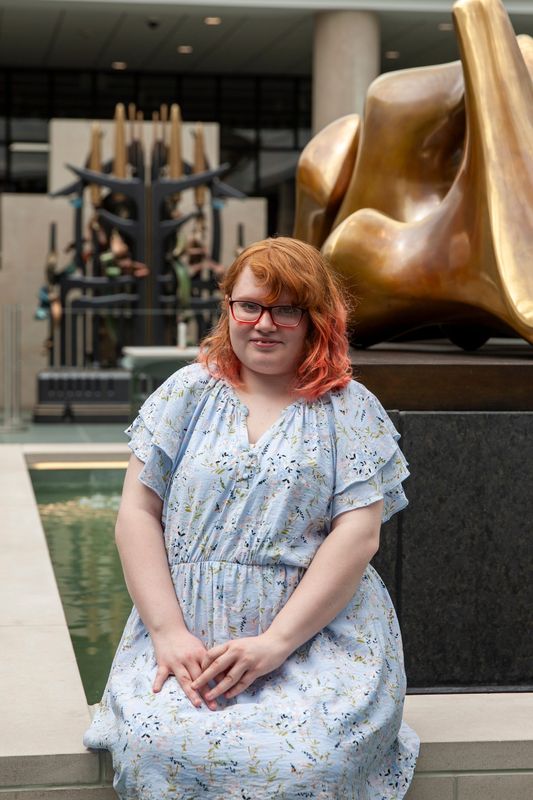
During a recent trip to the Memorial Art Gallery in Rochester, Payton Roselli spotted a problem.
The 20-year-old is always drawn to the thunderous melody of the museum’s Italian Baroque organ on the second floor. The location, though, made her pause. If an emergency broke out during an otherwise ordinary visit, would Roselli and her friends be able to safely evacuate?

The Macedon teenager has a rare genetic disorder that gradually replaces muscle tissue with bone growth, restricting her body’s ability to move. She can still walk but many of her friends use wheelchairs to get around. Accessibility is always top of mind when they plan outings to restaurants, museums, theaters and the like.
The MAG’s evacuation plan directed disabled individuals to find a designated “area of refuge” during emergencies and wait.
“They’re literally in a stairwell just sitting there until someone comes and rescues them,” Roselli said.
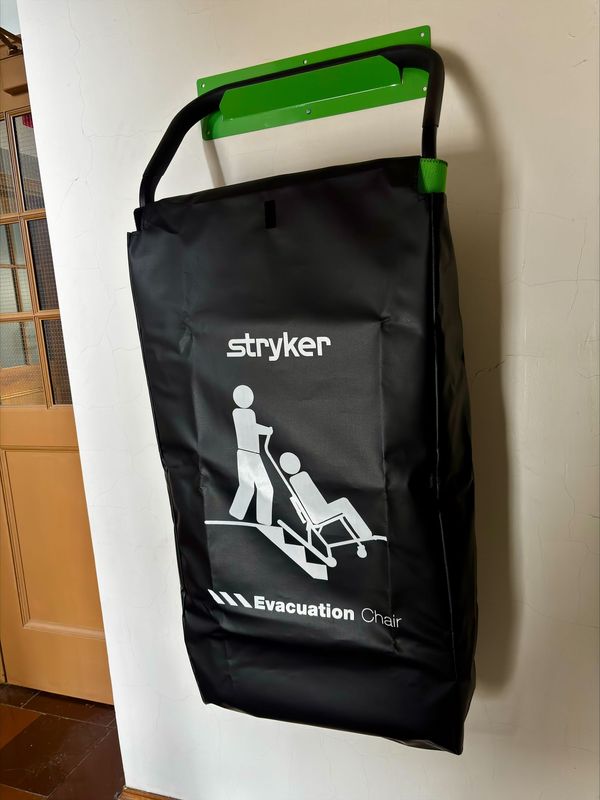
She brought her concerns to museum officials last year as part of a leadership project with the Disability EmpowHer Network. The museum, in turn, recently installed three emergency evacuation chairs that will allow disabled visitors to safely descend stairwells if needed.
MAG officials are also developing museum-specific maps after Roselli pointed out the current evacuation plans covered multiple University of Rochester buildings and seemed more applicable for an office or classroom setting.
“Her insights helped us strengthen our preparedness in ways that will better serve our entire community,” MAG senior associate Susan Dodge-Peters Daiss said.
The museum already offers a multitude of accessibility services, including ASL interpreted tours, audio descriptions of selected art work and sensory tool kits. And MAG is also undergoing an accessibility and inclusion consulation with another Rochester-based nonprofit, Endless Highway.
Roselli said the project gave her more confidence to use her voice and life experiences to push for change.
“I want to create many locations that are fully accessible,” she said. “Where you don’t even have to think about the accessibility. Where you can just easily go and do the thing you want to do and not have to worry about ― is this place accessible to me?”
— Kayla Canne covers community safety for the Democrat and Chronicle with a focus on immigration, police accountability, government surveillance and how people are impacted by violence. Follow her on Instagram @bykaylacanne. Get in touch at kcanne@gannett.com.
This article originally appeared on Rochester Democrat and Chronicle: This Macedon teen led safety changes for disabled visitors to MAG
Reporting by Kayla Canne, Rochester Democrat and Chronicle / Rochester Democrat and Chronicle
USA TODAY Network via Reuters Connect