Cole Palen’s Old Rhinebeck Aerodrome, situated on Norton Road in Red Hook, applied for a special use permit proposing modifications and improvements to two parcels of their property, according to the Town of Red Hook.
However, local residents are concerned about the Aerodrome’s plans, and they voiced those thoughts at a June 1 public hearing held by the town’s planning board.

A “number of letters” were sent in, too, according to the town’s planning board chairman, Sam Phelan. The letters were posted in the online meeting agenda.
For many at the meeting, this beloved historic museum would be turned into something more akin to an entertainment venue if given approval, and would disturb the rural character of the area. Concerns about the Aerodrome’s zoning, possible long-term impacts of the zoning determination, as well as the surrounding environment, were also raised.
Here’s what residents had to say, what the Aerodrome’s proposed plans are and how residents can continue the conversation.
What is the Rhinebeck Aerodrome proposing?
“The Aerodrome is committed to preserving and protecting its world-renowned collection for future generations,” Aerodrome officials said in an email statement. “To achieve this, our facilities require thoughtful updates and modernization that both meet current Town requirements and honor the vision of our founder.”
According to the Aerodrome’s “Facilities Master Plan Report,” dated May 26, the Aerodrome is looking to improve housing for its historic collection and patron experience.
The plan includes a new two-story maintenance hangar for aircraft used in their air shows as well as ongoing restoration projects, a “History of Flight Hanger” to consolidate the Aerodrome’s collection in a centralized location, allow full ADA access and house interactive exhibits and family-oriented activities, additional hangar space, and a new auto shed to replace the old one holding their antique cars.
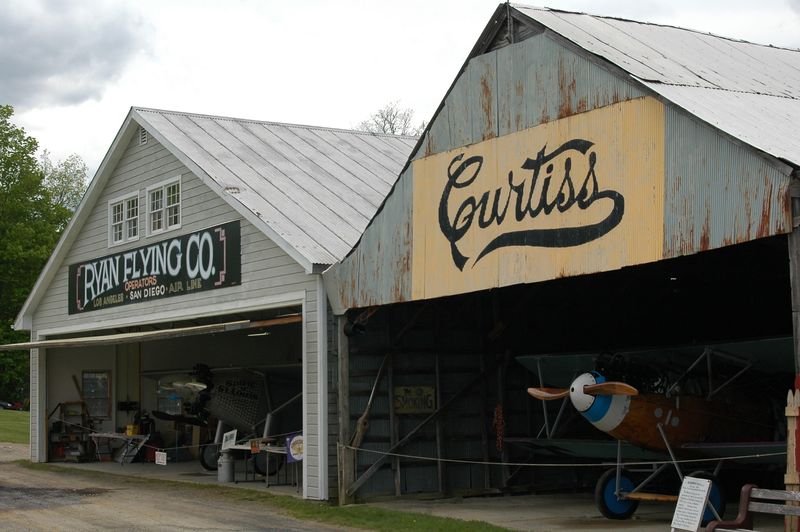
The facade of the Curtiss hangar, built by founder Palen in 1958, would also be repurposed and preserved, potentially as an exhibit inside the facility or as an architectural detail of the new facade. The Ryan Hangar facade will also be salvaged.
Otherwise, proposed changes include upgrades to the appearance and aesthetic, while retaining the Aerodrome’s existing charm, increasing non-airshow revenue streams and activities to expand educational opportunities.
“The goal is to appeal to young and old and create an iconic feeling that will serve the Aerodrome for many years to come,” the master plan states.
According to the Aerodrome’s statement, officials are concerned about “misinformation that has circulated throughout the community,” while they have worked “diligently and transparently” during this process.
As a nonprofit organization, Aerodrome officials will continue to work collaboratively and constructively with the town planning board to pursue their preservation goals.
“Our mission remains unchanged: to preserve aviation history and educate the public about aviation’s profound impact on society through the unique experiential opportunities that have long distinguished the Aerodrome,” Aerodrome officials said.
Concerns about changes to Red Hook’s rural character
Tomas Wise, a resident on Norton Road, said his family has lived on the road for four generations and knew Aerodrome founder Palen.
“As far as my family is concerned,” Wise said, “we grew up with the planes flying over our homes, and we had accepted that as a part of living there. What has changed is not our relationship with the Aerodrome; what has changed is the scale and the character of what is now being proposed, and the resources that are behind it.”
Wise argued what he believes is supposed to be a “seasonal museum” would move more toward a “commercial events venue,” and questioned whether this belongs in a residential district and scenic road of Red Hook.
Phelan noted the planning board would initiate a “full-blown traffic study,” and work to get opinions from Red Hook’s highway department to determine the potential traffic impacts of the Aerodrome’s proposed plans.
Wise asked the planning board to use the town’s zoning code to protect “a low-density residential community from a scale of development it was never meant to,” and that the Aerodrome should “abide by the code rules.”
Zoning concerns: Local attorney weighs in
Kenneth Stenger, a local attorney of Stenger, Glass, Hagstrom, Lindars & Iuele, is representing Tomas Wise and his family’s interest in maintaining the character of the Norton Road neighborhood.
Stenger said he discovered the Aerodrome application relied on a 2020 determination of the facility as an “Airport Use Facility,” rather than a museum designation made in 2019.
Stenger believes there is legal basis for challenging this classification and plans to take an appeal to the Zoning Board of Appeals.
Long-term impact concerns raised by architect
Rebecca Lorenz is a licensed architect in New York and partner of John Tompkins, a Norton Road property owner directly adjacent to the north of the Aerodrome.
The partners enjoy and support the Aerodrome, Lorenz said, but if something were to happen to it, she said the zoning designation could potentially lead to a future where this facility is turned into an actual commercial airport.
In letters to the board, she and Tompkins shared concerns including building setback requirements for residential property lines, the building occupancy classification, parking and traffic concerns, the new design raising questions of consistency with the area’s character, potential wetland, stormwater and infrastructure impacts, as well as contradictions between the zoning designation and its historic use as a museum.
“I just want to encourage you all to think about the long-term impact on this community,” Lorenz said to the planning board.
Potential environmental impacts
Amy Shein, an advisory council representative of the Saw Kill Watershed Community, was present at the meeting.
The group formed in 2015 to protect the Saw Kill watershed, and its ecological, recreational and historic resources through hands-on science education and advocacy. The majority of the watershed sits within the Town of Red Hook.
Shein said following the group’s review of the environmental assessment form, concerns were raised about how it is “excessively briefed, incomplete and does not fully acknowledge potential impact to the surrounding environment, wildlife and wetlands habitat.”
Thus, the Saw Kill Watershed Community requested the planning board require a revised, more accurate EAF and site-specific assessment, “as wetland and aquatic habitats are closely connected to the protection of sensitive wildlife populations,” to determine the project’s possible environmental impacts.
What happens next?
In the end, residents were appreciative to be able to share their worries and challenges to the Aerodrome’s proposed plans with the planning board.
Many noted their hope the planning board moves forward carefully and cautiously if an approval is to go through, using explicit language in all documents to clearly define what is permissible.
The board has also extended the public hearing, allowing people to continue to share letters and input.
The discussion will continue during the planning board’s June 15 meeting, from 6:30-9:30 p.m., and the public is welcome to attend.
Nickie Hayes is Breaking & Trending News Reporter for the Poughkeepsie Journal. See her most recent articles here. Contact reporter Nickie Hayes: NHayes@poughkee.gannett.com, 845-863-3518 and @nickieehayess on Instagram.
This article originally appeared on Poughkeepsie Journal: Red Hook residents push back on Old Rhinebeck Aerodrome expansion
Reporting by Nickie Hayes, Poughkeepsie Journal / Poughkeepsie Journal
USA TODAY Network via Reuters Connect
By Nickie Hayes, Poughkeepsie Journal | USA TODAY Network