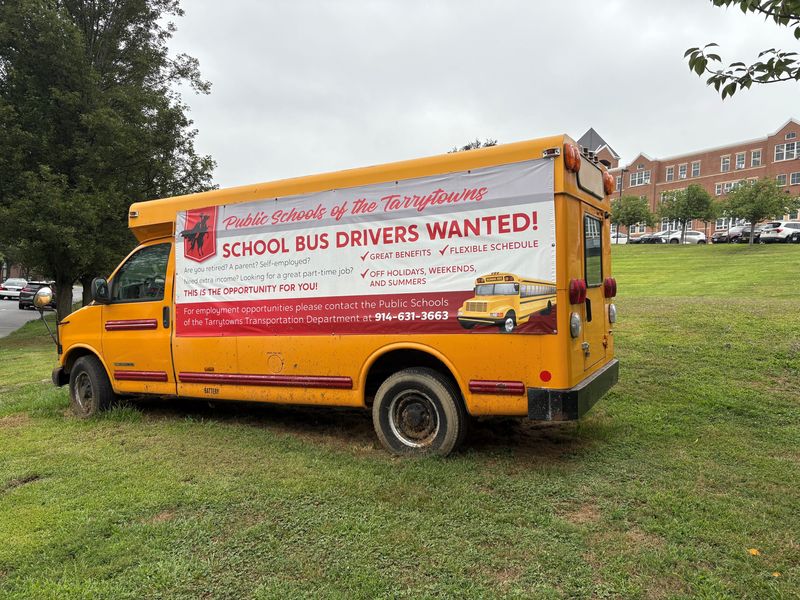
A recent stoppage of New York state’s non-domiciled commercial driver’s license program is deepening the state’s pre-existing school bus driver shortage, trade groups and state lawmakers said.
The state Department of Motor Vehicles late last year paused the program that issues commercial driver’s licenses to non-resident drivers, citing a “specific directive from the federal government” that primarily impacts immigrants.

That directive, which included additional requests for the state DMV to revoke all illegally-issued licenses and conduct an internal audit or risk the loss of $73 million in federal highway funding, came as a result of a Federal Motor Carrier Safety Administration (FMCSA) audit of these programs nationwide.
And since the state DMV stopped processing any non-domiciled CDLs, New York School Bus Contractors Association president Paul Quinn Mori says it’s “almost impossible” for school bus drivers across New York to get these specific licenses.
Here’s what to know.
How is this affecting school bus drivers across New York?
Fully-trained school bus drivers have been stopped just short of receiving their non-domiciled CDLs and others who need to renew their CDLs aren’t able to because of the new limitations. And both of these developments are exacerbating a school bus driver shortage that began during the COVID-19 pandemic, according to the school bus contractors group.
“My company alone probably lost 20 people in training,” Mori said.
Around 5% of the state’s nearly 5,000 school bus drivers have non-domiciled commercial driver’s licenses, with the most drivers concentrated in the New York City and Long Island areas as they have the most school buses, according to Mori. It also means these areas are being hit the hardest by the pause.
It’s an unintended consequence of the Trump administration’s push to secure the country’s roadways, Mori said, and one that will persist. On Feb. 13, the FMCSA officially limited eligibility for non-domiciled commercial learner’s permits and CDLs “to those who hold specific, verifiable employment-based nonimmigrant status” beginning March 16.
Mori, however, says the change might have the opposite effect on safety.
“My worry is when you take regular drivers out of the system and you keep plugging the gap with temporary things from here and there, it’s not as safe,” Mori said.
What did the federal audit reveal about New York’s CDL program?
Just over half of the 200 sampled CDLs issued to non-resident drivers by the FMCSA were found to be in violation of federal law, according to U.S. Transportation Secretary Sean Duffy.
In a report released in December, Duffy says the state DMV defaulted to issuing eight-year non-REAL ID CDLs to non-resident drivers — regardless of when their legal status expired — and issued CDLs to non-resident drivers without providing evidence they had verified the individual’s current lawful presence in the U.S.
At the time of the report’s publication, state DMV spokesperson Walter McClure said each CDL issued by the agency is subject to verification of an individual’s lawful status and that they continue to comply with federal rules.
“Secretary Duffy is lying about New York State once again in a desperate attempt to distract from the failing, chaotic administration he represents,” McClure said. “This is just another stunt from Secretary Duffy, and it does nothing to keep our roads safer.”
What New York lawmakers are saying about the stoppage
New York State Assembly transportation committee chair Assemblymember William Magnarelli, D-Syracuse, says New York needs plenty of CDL drivers, which are crucial for everything from schools to municipal bus services and businesses.
“Going after people trying to make a living and complying with our laws by removing their CDLs only exasperates this problem we have in finding people to drive our goods across our state,” Magnarelli said. “This administration is exasperating the problem we have and it requires a national solution to immigration that will allow people, who have committed no crimes and are doing nothing wrong, to work in this country.”
And New York State Senate transportation committee chair Senator Jeremy Cooney, D-Rochester, calls the change an overreach by the Trump administration.
“Regardless of how anyone feels about the policy itself, we should all object to this administration’s tactics of threatening vital federal funds for political purposes,” Cooney said.
Emily Barnes covers state government for the USA TODAY Network-New York with a focus on how policy and laws impact New Yorkers’ taxes, communities and jobs. Follow her on Instagram or X @byemilybarnes. Get in touch at ebarnes@usatodayco.com.
This article originally appeared on Rockland/Westchester Journal News: NY’s school bus driver shortage could get worse in 2026. Here’s why
Reporting by Emily Barnes, New York State Team / Rockland/Westchester Journal News
USA TODAY Network via Reuters Connect