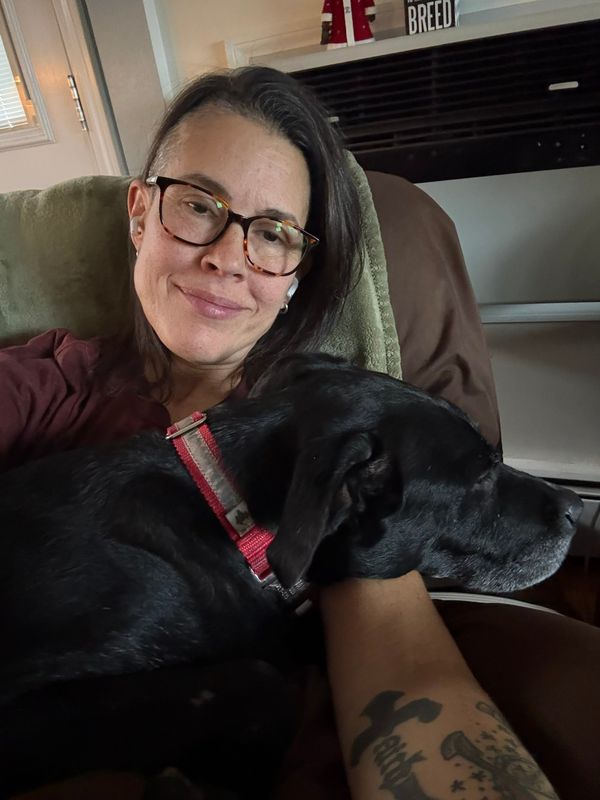
Karen Miletic wasn’t too worried as Democrats and Republicans clashed last year over whether to continue the federal subsidies that held down Affordable Care Act health insurance costs for her and her wife.
Millions of Americans faced big cost spikes if Congress allowed the funding to expire as of Dec. 31. And Miletic, a 56-year-old Westchester County native who lives in Peekskill, didn’t really expect that to happen, even with Republican majorities resisting a renewal in both the House and Senate and the government closed for 43 days due to a partisan standoff on that issue.

But it happened. And as of January, Miletic’s premiums shot up by $10,000 to nearly $29,000 a year. Now she and her wife are dipping into their savings to pay for their medical coverage.
“This is for my retirement,” a frustrated Miletic told the USA TODAY Network, referring to her savings. “I work really hard, and the middle class keeps getting beaten down.”
ACA enrollment is down in NY after premiums spiked
Miletic was one of about 140,000 New Yorkers who faced a nearly 40% average cost spike last year if their subsidies shrank or disappeared altogether. They were among about 220,000 people overall in New York who had no health insurance through their employers and were buying their own private plans through the state-run exchange.
Six weeks after the subsidies lapsed, the exact toll on New Yorkers who relied on them remains unclear. State health officials say they’re still analyzing how many people dropped coverage due to the cost spike by the time signups ended on Jan. 31, and how much more those who stuck with their plans are paying for them.
“New York is committed to preserving coverage for as many New Yorkers as possible,” Danielle DeSouza, a spokeswoman for the Department of Health, said in a statement. “We continue to work with the Centers for Medicare and Medicaid Services to design and provide affordable coverage options for New Yorkers.”
Preliminary figures suggest some did drop their insurance after the costs shot up. When the new enrollment period started on Nov. 1, roughly 222,000 New Yorkers were paying for plans through the exchange set up by the Affordable Care Act, better known as the ACA or Obamacare. As of Jan. 10, that count had dropped to about 208,000, according to federal data.
No choice but to accept the ACA cost hike
The now-expired subsidies had been in place for four years and had enabled millions of uninsured Americans to get coverage. Nationwide, enrollment soared from 11 million in 2020 to about 24 million in 2025. Republican-led states saw surges in spite of longstanding GOP opposition to Obamacare: Texas had 4 million enrollees and Florida had 4.7 million as of last year.
Those now clobbered by cost hikes fall into two camps. Some still qualify for aid to lower their premiums, though at lower amounts than the “enhanced” subsidies that began in 2021 and just expired. But others are now ineligible for any subsidies and must pay the full cost.
That’s why Miletic and her wife, Maria Martinez, are paying $10,000 more, a 54% increase over last year. Their combined income from the pet care business Miletic runs and Martinez’ work as a hair dresser is modest. But it’s just high enough to disqualify them for any aid under the pre-2021 standard for Obamacare subsidies.
In Westchester County, the new income cutoff appears to be $84,000 for a couple with no children to qualify for subsidies, according to a cost-estimating tool on the state exchange website. Miletic and Martinez earn more and so must shoulder the full cost. It comes to $2,376.58 per month for MVP coverage, compared to $1,545.60 for the same plan last year, Miletic said, citing her billing records.
Miletic said they have bought coverage through the state exchange since 2015 and were in no position to forgo insurance. She has a chronic disorder known as fibromyalgia and other conditions that require medicine and regular doctor’s visits, including two cardiologist appointments each year to get her heart checked. Her wife takes anti-seizure pills she could never afford on her own.
They seemingly had no choice but to keep their same policy and pay the added expense. They couldn’t drop to a lower coverage level to save money, since they would have wound up paying more due to higher out-of-pocket costs for the anti-seizure meds.
The House passed a bill in January to extend the enhanced subsidies for three years, with some Republicans, including Hudson Valley Rep. Mike Lawler, defying their leaders and breaking ranks with fellow GOP members to vote with Democrats in support. But the Republican-led Senate never took up the measure and has no plans to do so.
Miletic was stunned that Congress let the subsidies wither but no longer expects it to change course.
“I really have very little hope at this point,” she said.
Chris McKenna covers government and politics for The Journal News and USA TODAY Network. Reach him at CMcKenna@usatodayco.com.
This article originally appeared on Rockland/Westchester Journal News: NY woman’s health premiums spike $10K after Congress let ACA aid expire
Reporting by Chris McKenna, New York State Team / Rockland/Westchester Journal News
USA TODAY Network via Reuters Connect