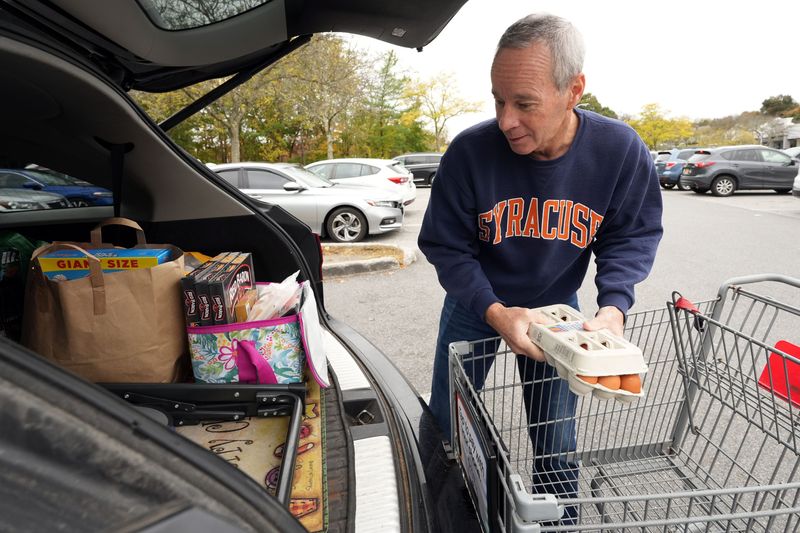
A food safety measure that could cause New Yorkers to spend an additional $620 on groceries per year, according to a federal food and beverage industry group, is awaiting Gov. Kathy Hochul’s approval.
The Food Safety and Chemical Disclosure Act, introduced by Assemblymember Anna Kelles, a Southern Tier Democrat, and Sen. Brian Kavanagh, a Lower Manhattan Democrat, would immediately ban three additives and expand state-level oversight of food substances designated as “Generally Recognized as Safe,” or GRAS, by the federal Food and Drug Administration.

And while state lawmakers say the bill, which is the first of its kind in the country and was passed by both the Senate and Assembly earlier this month, would protect New York consumers, a study conducted by Policy Navigation Group reveals the new regulations may hurt their pocketbooks.
“The numbers tell a clear story: this legislation doesn’t just affect industry,” the Food Ingredient Safety Coalition says. “It lands directly on the families it claims to protect, through higher prices, fewer choices, and a state budget stretched even thinner.”
Here’s what to know.
Which additives are banned through this legislation?
Three additives — FD&C Red 3, potassium bromate and propylparaben — would no longer be allowed in food produced or sold in New York, if the bill is signed by Hochul.
Red 3 is found in products such as maraschino cherries, sprinkles, frostings and breakfast cereals. White bread, rolls and pizza crusts sometimes contain potassium bromate and propylparaben can be found in tortillas, muffins, processed vegetable-based spreads and fruit-based fillings.
The legislation would also require companies to produce and submit reports on any food ingredients they use that they refer to as GRAS and why they believe they’re safe, which the state would then make public.
“New York is stepping up where Washington has slowed down,” says Jessica Hernandez, Environmental Working Group’s legislative director. “This bill will increase transparency and protect consumers from toxic chemicals in New York’s food supply. Without federal action, it’s up to the states to keep us safe from harmful additives in the foods we eat and feed to our families.”
How could New Yorkers’ grocery bills be affected?
On average, New York households spend $10,169 on groceries per year, according to Policy Navigation Group’s report.
Under the legislation, food producers would undergo compliance costs associated with the reporting requirements laid out in the legislation. These costs would then at least partially be put onto New York consumers through increased food costs, the report says, which could increase the average household’s annual grocery expenses by up to 2.3%, or $230.
Additionally, the ingredient ban, which the study says would push consumers to purchase other, more expensive alternatives, could increase New Yorkers’ grocery spending by 4%, or $390, per household per year. Together, the burden would amount to a 6%, or $620, spending increase annually, according to the report.
What NY lawmakers say about grocery price report
But the sponsors of the bill are pushing back against the report’s findings.
“It’s not true,” Kelles said. “The only thing that this bill is saying is that the companies, the chemical companies and the food companies need to share in a PDF file the research that they already did to meet federal law.”
“So to literally say that this is going to cost billions of dollars, specifically because this is going to require a tremendous amount of data gathering, internal preparation, review, is literally an admission that they have not been complying with federal law,” Kelles added.
Kelles also said states like California have already banned the harmful additives and haven’t seen grocery cost increases as a result.
“Every single one of these already has alternatives existing on the market, used by the industry,” Kelles says.
“Even if the cost of the alternative were slightly more than what they’re currently using, it would be a minuscule change in the total cost of the product,” she said, before adding, “because the current cost of these three components compared to the total cost of the current product is a tiny fraction of the total cost of these products.”
The study also asserts it will cost millions to create a database, website and regulations as well as pay for the associated labor costs. Kavanagh says that’s “laughable” as their in-house cost estimate equals “about 1% of that number.”
“Lies don’t become true because you put them in a report,” Kavanagh added, “and there’s no credible analysis here that suggests this is going to have a meaningful expense.”
Hochul hasn’t yet taken a public stance on the bill and is expected to review it in the near future.
Emily Barnes covers state government for the USA TODAY Network-New York with a focus on how policy and laws impact New Yorkers’ taxes, communities and jobs. Follow her on Instagram or X @byemilybarnes. Get in touch at ebarnes@usatodayco.com.
This article originally appeared on Rochester Democrat and Chronicle: NY grocery prices could rise if Hochul signs this food safety bill
Reporting by Emily Barnes, New York State Team / Rochester Democrat and Chronicle
USA TODAY Network via Reuters Connect