It takes a strong commitment and a lot of difficult work to maintain a landmark on the National Register of Historic Places, especially when the history-maker is alive.
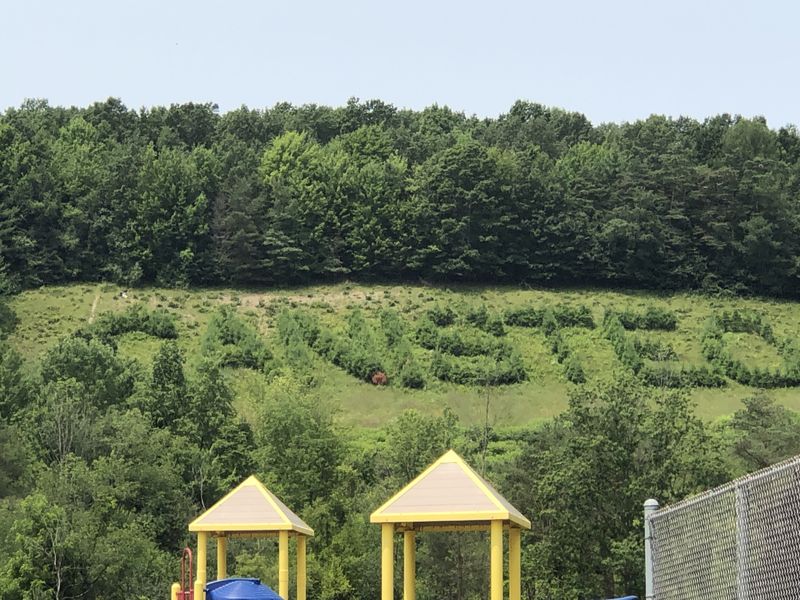
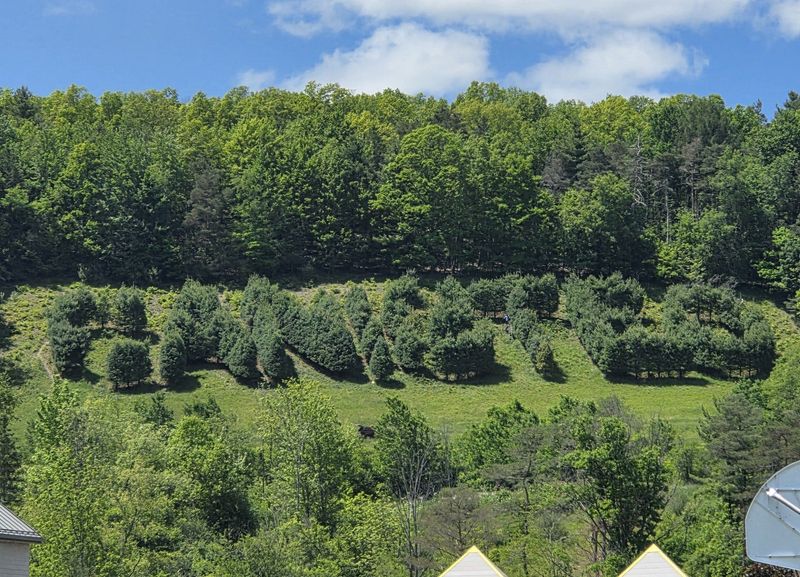
Built by local residents Harry Smith and Ed Childs in 1933, the Canisteo Living Sign originally featured some 260 scotch pine trees that spell C-A-N-I-S-T-E-O.

Standing about 90 feet high and 300 feet wide, the Canisteo Living Sign towers on a hillside near Cemetery Road in the Steuben County village.
The living marvel that has delighted visitors and boosted community pride for more than 90 years was entered into the National Register of Historic Places in 2004.
Over the decades, the iconic sign has required ongoing maintenance and restoration with its continued existence threatened by drought, disease, overgrowth and encroaching vegetation.
The Canisteo school district has been the sign’s caretaker since 1957.
New white pine trees were planted about ten years ago in a nearly $200,000 project to restore the time-worn sign to its former glory.
During the first year, approximately 80 trees were lost due to a summer drought and the challenging growing conditions on a rocky hillside, Canisteo-Greenwood Superintendent Tom Crook said.
The following summer, about 16 additional trees died, and over the past several years, roughly eight more trees have been lost.
Crook said maintenance of the sign is performed on a rotating schedule. One year, the trees are trimmed; the next year, underbrush is cleared in and around the sign.
Funds donated to the district in 2016 continue to support the ongoing maintenance and replacement of trees, Crook said.
Tree heights impacting visibility of Canisteo Living Sign
It is going to be a busy spring and summer at the Canisteo Living Sign as the school addresses a new round of tree issues.
According to Canisteo-Greenwood, the recommended maintenance practice of cutting back top growth trees was not consistently followed, resulting in trees growing too tall.
This height impacts the visibility and readability of the sign. White pine trees can reach heights of up to 30 feet, which is not ideal for maintaining clear letter definition.
The school district said the white pines planted a decade ago have grown to over 15 feet tall, beyond what is ideal for the best visibility.
In other cases, there are trees that have been lost in the letters, creating gaps.
What latest Canisteo Living Sign project hopes to accomplish
Crook said Mike Evingham approached the district last year with a plan to address these concerns.
“After several discussions, it became clear that his approach would help bring the trees to a more manageable height and improve the sign’s legibility,” Crook said.
Due to the unusually wet spring, work was delayed until a stretch of dry weather allowed the contractor to begin.
The goal is to make the letters more defined while also reducing their height and limiting future growth.
As trimming continues, community members may notice some gaps where trees have not survived. Crook said plans call for replacing those with 6-8 foot trees, which will grow in and restore the sign over time. The letters “C” and “S” will likely take a bit longer to fully fill back in.
The project could be completed within the next month, provided favorable weather conditions continue.
The total number of trees is likely below the original 260, primarily due to the larger size and spacing required for white pine compared to Scotch pine, Crook said.
Email Neal Simon at nsimon@gannett.com. To get unlimited access to the latest news, please subscribe or activate your digital account today.
This article originally appeared on The Evening Tribune: New project will bring Canisteo Living Sign into sharper focus
Reporting by Neal Simon, Hornell Evening Tribune / The Evening Tribune
USA TODAY Network via Reuters Connect