Once each month until July, we’re looking at America, and especially Steuben County, in the 50-year blocks that make up “America 250.” This month we look at the second block – 1826-1876.
On the Fourth of July in 1827, slavery ended in New York – way past time, but still way ahead of many other places in America. Some formerly enslaved families continued in Steuben, especially in the Bath area, where they remained significant members of the community for almost a hundred years.

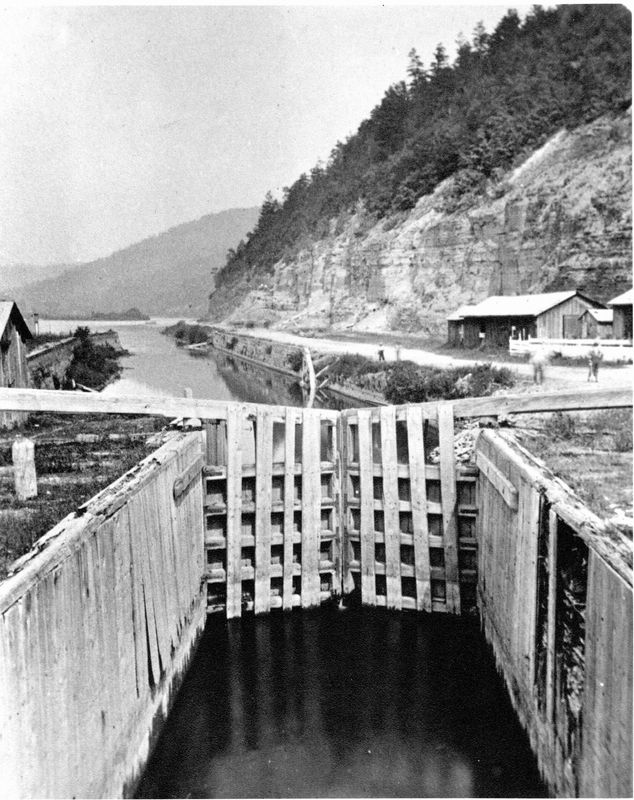
The Erie Canal’s opening in 1825 wrecked Steuben’s economy, which was based on floating cargo downstream upon the rivers. Steamboats on Keuka Lake, feeder canals from Penn Yan, Corning, and Dansville, then especially RAILROADS, got Steuben back into the game. The Erie Railroad’s Lake Erie-New York City line brought our first presidential visit, from Millard Fillmore. It also turned Hornell (the modern name) into a railroading boom town.
Creation of Schuyler County in 1854 reduced Steuben to its current boundaries, finally erasing our beachhead on Seneca Lake. Creation of Tuscarora (1858, from Addison) gave us our current 32 towns.
Many factors, including changes in shipping patterns thanks to the new Erie Canal, led to violence as hundreds of Steubeners demanded that the British land company revalue their properties and reduce their mortgages. The Panic of 1837 only made matters worse … America finally had an economy big enough to have a financial depression.
The U.S. continued robbing and warring upon Native peoples – former Steubeners Marcus Whitman and Narcissa Prentiss Whitman were massacred on the fringe of such wars … future general W. W. Averell of Cameron started his army career fighting on the western frontier.
In a series of aggressions, the U.S. stole nearly half of Mexico, running from the Pacific Ocean almost to the Mississippi. Ulysses S. Grant, who fought in that conflict, called the war “one of the most unjust ever waged by a stronger against a weaker nation.” A Steuben County company garrisoned a fort in California, but saw no action.
ALL slavery in America ended on New Year’s Day in 1866, but getting there required a Civil War. Over 3,000 Steuben men served, and one in six of them died. Foreseeing the dreadful toll, Ira Davenport opened a remarkable girls’ orphanage in Bath.
From the ashes of war arose the Grange … a social, educational, and political group for farm families. Francis McDowell of Wayne, along with six others, were the national founders. Even before Grange, a new Steuben County Agricultural Society took over the county fair. It’s been on the same site EVERY YEAR since 1854.
In 1868 the Corning Flint Glass Works opened, exploiting good rail connections. Germans, Scandinavians and Irish flooded in for the jobs, and Catholic churches proliferated, creating a panic among those who considered themselves superior.
Public libraries appeared in Steuben, as did private high schools, most of which soon went public, just as their founders had hoped. Some Steubeners now went to New York’s new Land-Grant college, Cornell University. Those who wanted a career in education went to the new Oswego State Normal School. Some Steuben women went to the new Elmira College, the first institution to grant women the same degree that men would get.
Despite its good results, the Civil War was one of our great tragedies in this half-century, killing some three-quarters of a million people. But perhaps an even greater tragedy was letting that victory slip away. One-party white power governments began to re-seize control of the south … for a hundred years.
One hint of the future … as the Civil War wound down, Remington Arms made a bid for non-military business by buying all the typewriter patents they could find. It would take them years to work out a practical model … but they finally got there!
– Kirk House, of the Steuben County Historical Society, writes a column appearing in The Leader and The Spectator.
This article originally appeared on The Leader: Key happenings during Steuben County’s second 50 years | America 250
Reporting by Kirk House, Steuben County Historical Society, Special to The Leader / The Leader
USA TODAY Network via Reuters Connect