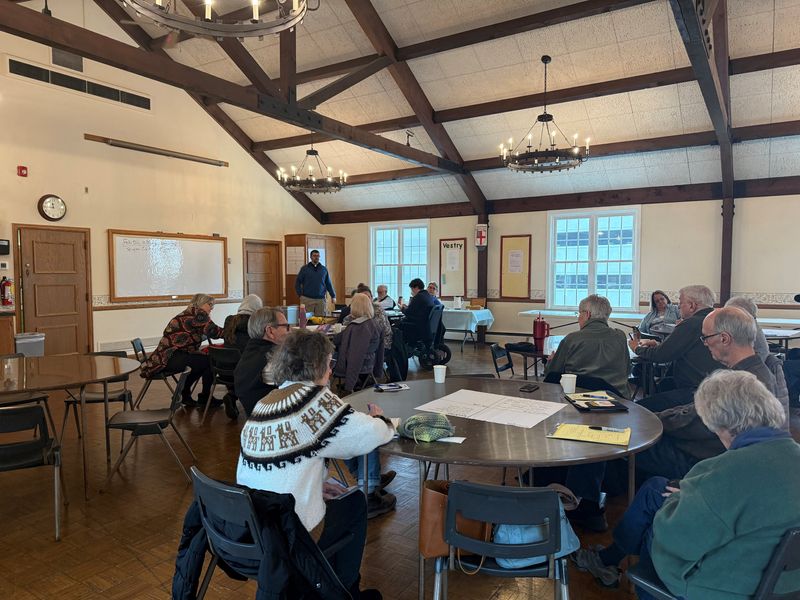
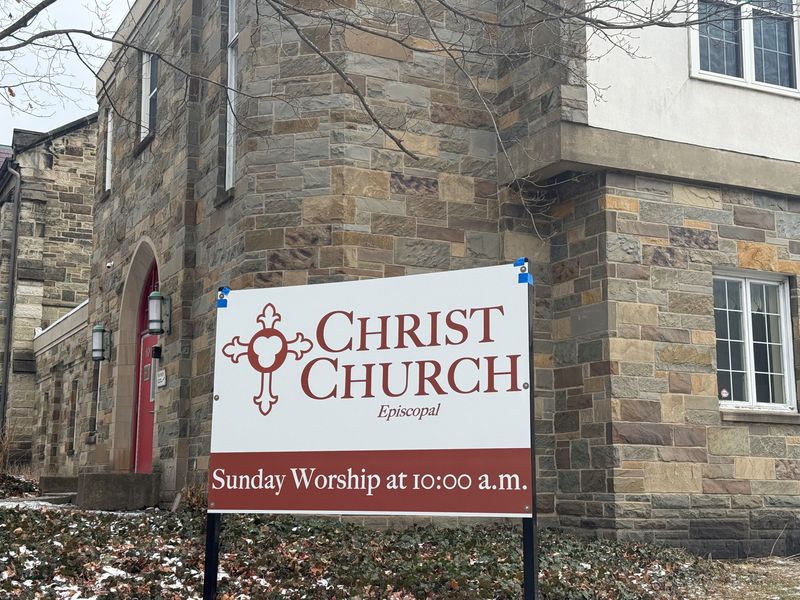
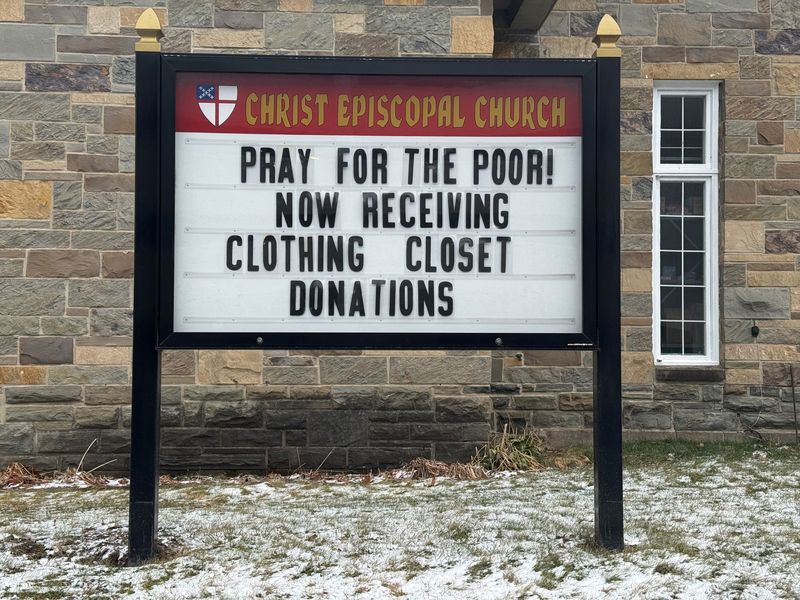
A group made up of several local churches recently gathered at Christ Episcopal Church to discuss outreach efforts and ways to get other congregations involved in what they call the “Coalition of Congregations in Binghamton,” or CCB for short.
The group talked about what is needed to directly address community needs as a collective, like housing, expanding existing initiatives, and creating a solid vision.

The formation of the CCB was orchestrated by Rev. Scott Parnell, rector of Christ Episcopal Church, with the intention of gathering congregations in the City of Binghamton who are active in the communities they serve.
The overall goal is not to solve global issues, but to take a step back and find solutions to local problems and bridge the gaps within the current systems.
Parnell summed up the effort with one simple statement: “All we’re trying to do is help people survive.”
The Jan. 15 gathering was only the second meeting held for the emerging group, but they plan to come together at least once a month.
Teddy Aribisala is a member of Trinity Memorial Episcopal and has lived in Binghamton for the past 10 years. This was Aribisala’s first time attending a CCB meeting and he said he “wouldn’t miss it for the world.”
During a discussion on establishing a concrete vision for the group, Aribisala brought up an important point to keep in mind as they move forward. Though the group is made up of churches, the faith-based initiative should not deter people who may not associate with a particular religion but approach it as a “human thing,” Aribisala said.
The group is taking inspiration from the United Nations Universal Declaration of Human Rights, which was made public in 1948 and documents the “common standard of achievements for all peoples and all nations.”
Article 25 of the declaration states, “Everyone has the right to a standard of living adequate for the health and well-being of himself and of his family, including food, clothing, housing and medical care and necessary social services, and the right to security in the event of unemployment, sickness, disability, widowhood, old age or other lack of livelihood in circumstances beyond his control.”
Food, clothing, housing and efficient healthcare are the basic essentials for a human being to thrive in society.
“There’s no throwaway people … for any human being it takes only two steps for you to end up being homeless,” Aribisala said after the meeting, noting that one diagnosis, one termination or an unexpected event can disrupt a person’s consistent sense of security.
How new group aims to be ‘conscience of the community’
Jay Fish has been a member of Christ Episcopal Church for roughly a year after moving back from St. Louis with his wife. There are a lot of issues impacting people globally that can make it difficult to think of tangible solutions. For Fish, he believes that something can be done on a human scale, and local efforts like clothing drives and food pantries can make a difference.
“We can be the conscience of the community,” Fish said. “We can be the conscience that says ‘Wait a minute, how do we treat people like people?’”
One example of how Christ Episcopal Church has helped bridge gaps in the community is when the church partnered with UnDue Medical Debt in 2025 to raise funds to forgive $1.5 million in medical debt for residents in Broome and Tioga counties.
UnDue Medical Debt purchases outstanding bills from hospitals and debt collectors for pennies on the dollar. For every dollar donated it canceled at least $100 worth of debt. The church began collecting donations on Easter Sunday, and over roughly seven months members of the congregation raised $10,000 to purchase the debt.
Recipients were not identified to the church, but they did receive a letter from UnDue sharing the news of the eliminated debt. In the original campaign announcement, Parnell shared how medical debt can impact families.
“For many families, medical debt, especially unexpected debt, is the tipping point between stability and crisis,” Parnell said. “By forgiving this debt, we proclaim a deeper truth of our faith — that no one’s worth or dignity should be held captive by their debt.”
Congregations involved in CCB, current community outreach efforts
To help raise awareness of the housing crisis in Binghamton, breakdown stereotypes and support the ongoing community outreach, Christ Episcopal Church is selling “Unhoused, Still Human” T-shirts available on bonfire.com.
If you or your congregation may be interested in getting involved with the CCB, contact Christ Episcopal Church via email at christchurch1810@gmail.com or by phone at 607-722-2308. The next meeting will be held at Christ Episcopal Church on Feb. 28 at 10:30 a.m.
Kalyn Grant reports on public service issues for the Press & Sun-Bulletin, focusing on schools and community impact. Have a story to share? Follow her on Instagram @KalynCarmen and on Facebook under Kalyn Kearney. Get in touch at KCGrant@usatodayco.com
This article originally appeared on Binghamton Press & Sun-Bulletin: How Binghamton churches are filling the gaps ‘to help people survive’
Reporting by Kalyn Grant, Binghamton Press & Sun Bulletin / Binghamton Press & Sun-Bulletin
USA TODAY Network via Reuters Connect