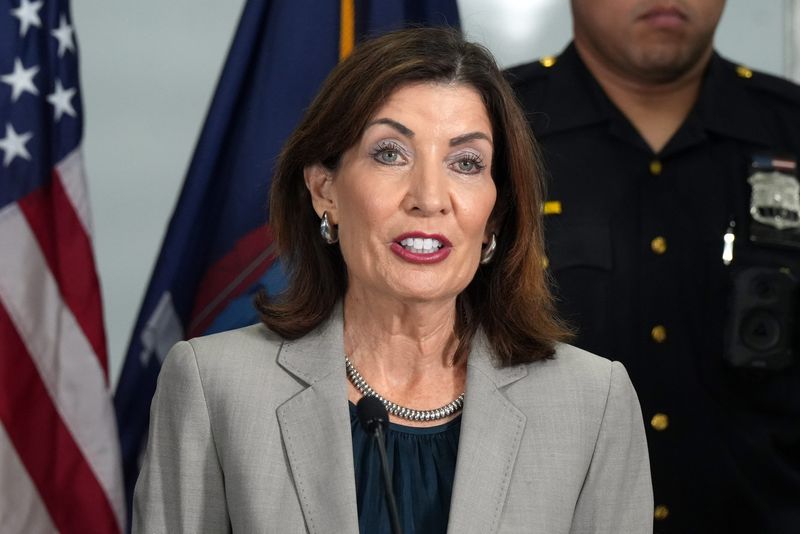
New York is set to become the 13th state to legalize medically assisted suicide for terminally ill patients, with Gov. Kathy Hochul saying after months of uncertainty that she’ll sign the legislation once more safeguards are added.
Hochul, explaining her decision in an op-ed column in the Albany Times Union on Wednesday, Dec. 17, said she was torn on the emotionally charged issue, but had concluded that giving dying patients the choice to end their suffering was compassionate and in keeping with American freedoms.

She addressed ardent opposition by the Catholic Church and others by acknowledging that people of various religious faiths have objected that “deliberately shortening one’s life violates the sanctity of life.”
“I understand and respect those views,” the governor wrote. “But as I have spoken with people tormented by pain, I have come to see this as a matter of individual choice that does not have to be about shortening life but rather about shortening dying. And I do not believe that in every instance condemning someone to excruciating pain and suffering preserves the dignity and sanctity of life.”
What to know about NY’s Medical Aid in Dying Act
The Medical Aid in Dying Act will allow doctors to prescribe lethal pills to mentally competent patients who request them and are determined to have less than six months to live, with no hope of recovery. Patients must make their request first orally and then in writing, before two adult witnesses. Doctors must refuse if the patient is found to lack the capacity to make that decision.
The bill was first proposed in Albany in 2016 but never voted on until this year, when the Assembly approved it in an 81-67 vote in April and the Senate passed it by 35-27 in June. Large Democratic majorities in both chambers were split on the issue, with some Democrats joining Republicans in opposition.
Hochul said she’ll sign an amended version of the bill after lawmakers return to Albany in January and vote again on legislation that includes more protections she wanted. They include requiring confirmations that a patient has less than six months to live and has made the decision freely, not under duress. Those steps are meant to quell concerns that a patient may be pressured to end their life.
The bill sponsors have agreed to the new requirements, which also include a recording of the patient stating his or her decision, and a five-day waiting period after the prescription is written before the pills are provided.
What both sides say about Medical Aid in Dying Act deal
Lawmakers who fought for the bill for years applauded Hochul’s agreement to bring it to fruition. Assemblywoman Amy Paulin, a Scarsdale Democrat who sponsored the measure in the Assembly, said she was “profoundly grateful,” recounting her own sister’s agonizing death from ovarian cancer and her pleas to die in her final days.
“Her experience is, tragically, the story of so many others,” Paulin said. “Most people will never choose medical aid in dying, but they want the reassurance of having it as a compassionate safeguard that offers comfort even if it is never used.
Opponents condemned the decision, arguing no amendments would fix the bill’s flaws. In a statement, a group called the New York Alliance Against Assisted Suicide said such laws send a message that “some lives are less worth protecting,” and “place subtle but real pressure on people who may already feel like a burden.”
“No amount of legislative tinkering can eliminate the risks of coercion, misdiagnosis, untreated depression, or inaccurate prognoses — all of which could lead people to end their lives prematurely,” the group stated.
Chris McKenna covers government and politics for The Journal News and USA TODAY Network. Reach him at CMcKenna@usatodayco.com.
This article originally appeared on Rockland/Westchester Journal News: Hochul to sign NY Medical Aid in Dying Act legalizing assisted suicide
Reporting by Chris McKenna, New York State Team / Rockland/Westchester Journal News
USA TODAY Network via Reuters Connect