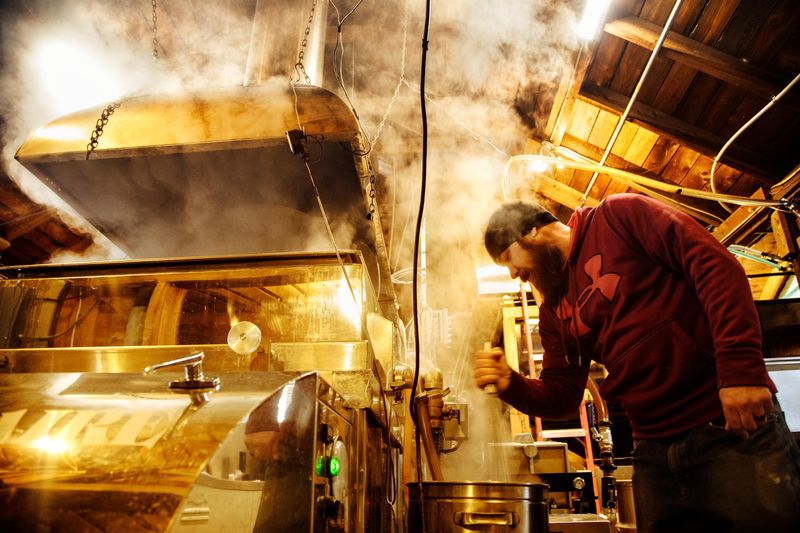
New York state maple syrup producers are faced with the challenge of keeping sap fresh as March temperatures continue to rise, but Cornell researchers have discovered an inexpensive, do-it-yourself solution to boost a key industry.
Maple season in Upstate New York is directly correlated to cooler temperatures, which ensure that sap does not spoil and can be used in the production of syrup. As winters grow warmer and more unpredictable, however, and temperatures begin to spike in March during the peak season for maple production, producers need a new method to keep sap chilled.

Enter the Cornell Maple Program.
Adam Flint, co-director of the Cornell Maple Program and Director of the Uihlein Maple Research Forest in Lake Placid, said in a recent interview that Cornell researchers have come up with a new, affordable and environmentally friendly method to help maple producers prevent sap from spoiling and produce more of the tasty syrup for breakfast tables across the nation.
Maple collection in New York state impacted by temperature swings
New York state ranks second in the nation in maple production, according to the state Department of Agriculture and Markets. In 2025, the state’s industry produced 829,000 gallons.
March is considered “Maple Month” in New York, and the timing and temperature are key ingredients in the production of syrup. Ideal conditions to get sap from sugar maple trees flowing are 25 degrees at night and 45 degrees during the day; the sap freezes at night and thaws during the day.
Rising temperatures in March have presented a problem for many maple syrup producers in New York — without proper chilling methods, maple sap can spoil.
Sap that is collected from maple trees is primarily water, generally 98% water and only 2% sugar, according to Flint.
To make maple syrup, producers have to remove the water, concentrate the sugar and cook it.
“The cooking of the sap into syrup provides caramelization and browning that gives the flavor to our maple syrup,” Flint said.
As a sugary water solution, sap is highly susceptible to various microbes, unlike maple syrup. Similar to milk, if sap is left sitting out in 50- or 60-degree weather, “it will spoil fast.”
New method extends the life of maple sap, boosting producers
With temperatures sometimes hitting the mid-60s in March and the price of maple production continuing to rise, Cornell researchers decided to develop a method that would allow producers across the state to keep their sap fresh despite the unpredictable weather.
Flint said the cooling of sap in itself is not a novel idea — maple syrup producers use dairy tanks and refrigerants to cool and store sap.
This method, however, is “cost-prohibitive” for many maple producers, and refrigerants, which were used in the cooling process, are not accessible due to their negative impact on the environment.
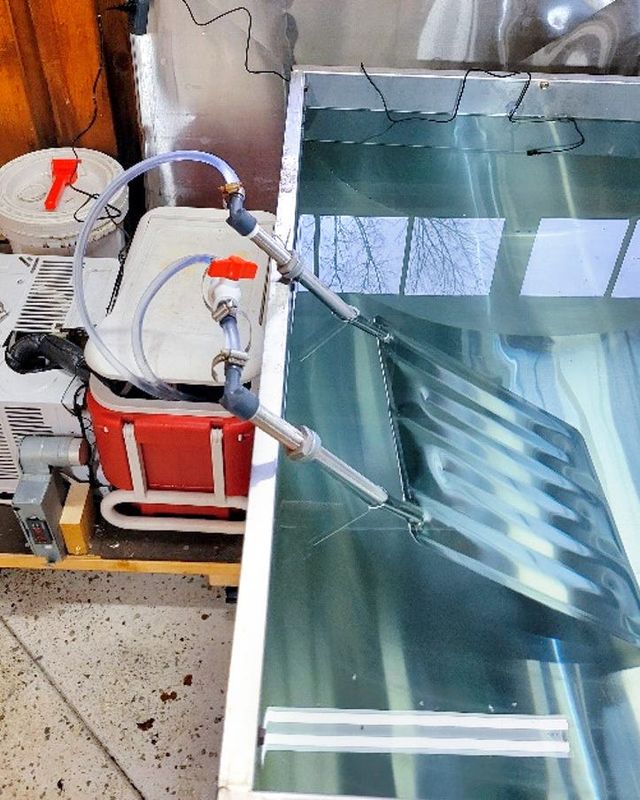
The inaccessibility of this method has led Cornell researchers to develop a new, simple setup — a window air conditioner and a picnic cooler filled with a glycol solution.
The air conditioner is used to cool the glycol solution, which is then pumped through the coils of a heat exchanger, according to Flint. The sap is filtered through the exchanger, and the coils cool the sap to a safer temperature for storage.
“The concept of building a sap chiller in itself is not completely novel to us. There are people who have done it for home brewing or different applications, but applying that to maple is unique,” Flint said.
The total cost can be less than $1,000 for the setup, a striking difference in comparison to the dairy tank system, which can end up costing maple producers up to $80,000.
Now, maple producers across the state have already begun adapting the new glycol method to their operations, keeping up the quality of their sap and decreasing costs as “big temperature swings” continue.
“I think more and more producers will latch onto this now that there’s an affordable option for them,” Flint said, “and I think it will become more standardized throughout the industry.”
This article originally appeared on Binghamton Press & Sun-Bulletin: Cornell develops maple sap chiller to boost New York syrup producers
Reporting by Jillian McCarthy, Binghamton Press & Sun Bulletin / Binghamton Press & Sun-Bulletin
USA TODAY Network via Reuters Connect