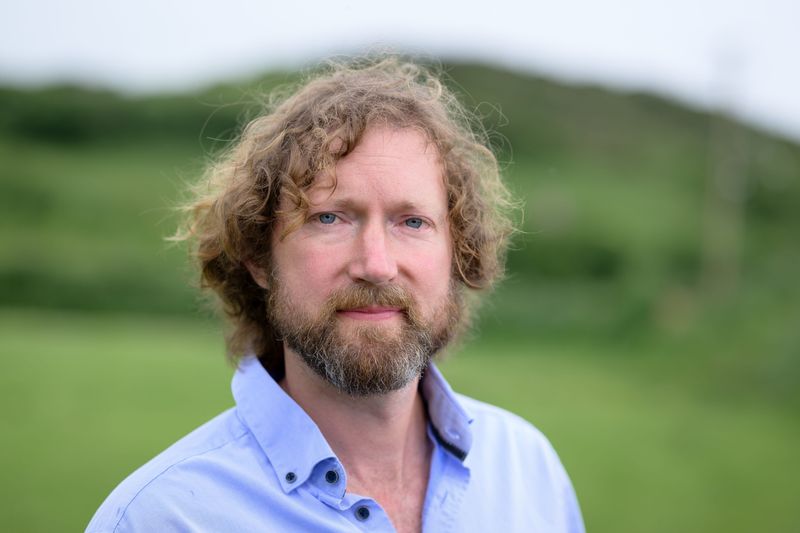
An ocean separates Ryan Dennis from the forests and fields surrounding the old family farm in rural Allegany County.
Dennis lives in West Ireland these days, but a piece of his heart remains in Canaseraga.

It always will.
Dennis grew up on that farm, which sat between the villages of Canaseraga and Arkport for generations. Dennis would have been the fourth to work the land, but he chose a different path. The decision wasn’t entirely his; the economics of running a small dairy farm got evermore challenging with each successive generation.
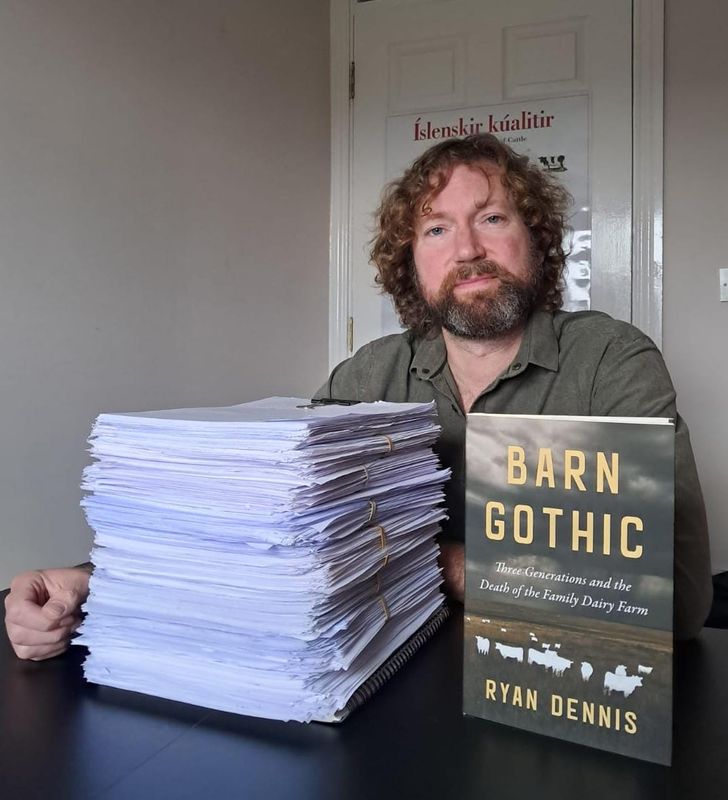
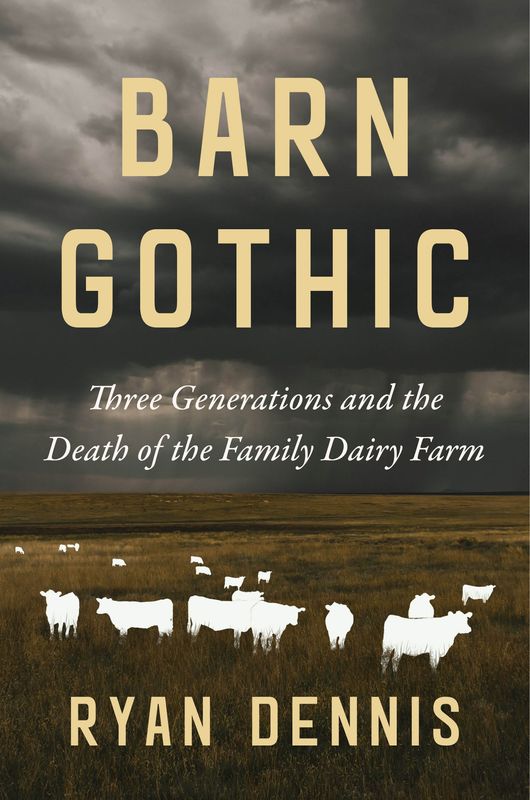
Dennis recently penned a book about his experience and how it relates to a broader trend in New York state and across the U.S. “Barn Gothic: Three Generations and the Death of the Family Dairy Farm” was published by Island Press in late 2025, and Dennis formally launched the book at a well-attended event in Canaseraga.
“I hope the book shows the lived experience of a family trying to keep a farm going under difficult conditions, and then at the same time explore the political conditions that created those circumstances,” Dennis said from Ireland. “It’s mostly a narrative, mostly memoir, but addressed in the context of ag policy in the last 100-plus years.
“The comment I get over and over again from farmers is ‘this is our story.’ I hope the book is filling a gap in sharing what happened to dairy farmers at the turn of the century and beyond. I’m hoping to allow those who don’t have farm experience to understand what it’s like to try to farm these days.”
The Dennis dairy farm milked its last cow in 2015. Ryan’s father carried on with some beef cows until his death in 2021. The last of the family’s herd was then sold, its fields rented out to the one remaining large farm in the area.
It’s a familiar story.
The number of licensed dairy farms in the U.S. dropped from 70,375 in 2003 to 31,657 in 2020, according to USDA data, a decline of more than 55%.
Dennis believes that the loss of family dairy farms at such scale was not inevitable. Corporations have long had an interest in keeping milk prices low and worked toward that end, Dennis said, while “governments of all parties were addicted to cheap food.”
“Agriculture traditionally isn’t an issue that gets presidents elected, but the price of groceries is,” he said. “I think there’s an idea that it’s a symptom of modernity, that because of bigger machinery and better technology farms had to get bigger and there’s no place for a farm of 100-200 cows. I think that’s patently false.
“I hope the book traces why the U.S. didn’t have to lose family farms or at least make it very hard for family farms to survive.”
Dennis takes readers beyond the pastoral setting of the family farm in “Barn Gothic,” detailing challenges and tragedies the family faced over the years. Ryan’s grandfather suffered a head injury in the milkhouse on Sept. 11, 2001 that impacted the family for years. Later, his father was nearly killed in a skid steer accident.
“He had to learn to walk again. At the same time, he’s trying to fight off banks and lawyers to try to keep the farm going,” Dennis recalled.
Dennis makes a point in the book to highlight the family and community members who helped keep the farm going through difficult times. Dennis also offers a glimpse into life beyond the Canaseraga farm. Scenes put the reader in his shoes climbing on a Greyhound bus at the Michael John’s gas station in Hornell and fishing under the Weidrick Road bridge in Wellsville.
“I still feel quite connected to the community. It is the place that shaped me. I still call it home,” Dennis said. “I always miss going back fly fishing or doing a bit of hunting. I miss the wings at Paddy’s. You can’t get good chicken wings anywhere in Europe.”
Dennis tries to get back to the area at least once per year. He will give a reading of “Barn Gothic” on Aug. 9 at Act 4 Books in Perry before attending the World Dairy Expo in Wisconsin.
Dennis settled in Ireland after studying abroad and now teaches creative writing. He also runs a literary journal called “The Milkhouse” that features writing on rural subjects. He previously wrote a novel published in 2021 before tackling the memoir. The writing process took five years.
“It was a tough project because I was dealing with a certain guilt not taking over the farm myself and certain things that happened in our family, and then in the middle of writing it my father passed away,” he said. “The book is about him most of all. It became really hard to sit down and go back to the book and write it. The wheels were really turning slowly.”
Dennis looks back on his youth growing up on the farm in the 90s as a time when the dairy industry had started to change. As an adult, he realized there are precious few U.S. novels written about farming and the experiences of family farms — and how their absence can unravel some of the fabric of their rural communities.
“Farmers knew milk prices were too low, costs were too high, but they didn’t really have a sense of what mechanisms were behind the curtain, why this was happening,” he said. “I don’t think the farm journals were reflecting the reality at the time. They were sponsored by agribusiness and portraying a different reality.
“There was nowhere a farmer could look to see their own experience reflected back at them. I wrote the book to fill both those gaps, to try my best at pinning down all the forces at play that led to where we are and also to hopefully help farmers be seen, heard and have their experiences shared. I think they deserve it.”
This article originally appeared on The Evening Tribune: Canaseraga native authors ‘Barn Gothic’ on plight of family dairy farm
Reporting by Chris Potter, Hornell Evening Tribune / The Evening Tribune
USA TODAY Network via Reuters Connect