Smoke from Canadian wildfires may be affecting more than New Yorkers’ health — it could also be making birds harder to spot.
A new study from the University at Buffalo found that dozens of bird species were less likely to be observed across New York during periods of poor air quality caused by wildfire smoke, including during Canada’s record-setting 2023 wildfire season.

Study examined nearly 99,000 birdwatching reports
Researchers analyzed fine particulate pollution (PM2.5) during New York’s 2021-23 bird breeding seasons and compared those data with nearly 99,000 birdwatching checklists submitted to Cornell University’s eBird database.
The findings, published this month in the journal Biodiversity and Conservation, showed that 40 of the 84 bird species studied were less likely to be observed as wildfire smoke increased.
“Our results show a link between wildfire smoke and the probability of observing particular bird species,” lead author Festus Adegbola, a University at Buffalo doctoral candidate in geography, said in a news release.
The study included the summer of 2023, when smoke from Canadian wildfires repeatedly blanketed New York and drove air pollution to some of the highest levels on record.
Forest songbirds among the most affected
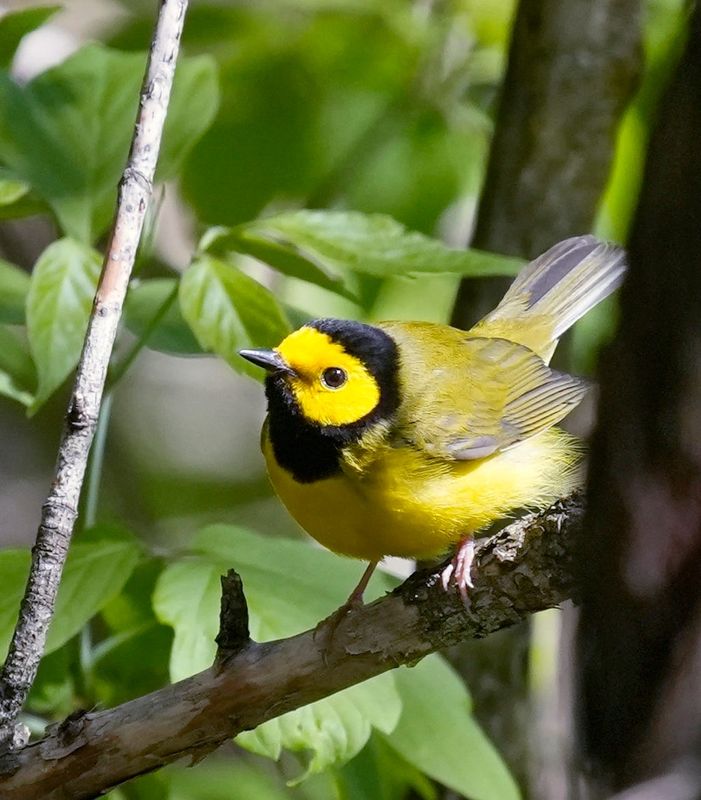
Species that were less likely to be observed included many migratory forest birds, such as warblers, thrushes and vireos.
Researchers said smoky conditions may have changed bird behavior, causing them to sing less, move less frequently or remain hidden in dense tree canopies, making them more difficult for birdwatchers to detect.
The researchers noted that fewer sightings do not necessarily mean bird populations declined.
Some birds showed no change
The study found that 15 species were actually more likely to be observed during smoky conditions, while 29 species showed no significant change.
Researchers said those differences may reflect where birdwatchers chose to observe rather than how the birds responded to smoke.
Why the findings matter
Researchers said understanding how wildfire smoke affects bird detection is important for tracking wildlife populations as climate change contributes to more frequent and intense wildfires.
“Still, as climate change continues to intensify wildfires, it’s crucial we understand how birds will be affected by increased smoke pollution,” co-author Adam Wilson, an associate professor of geography at the University at Buffalo, said in the release.
The researchers said accounting for air quality could improve future biodiversity monitoring and help scientists avoid mistaking temporary changes in bird activity for long-term population declines.
This article originally appeared on Rochester Democrat and Chronicle: Canadian wildfire smoke linked to fewer bird sightings in New York, UB study finds
Reporting by New York Connect Team, USA Today Network / Rochester Democrat and Chronicle
USA TODAY Network via Reuters Connect
By New York Connect Team, USA Today Network | USA TODAY Network