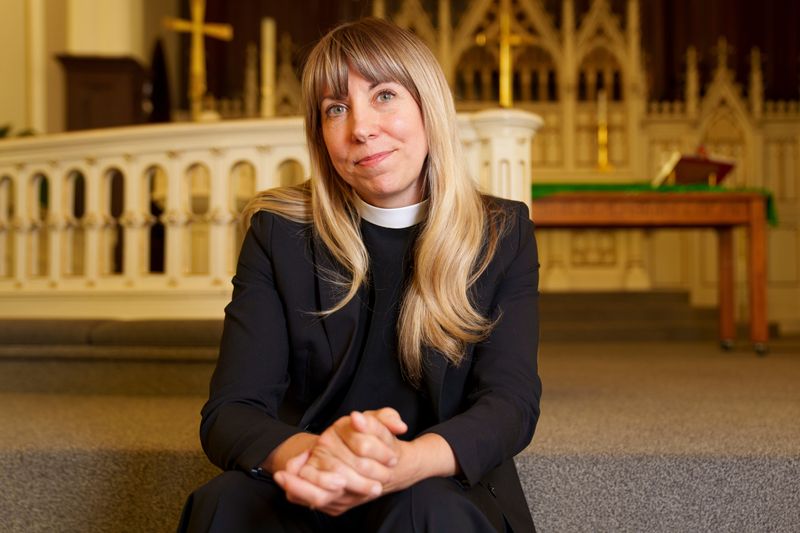
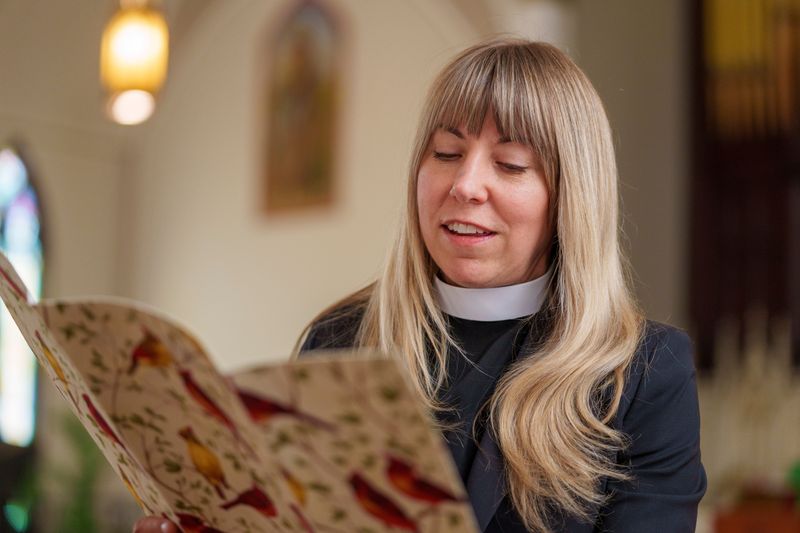
Piano notes filled St. James Lutheran Church as self-described “free-range” pastor Sarah Trone Garriott led congregants in worship.
Wearing a traditional white alb as she stood before the churchgoers in Johnston, the Lutheran minister and state lawmaker came equipped with a Sunday school jingle to impart a lesson straight from the Gospel.

“I’m gonna teach it to you,” she said in an April Sunday service. “So are you ready to sing? So this is your part: Baaaaa.”
Her bleat was met with laughter before several dozen congregants joined in with a chorus of baaaaing before she segued into a lesson about Jesus as the Good Shepherd — and about recognizing a voice worth following.
“The thing about a shepherd is the shepherd takes care of the sheep, the shepherd leads the sheep,” she said. “The shepherd watches over them and protects them. The shepherd makes sure that the sheep have what they need. And it’s really important that the sheep get to know the shepherd’s voice.
“And we know that by being part of a community of faith.”
It was a sermon about faith, not politics. But it parallels the themes Trone Garriott extols on the campaign trail about leadership, public service and trust — and about leaning on community to discern the right path.
As the 48-year-old Democratic state senator from West Des Moines seeks to oust Republican U.S. Rep. Zach Nunn in south-central Iowa’s 3rd Congressional District, she routinely points to her faith as a guide for her approach to governance.
She and a growing cohort of Democratic candidates with clergy backgrounds are seeking to connect with voters in competitive races.
But with the blessings, come the blight. Her faith background has become a political target for Republicans.
In one of the nation’s top battleground matchups in the 2026 midterm elections, Trone Garriott is encountering a steady drumbeat of attacks from the right over how she expresses her faith and what it signals about how she would govern.
Right-wing news articles, Republican social media accounts and GOP critics have focused on approximately two decades of Trone Garriott’s ministry, calling out her support for LGBTQ rights, critiques of Christian nationalism and embrace of religious diversity to undermine the crossover appeal of her pastoral background. They use language casting doubt on her credibility as a Christian, publishing a barrage of GOP posts calling her a “so-called” or “fake” minister.
The Republican National Committee has asked “Is Sarah Trone Garriott a Witch?” calling her the “wicked witch of woke.”
Nunn has joined the critiques.
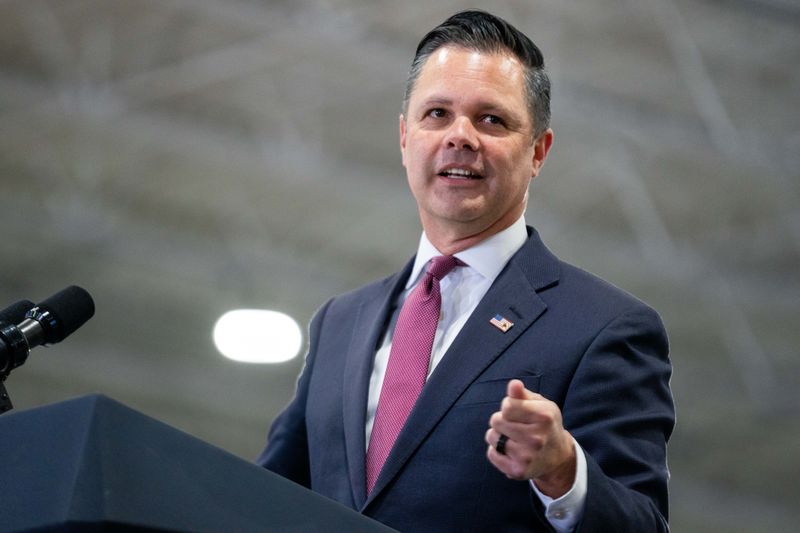
“What I don’t need is I don’t need a lecture from someone who pretends to preach from the pulpit while at the same time doing things like oversee a Satanic wedding or tell Americans that they’re too white and too racist, or wag their finger to say, ‘Hey,’ from the Holy pulpit, ‘most of Iowa is bigoted,’” the Ankeny Republican said in May during a Des Moines campaign rally with Republican Vice President JD Vance.
But Trone Garriott and churchgoers who have known her for years say those attacks don’t square with the way she practices her faith in public life or in the traditional, structured religious settings where they’ve seen her work.
She and other Democrats are asking progressives to reclaim the language of faith while surfacing cultural conflicts over who gets to define religion and American identity.
“Faith is about how we live together,” Trone Garriott said. “So is politics. So, of course, faith should speak to our politics, but it’s wrong to use religion to try to gain power over other people or enrich yourself or hurt other people. And my faith teaches me that, that the true calling of faith is to love my neighbor.”
Republican Party officials say they’re simply calling out Trone Garriott’s “woke” views that fail to reflect Iowa values and don’t align with the swing district’s politics.
“Iowa voters should judge Sarah Trone Garriott the same way every candidate is judged — by her words, actions and values,” said Zach Kraft, a spokesperson for the Republican National Committee. In a statement, he added that her comments and votes have “made it clear she is more comfortable with the woke values of coastal elites than the Iowa values of faith, freedom and family.”
Trone Garriott argues criticism of her faith has intensified because she has taken aim at Nunn’s positions on legislation gutting federal Medicaid spending, protecting sweeping global tariffs and upholding the president’s war powers in Iran.
She contends the attacks repeatedly twist her positions and past remarks in a “desperate attempt to hold on to power.”
Democrats decry the tactic as “pushing despicable lies to attack Sarah’s lifelong, deeply-held Christian faith,” said Katie Smith, spokesperson for the Democratic Congressional Campaign Committee, House Democrats’ campaign arm.
“Iowa voters know you won’t always agree on everything, but Nunn is trying to divide Iowans by dictating how they should practice their faith because he thinks it will score him political points,” Smith said. “It’s a desperate attack from a desperate politician, and one of the many reasons he will lose in November.”
Republicans painting faith-rooted Democrats as ‘radical’
Northeastern Iowa’s 2nd Congressional District nominee Lindsay James, a Presbyterian minister, and Texas U.S. Senate hopeful James Talarico, a Presbyterian studying to become a minister, have faced similar attacks from Republicans that cast their politics as incompatible with their faith.
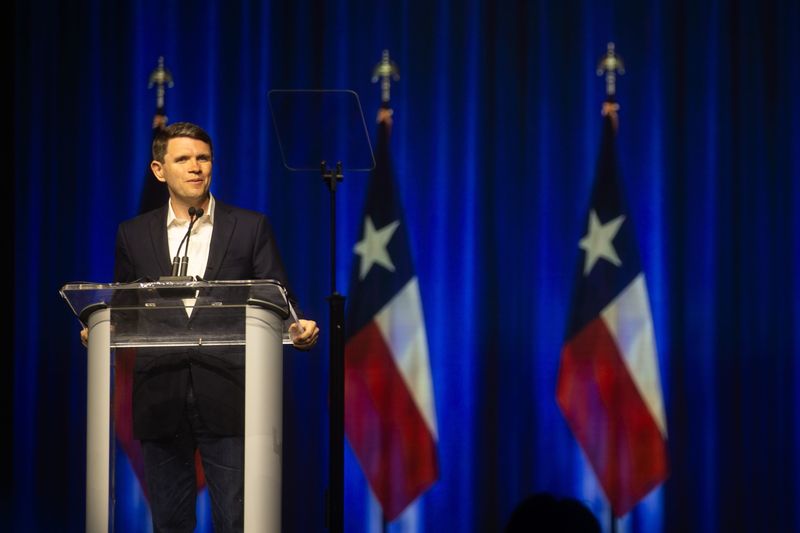
Talarico has been criticized over viral comments about gender and religion, including saying God is “nonbinary” and a podcast quote about being “a Christian who hates Christianity” that has been circulated without the context of his criticism of using religion to justify hate.
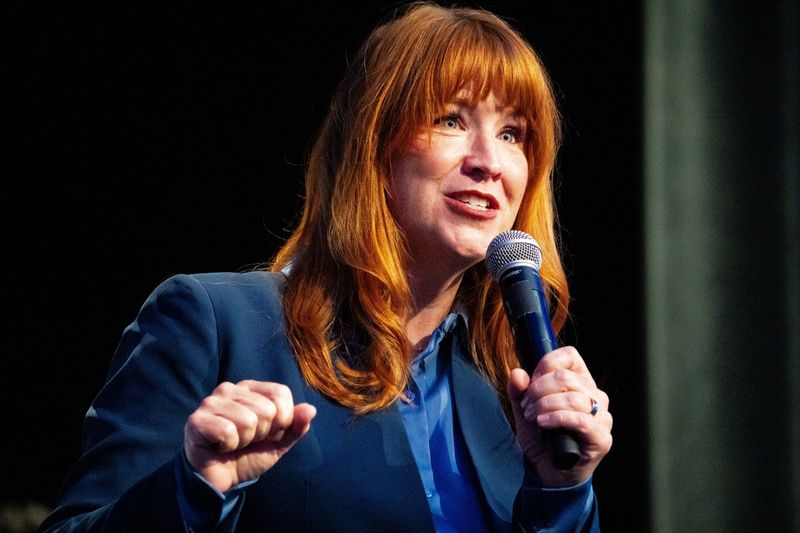
James, meanwhile, has faced attacks centered on her legislative record, with Republicans pointing to her support for LGBTQ rights and gender-affirming care for minors as evidence that her politics are out of step with her religious background.
Talarico and Trone Garriott, in particular, have waded into politically unusual territory for Democrats by pairing their public expressions of faith with criticism of religious nationalism and its influence on American politics.
In 2023, Trone Garriott delivered remarks to a United Methodist congregation in Ames about navigating a rise in Christian nationalism and use of religion to impose masculine power, violence and dominance against others. Critiques have said the remarks equate to characterizing religious conservatives in politics as “uncomfortable” and “threatening.”
An opinion piece from right-wing outlet Daily Wire compared her to Judas, who betrayed Jesus, and calls her “deeply hostile to the faith she claims to represent.”
“A minister who thinks Christianity is an imminent threat is not a pastor; she is a politician in a collar,” conservative columnist Chloe Trapanotto wrote. “Don’t let her do to Iowa’s Third District what Judas did in the garden — betray it with a kiss, wearing the vestments of a friend.”
For hardline Republicans like GOP activist Gary Leffler, Trone Garriott’s comments reinforce that she’s more concerned about diversity, equity and inclusion than Iowa. He was escorted out of a town hall after he questioned her past remarks pointing out Iowa’s predominantly white, male and Christian state Legislature.
In an interview, Leffler told the Register Trone Garriott’s view represents “wokeness” even though she is Christian, saying she was arguing, “We can’t have too many whites, and we can’t have too many men. We can’t have too many Christians.”
Emily Tuttle, spokesperson for the National Republican Congressional Committee, House Republicans’ campaign arm, said Trone Garriott’s words show a “contempt for Iowa.”
“If she dislikes Iowa this much, maybe politics isn’t for her,” Tuttle said.
But Trone Garriott said elected officials should reflect the full diversity of the communities they represent, including in matters of faith.
“I think it’s really important to have elected leaders who are going to push themselves to get out there and spend time with their communities, especially the people who might be different than them, or see the world differently, or be of a different political party,” Trone Garriott said.
How Trone Garriott preaches her faith in her politics
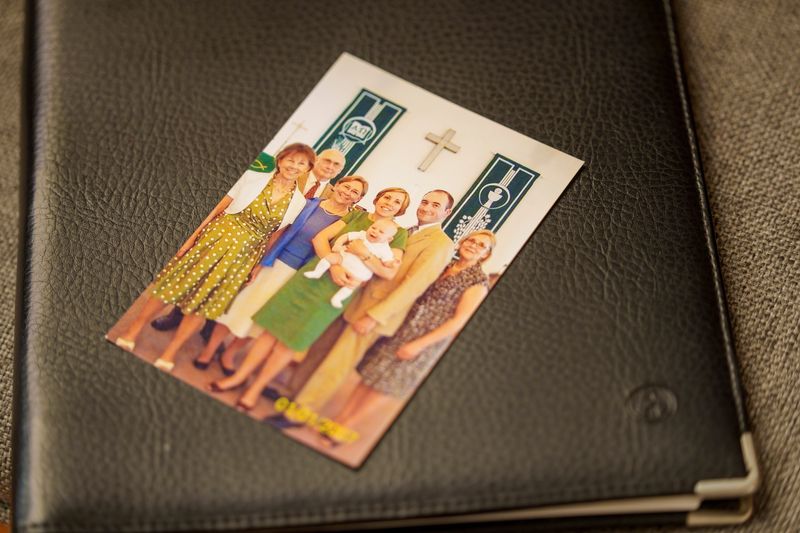
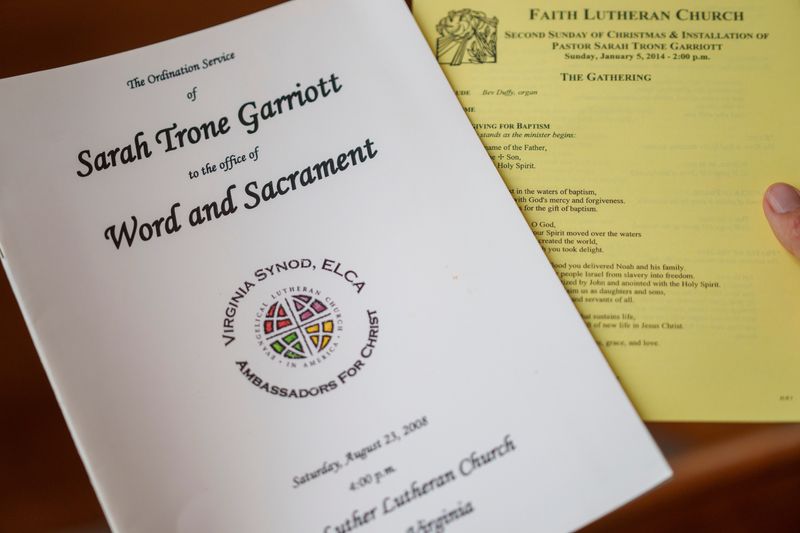
Trone Garriott, an ordained Lutheran minister since 2008, considers her faith and public life to be deeply intertwined and seeks to use faith leadership to help others do the same.
She has criticized the growing influence of conservative evangelical Christianity on policymaking in Iowa. She points to legislation establishing private school scholarships using state money, limiting LGBTQ books and curriculum, and banning transgender women and girls from female sports teams as examples of problematic blending of religion and politics in the Hawkeye State.
“I think religious nationalism, whether it’s Christian or some other religion, is seeking to use religion to have political power and achieve political goals,” Trone Garriott said. “My faith calls me to help my neighbors …
“And so, I think a healthy faith approach to being engaged in the public realm shows respect for those other beliefs and other people and respects their rights, protects their rights, to see the world differently and to believe differently.”
Trone Garriott grew up Lutheran but came to ministry after an AmeriCorps VISTA year in New Mexico, where she worked on domestic violence issues and saw people struggling to reconcile personal crises with their faith communities.
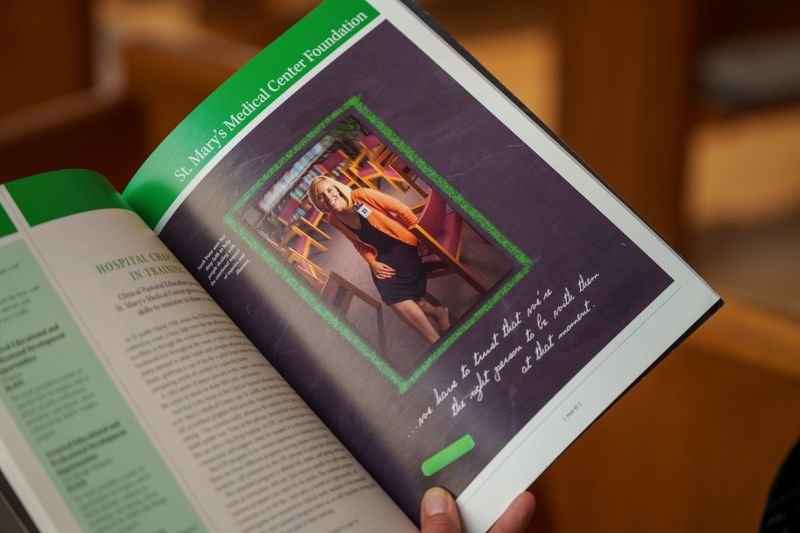
The experience led her to Harvard Divinity School and later chaplaincy work in Philadelphia and Chicago, where she encountered people during some of the most difficult moments of their lives — after car accidents, gunshot wounds and other traumatic events.
That, she said, reinforced the importance of service and relationship-building across differences.
“I really learned from that experience that to serve a community well, you have to show up,” Trone Garriott said. “And that’s how you build trust and those relationships.”
Attacks backfire with some Iowa voters
After her sermon in Johnston, Jerry Wylie, 71, of Urbandale, smiled as he reflected on Trone Garriott’s Biblical bleating to the congregation.
“It’s a way to relate to people, is to provide a little humor and to mesh that with the faith lesson for the day,” Wylie said. “Makes people go home and remember that.”
Wylie, the treasurer on the St. James church council, was a Republican for 45 years until about 2016. He flipped to become a registered Democrat after President Donald Trump told a crowd in Sioux Center that “I could stand in the middle of Fifth Avenue and shoot somebody, and I wouldn’t lose any voters.”
Wylie said he votes for candidates who match his values, regardless of party. He plans to vote for Trone Garriott because she practices what she preaches: being kind, listening and serving others.
“She’s genuine in her faith,” Wylie said. “She’s genuine in her desire to serve others. And, you know, what more would you want, really, for a person representing you than somebody that does that?”
Churchgoers who have long known Trone Garriott in faith settings who spoke with the Register said the Republican attacks don’t jibe with the pastor they know and instead reflect the toxicity and polarization of modern American politics.
John Brown, 71, a registered Republican from Johnston who attends St. James Church, has known Trone Garriott for nearly 15 years, and said he voted twice to send Nunn to Congress since his first bid in 2022.
He has become disenchanted after hearing Nunn’s comments in an interview with conservative radio host Simon Conway criticizing Trone Garriott as “preaching down to Iowans.”
“Frankly, I heard that, and I’m ashamed that I voted for him after hearing that,” Brown said. “It’s like, let’s get to the issues that affect Iowans and not fabricate stuff to try to have the ultimate attack ad.”
Faith mentions push emotional buttons
Political analysts see the Republican strategy as an attempt to shift the conversation from inflation and affordability to to social issues where they believe Democrats are more vulnerable.
Erin Covey, an analyst with the nonpartisan Cook Political Report, said mainline Protestant denominations such as Trone Garriott’s have gone through major schisms in recent decades and become politically defined by progressivism and opposition to conservative teaching on issues such as LGBTQ rights.
“That’s why it’s difficult for someone like Trone Garriott,” Covey said. “The way she has expressed her religious faith has been by, in some ways. talking about or working on issues that are coded as very left-leaning or very socially progressive.”
It’s a potentially risky tactic that could fuel GOP base turnout but alienate voters who are turned off by negative rhetoric, University of Northern Iowa political science professor Donna Hoffman said.
“Both sides of the campaign want to make sure that their supporters get out to vote,” Hoffman said. “And this is one way that you can try to push emotional buttons, in that sense, to get people who might feel not so great about the midterm reelection to come out because it’s an emotional issue for them.”
Laurie Politzer, 52, of Waukee, an anti-Trump Republican who previously had Trone Garriott as a pastor at Faith Lutheran Church, watched on as Vance and Nunn took jabs at Trone Garriott in May. She said the remarks signal “politics is way off the rail at this point.”
She described Trone Garriott’s ministry as rooted in inclusion, welcoming her Jewish husband’s attendance at church, and questioned GOP efforts to define who is a “real Christian.”
“You hear these ads against someone you know and it doesn’t resonate with the person you know, and it just feels so weird and gross,” Politzer said.
In a statement, Nunn’s campaign didn’t directly answer questions on whether he worried that criticism of Trone Garriott’s faith expressions may alienate voters, including those that said it was inappropriate to use rhetoric that questions the legitimacy of a candidate’s faith.
“Zach Nunn has won one of the most competitive districts in the country twice because he works with everyone, Republican and Democrat, to lower costs and keep Iowa communities safe,” a Nunn campaign spokesperson said in a statement, accusing Trone Garriott of routinely participating in party-line “no” votes. “Iowans know the difference.”
Trone Garriott said the attacks are unlikely to stick with voters in a community where she has long woven her faith into her public service.
“I live that out in a way that respects my neighbors who have different beliefs and stand up for the rights of my neighbors who see the world differently than me and really centers the dignity of all of my constituents,” Trone Garriott said. “And that is, I think, a fulfillment of my faith — as I said, that calling to love God and love my neighbor. There is no one who is not my neighbor.”
Marissa Payne covers the Iowa Statehouse and politics for the Register. Reach her by email at mjpayne@registermedia.com. Follow her on X at @marissajpayne.
This article originally appeared on Des Moines Register: Why GOP keeps targeting Iowa Democrat Sarah Trone Garriott’s faith
Reporting by Marissa Payne, Des Moines Register / Des Moines Register
USA TODAY Network via Reuters Connect
By Marissa Payne, Des Moines Register | USA TODAY Network