In its bid to regain a toehold in early days of the presidential nominating calendar, Iowa Democrats are arguing that the national party cannot build sustainable national majorities without reconnecting to rural America.
To help the party accomplish that, Iowa Democrats are touting the flexibility they can provide with their caucuses. Faced with several years of upheaval and experimentation, state Democratic Party leaders say they can create a system that is more inclusive and transparent and eliminates many of the pitfalls that bedeviled it in 2020.

“No other state has the knowledge, infrastructure and history of giving long-shot presidential candidates a fair chance,” party leaders wrote in an application to a panel of the Democratic National Committee that sets the presidential nominating calendar. “When Iowa is included among the early states, we complement and represent an intentionally well-designed balance of our party’s values and priorities.”
Friday, Jan. 16, was the deadline for state parties to submit their applications to the DNC’s Rules and Bylaws Committee, which is once again planning to shake up its presidential nominating calendar ahead of the 2028 elections.
According to The New York Times, a dozen states have submitted applications: Delaware, Georgia, Illinois, Iowa, Michigan, Nevada, New Hampshire, New Mexico, North Carolina, South Carolina, Tennessee and Virginia.
The committee is scheduled to meet Jan. 31 in Puerto Rico to begin considering states’ applications.
Committee leaders previously said they would consider the applications and invite some states to make presentations to the committee before selecting four or five states representing different regions to make up the early voting window.
The calendar order will have tremendous sway over the trajectory of the 2028 primary race. It will dictate where candidates need to compete, how they will tailor their messages and how much money they’ll need to be competitive.
For Iowa, being in the early voting window would mean heightened attention, visits from Democratic presidential candidates and a return to national prominence. But some activists it worry it would come at the cost of local resources at a time when the party needs to be laser-focused on winning elections.
The DNC stripped Iowa of its first-in-the-nation caucus spot and reordered the nominating calendar in 2022 following a disastrous 2020 presidential caucus year when the results were riddled with delays and errors.
Then-President Joe Biden recommended that South Carolina replace Iowa at the front of the line, with New Hampshire, Nevada, Georgia and Michigan to follow.
Iowa: Caucuses play ‘vital role’ in helping Democrats connect to rural voters
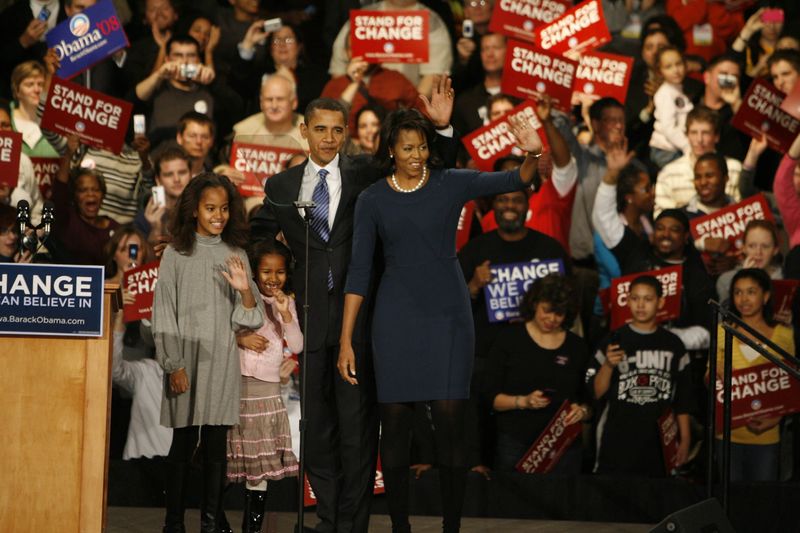
In its application, Iowa Democrats argued that the state offers an inexpensive and accessible playing field, allowing unknown candidates such as Jimmy Carter and Barack Obama to create a name for themselves that helped catapult them to the White House.
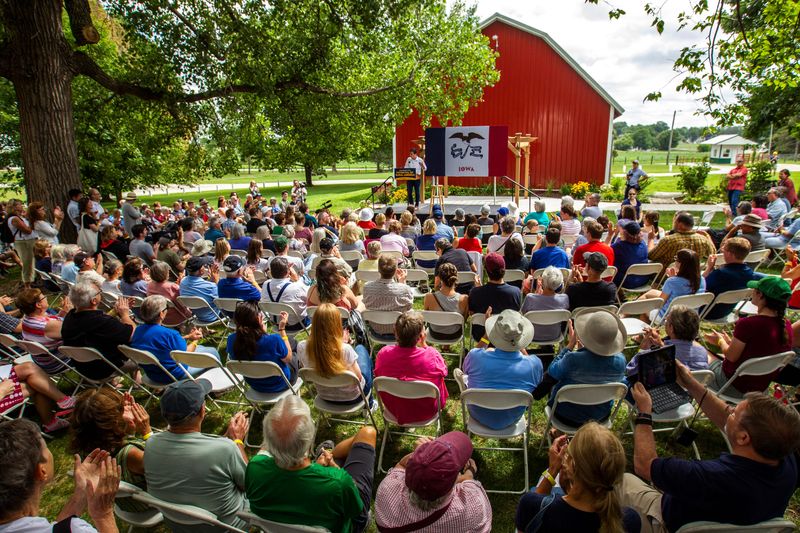
They highlighted Iowa’s cheap media markets and a political infrastructure that can accommodate presidential campaigns’ needs, even in in small towns.
But state leaders urged Democrats to look at the bigger picture and take seriously their push to reconnect with white, working-class voters even as the party looks to broaden its support among other demographics.
Iowa Democrats cite the national party’s vote share among non-college-educated white voters, which slipped from 40% in 2008 to 32% in 2024. At the same time, Democrats lost seats in both the U.S. House and Senate.
“Over the past several election cycles, the Democratic Party has lost rural working class voters across the Midwest,” they wrote. “For the future of our party, our candidates — at all levels — must engage meaningfully with these groups. It is not an exaggeration to say that the Iowa Caucuses have played a vital role in helping Democrats connect with this population.”
Other states making appeals to the committee such as Nevada, South Carolina and New York have said their states contain large rural swaths as well. But Iowa Democrats pushed back on that idea.
“Other states claim to be rural, but in Iowa, we actually are,” they wrote.
They cite population density numbers from the U.S. Census Bureau, which shows Iowa has about 57 people per square mile.
“For comparison, New Hampshire has 157 people per square mile, South Carolina averages 170 people per square mile and Michigan is about 174 people per square mile,” they write. “While Nevada’s population density is comparable to Iowa’s, its topography naturally creates significantly larger population centers compared to our state.”
How will Iowa Democrats caucus in 2028?
Although state party leaders do not specifically outline what they want the caucuses to look like in 2028, they suggest they can be flexible in accommodating the DNC’s goals and said they can offer a “menu” of options as the process continues.
“Although caucuses are mandated by our state law, the statute is not explicitly prescriptive about their conduct and administration,” they wrote.
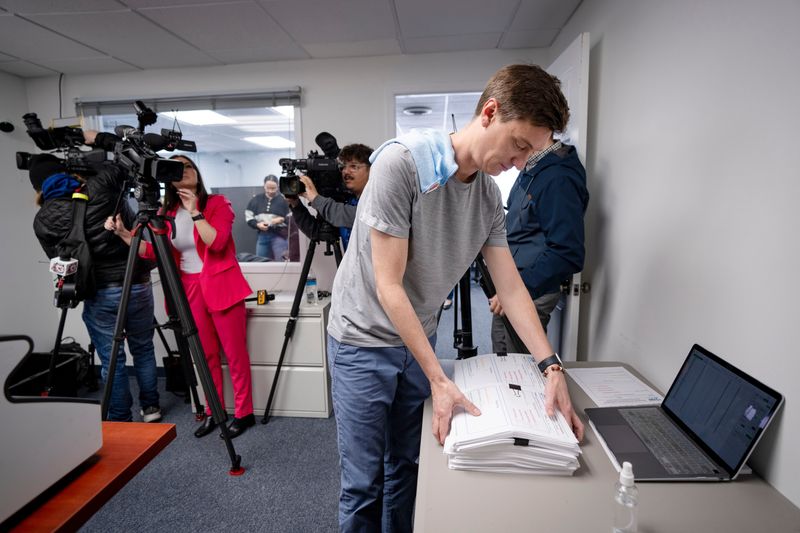
Already, the party has done away with the complex “caucus math” and created a mail-in option, they wrote.
In 2024, the Iowa Democratic Party converted its longstanding in-person caucuses into a fully absentee mail-in event. Iowa Democrats met in person, only to conduct party business the same day Iowa Republicans held their first-in-the-nation caucuses, and they announced the results of their caucus on Super Tuesday in March 2024.
Party leaders said they found success with their mail-in option in 2024 and would like to see some version of absentee participation to continue.
Party leaders also suggest reviving the possibility of using satellite and tele-caucuses, which would let people participate in caucuses from outside the standard precinct locations set up by the party.
Before the 2020 caucuses, the national party required states to increase participation for those who could not be physically present at their nominating events. Iowa proposed a series of telephone caucuses, but their plan was rejected in September 2019 amid cybersecurity concerns.
“Following the 2024 decision of the DNC for delegates to nominate Vice President Kamala Harris electronically, IDP believes this should be explored again as a viable option,” Iowa leaders wrote.
The in-person process could continue much as it has traditionally, with a 15% viability threshold and re-alignment options, they wrote.
Or, it could look more like the Republican process, with printed ballots counted publicly at precinct locations.
“Ideally, the Iowa Caucuses would be the conclusion of an absentee window and then Iowans would also be allowed to express presidential preference at the caucus,” Iowa Democrats wrote. “However, IDP will have some flexibility to work with RBC on the exact date all preferences must be returned and reported.”
And Iowa leaders promise that one thing is already decided for 2028: They will not use any kind of phone application for reporting results after the app designed for the 2020 Iowa Caucuses failed disastrously.
Democrats say the party needs to counter Republicans who are expected to campaign in Iowa in 2028
Iowa Democrats argued that whatever the Rules and Bylaws Committee decides, Republican presidential candidates will be campaigning in Iowa ahead of their party’s caucuses, which are on track to once again be first in the nation.
Those caucuses will once again draw international media attention, which Iowa Democrats argue will again go unanswered by the national Democratic Party.
They said that in 2024, Democrats spent far less than Republicans in Iowa, and “a near complete blackout from an incumbent presidential campaign in Iowa forced all Democrats to play catch up.”
They said it also adds fuel to the national narrative that Democrats don’t care about rural America.
“The perception of Democrats ‘abandoning’ rural America and Iowa continues to be a difficult narrative to overcome, especially when significant Republican funding continues to funnel into our state,” they wrote.
What happens if Iowa’s application is rejected?
Iowa goes into this process an underdog.
Iowa’s longtime Rules and Bylaws Committee member Scott Brennan was not reappointed to serve on the panel, while New Hampshire, Nevada and South Carolina each gained a representative — a clear signal of the state’s waning influence.
And although some committee members have said they are open to hearing from Iowa Democrats, others have expressed more reluctance.
So, what happens if Iowa’s application is rejected?
According to a recent survey conducted by the Iowa Democratic Party, just more than half of survey respondents — 51% — said Iowa should work with the DNC, even if it means Iowa is not in the early nominating window.
The rest said Iowa should flout the DNC in some capacity, with 34% saying Iowa should work within the DNC process but ignore the outcome if Iowa’s plan is not accepted.
And 14% said Iowa should give no consideration to the DNC process and do what it wants.
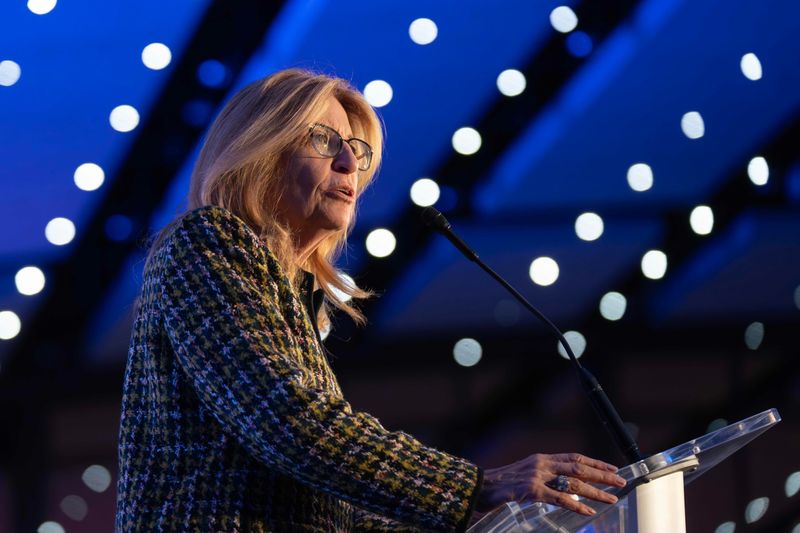
Iowa Democratic Party Chair Rita Hart has repeatedly said that “all options are on the table for Iowa Democrats in 2028.”
Brianne Pfannenstiel is the chief politics reporter for the Des Moines Register. She writes about campaigns, elections and the Iowa Caucuses. Reach her at bpfann@dmreg.com or 515-284-8244. Follow her on X at @brianneDMR.
This article originally appeared on Des Moines Register: What’s in Iowa Democrats’ bid to make caucuses first in nation again?
Reporting by Brianne Pfannenstiel, Des Moines Register / Des Moines Register
USA TODAY Network via Reuters Connect