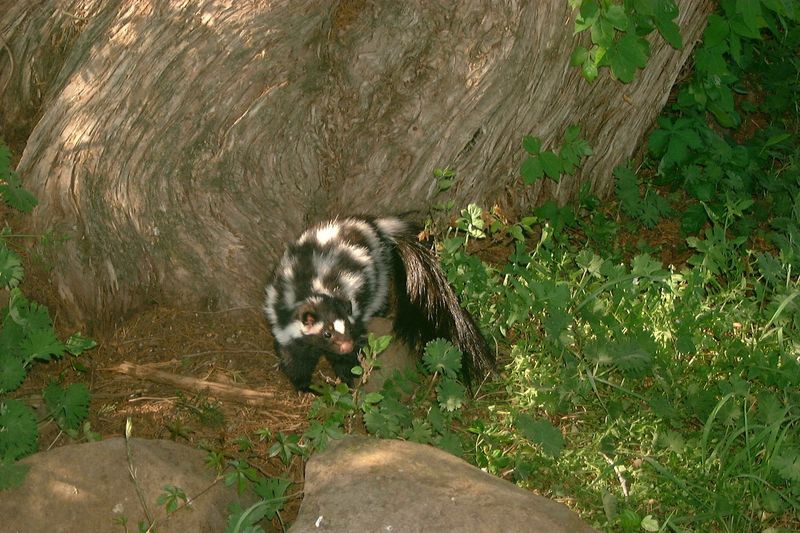
The U.S. Fish and Wildlife Service is reconsidering whether a specific type of skunk needs to be listed under the Endangered Species Act. It stinks, but in a good way.
The plains spotted skunk, or Spilogale interrupta, is already protected under Iowa state law, but that’s just one state in which the species can be found. These skunks also live in Arkansas, Kansas, Minnesota, Missouri, Nebraska, North Dakota, Oklahoma, South Dakota, Texas and Wyoming.

What is the plains spotted skunk?
The spotted skunks are known for doing handstands with their tails blown out like a Christmas tree. It’s an exaggerated self-defense mechanism, according to the Smithsonian magazine. It has suffered dramatic declines in its population over the last century.
The plains spotted skunk was previously recognized as a subspecies of the eastern spotted skunk, according to the FWS, but recent molecular research supports the position that the plains spotted skunk is a distinct species.
With that new species designation, the plains spotted skunk has a better shot at receiving broader national protections, the Smithsonian said.
Why are plains spotted skunks at risk of being endangered?
The service initially found that the species did not warrant an “endangered” listing in 2023. At the time, range-wide demographic information, species distribution across the Great Plains and population trends were not available.
But now, in 2026, “new data suggest the species may have a reduced distribution or occur at very low numbers in the Great Plains,” according to a news release. Their numbers are especially low in Kansas and Nebraska.
Petitioners also presented information suggesting that isolated extreme weather conditions, climate change, and the trends in land conversion from grasslands to large-scale agriculture may be threats to the plains spotted skunk.
The service will continue to monitor the plains spotted skunk over the next 12 months to determine if the listing is indeed warranted.
It is accepting late comments its their docket filing for the skunk for anyone who has scientific and commercial data that can affect its status. A detailed description and contact information for this finding will be available at regulations.gov under docket number FWS-R3-ES-2025-0605.
Other species up for consideration include the Cascade red fox, diamondback terrapin, Goose Lake lamprey, Goose Lake sucker, Goose Lake tui chub and loopy five firefly.
Lucia Cheng is a service and trending reporter at the Des Moines Register. Contact her at lcheng@gannett.com or 515-284-8132.
This article originally appeared on Des Moines Register: These Iowa skunks known for their handstands may be endangered
Reporting by Lucia Cheng, Des Moines Register / Des Moines Register
USA TODAY Network via Reuters Connect
By Lucia Cheng, Des Moines Register | USA TODAY Network