Corteva Agriscience’s decision to split its seed business, centered in Johnston, from its crop protection line is sparking several questions. Among them: SpinCo? Really?
Corteva said Oct. 1 it would refer to the new seed business as SpinCo, with the chemical operation to be called New Corteva. The names drew some heckling online, but industry experts say they’re likely just placeholders for the Indianapolis-based Corteva’s newly created businesses until permanent names are chosen.

Corteva says splitting the two operations will make them more attractive to investors as pure-play seed and crop protection companies and accelerate their opportunities for growth. Corteva expects to complete the separation by the second half of 2026.
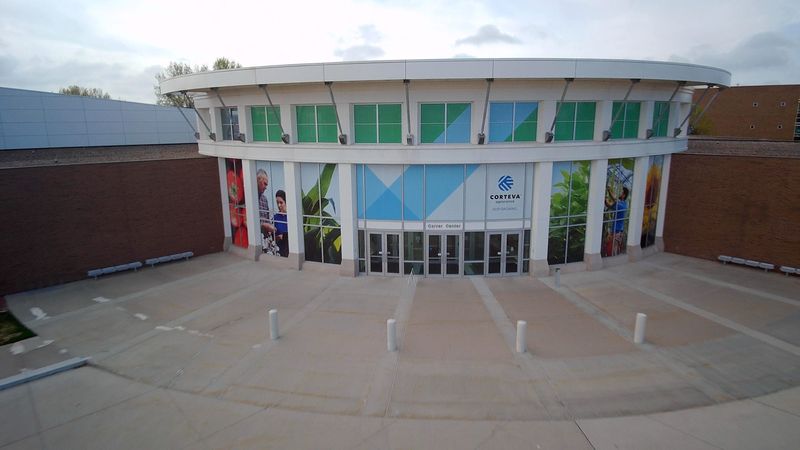
With Corteva’s seed operation housed mainly in Johnston, home to its Pioneer seed brand for nearly a century, Iowans have a few ideas about what the company’s name should be.
“I think Pioneer 2.0 has a nice ring to it,” said Johnston Mayor Paula Dierenfeld, who plans to work with local, state and federal officials to return the seed company’s headquarters in the north metro city.
Corteva, a major Iowa employer with about 3,000 workers in Johnston and across the state, has been planning Pioneer’s 100th anniversary celebration next year.
Pioneer name remains powerful among farmers
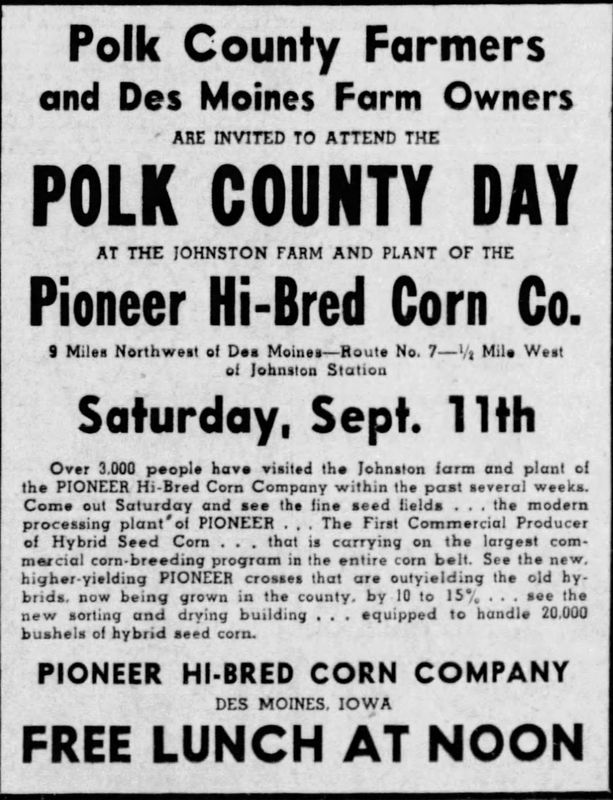
Henry A. Wallace, who went on to serve as U.S. vice president and agriculture secretary, founded Hi-Bred Corn Co. in Des Moines in 1926, using 40 acres near Johnston to grow the company’s revolutionary hybrid seed. It became Pioneer Hi-Bred in 1935.
Pioneer was a standalone company until 1999, when the chemical giant DuPont purchased it. In 2017, DuPont finalized its merger with Dow, creating DowDuPont. The combined company spun agricultural company Corteva Agriscience in 2019.
Since then, Pioneer has been a leading Corteva seed brand.
DowDuPont said in 2018 that “Corteva” was derived from a combination of words meaning “heart” and “nature” and represented the new business’s “deep connections and dedication to generations of farmers.”
Aaron Lehman, the Iowa Farmers Union board president, said he hopes the seed company’s new name reflects Pioneer’s Iowa roots and ties to family farmers.
“We have a lot of pride in Iowa’s place in the seed industry,” said Lehman, who farms near Alleman. “It’s historic and has transformed agriculture around the world.”
Pioneer is widely recognized and “deeply ingrained in the countryside,” he added. “Farmers still understand the power of that name and logo.”
Priyanka Jayashankar, an Iowa State University adjunct associate professor of marketing, said she expects the new seed company will consider U.S. farmers’ ties to Pioneer when looking for a new name.
Her research shows Midwest farmers value innovation, but they’re also loyal to companies their families have relied on for generations. “Farmers are smart and innovative. But they’re also traditional… when it comes to certain legacy brands,” she said.
They may want a tractor from the same company that made the one “Grandpa Joe drove,” but it also must have cutting-edge technology, she said.
Corteva split worries farmer. ‘We don’t want even fewer players’
Lehman said U.S. farmers, who have been beset by low commodity prices and high costs to grow their crops, will closely watch the Corteva split. Corteva and competitor Bayer AG provide about 70% of the seed purchased by U.S. corn and soybean growers, U.S. Department of Agriculture data show.
“We want to ensure the farmer focus is maintained,” said Lehman, adding that he’s also concerned that the independent seed and chemical companies could more easily be acquired by other conglomerates.
That would worsen consolidation within the agricultural industry — from livestock and crop production to equipment manufacturing, he said. “We don’t want even fewer players,” he said.
Critics of the separation have expressed concern that it will weaken the seed and chemical collaboration that resulted in products like Corteva’s Enlist line, which pairs a weed-killing herbicide with crop seeds bioengineered to resist its effects.
Corteva CEO Chuck Magro said Wednesday that integrating seed and chemical operations worked well in creating the Enlist brand. But, he added, “the future looks different.”
“We believe tomorrow’s systems will be open or multi-sourced licensing agreements with multiple modes of action,” he said. “Farmers will need these systems due to rapidly growing crop resistance and environmental challenges — insects, weeds, disease and so on — presented by changing weather patterns.
“In other words, integration is no longer a prerequisite or a predictor of success,” he said. “The facts on the ground have changed such that we believe it may actually constrain long-term value creation.”
Donnelle Eller covers agriculture, the environment and energy for the Register. Reach her at deller@registermedia.com.
This article originally appeared on Des Moines Register: SpinCo? Iowans say Corteva should consider ‘Pioneer’ when naming a new seed business
Reporting by Donnelle Eller, Des Moines Register / Des Moines Register
USA TODAY Network via Reuters Connect