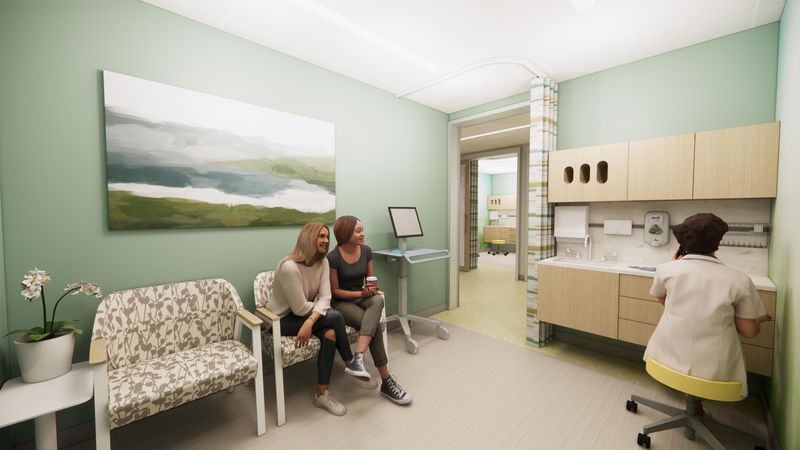
To great acclaim, Gov. Kim Reynolds on May 19 signed a bill for a stand-alone center, Safe Center, to provide emergency sexual-assault treatment.
Iowa is back-sliding in its approach to sexual assault. The facility is opening in Des Moines to provide emergency medical services to survivors of sexual assault. Safe Center in Des Moines is hailed as an innovation, something previously unavailable. This is not true. The facility is also not the answer to for most survivors of sexual assault, who do not seek such services. In fiscal year 2025, 5,118 sexual assault survivors sought services from sexual assault programs in Iowa. There were, however, 764 new “files” or claims for payment for emergency services.

While a stand-alone facility in one city may be new, and of benefit to some survivors, not only is much of what they offer currently available, the state also pays for those services. Since 1979 the state of Iowa has been paying for forensic sexual assault exams. The state pays for the services of the person who performs the exam, a fee for the hospital, and medications. Nothing is charged to the person who has been victimized; in fact, state law prohibits such a charge.
About 80% of sexual assault survivors know the person who harmed them. Many, most, do not report the assault to anyone until long after, with one study showing the average age of disclosure as 52, and others showing significant delays.
Wrestling with the fact that a family member, a friend, a neighbor, a classmate, or someone you trusted assaulted you, is overwhelming, frightening and difficult to understand. We all know of survivors who, years later, tell of assaults by public figures, clergy, Boy Scouts, schoolteachers, and more. Survivors in these instances seldom need emergency sexual assault services.
Over its 40 years of statewide and national efforts, the Iowa Coalition Against Sexual Assault came to learn what was most helpful to survivors. Community resources provided by trusted members of their own ethnic or religious community, healing programs that address health and well-being, groups of others similarly harmed, local sexual assault programs, and counselors are places most survivors go to for assistance. Healing resources can creatively use running, yoga, sewing and gardening circles, building, or many other activities that engage survivors and allow them a space to discuss trauma.
Other survivors do not want to engage with a facility that promotes its connection to law enforcement, for a number of reasons. Survivors may not intend to make a report, they may have had a negative experience with law enforcement, their community or group in another country make have had negative experiences. Competent and caring law enforcement officers still cannot overcome these experiences of survivors.
Long-term trauma can have significant effects on victims’ physical, emotional, and mental health. The ability to obtain stable housing and income, or to address substance misuse can be affected by trauma. Survivors need community resources to guide them to and help address the specific issues they face.
Public safety and long-term community health requires comprehensive, community-based services centered on healing and recovery. A facility such as Safe Center, although well-meaning and of great benefit to some survivors, is nevertheless one that falls far short of optimal service standards.
Elizabeth Barnhill retired in 2026 after 33 years as executive director of the Iowa Coalition Against Sexual Assault. Mira Yusef has been executive director of Monsoon Asians and Pacific Islanders in Solidarity for 19 years.
This article originally appeared on Des Moines Register: Iowa sexual assault victims need more than the Safe Center | Opinion
Reporting by Elizabeth Barnhill and Mira Yusef, Guest columnists / Des Moines Register
USA TODAY Network via Reuters Connect