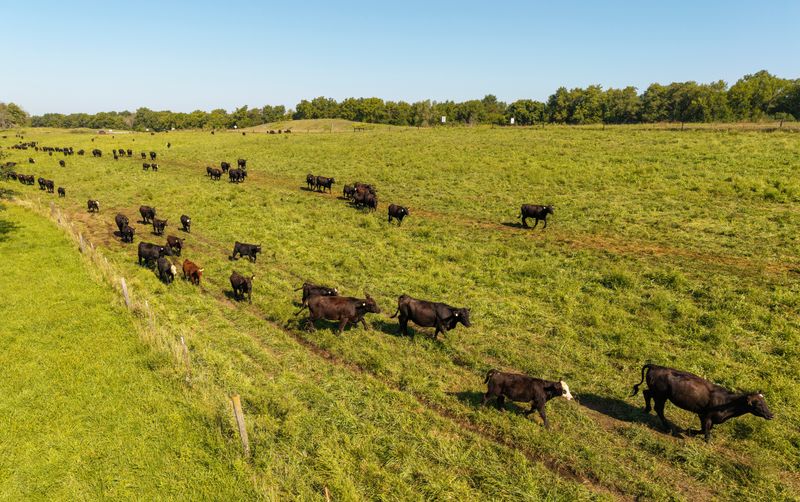
Iowa’s economy leans heavily on farming, not just crops but agriculture’s ties to giant employers like equipment manufacturers Deere & Co. and Kinze Manufacturing, seed companies Corteva Agriscience and Monsanto Co. and meatpackers like Tyson, JBS and Smithfield foods.
The state is the nation’s second-largest agricultural producer after California, and is a top U.S. producer of corn, soybeans, pork, eggs, turkey, beef and milk.

And while Iowa’s economy is more diversified today than four decades ago, when the 1980s Farm Crisis hit, an old saying still resonates: “When farming in Iowa sneezes, the economy catches a cold.”
Here’s a look in graphics at the 1980s Farm Crisis’s impact on the state’s economy and its performance since:
The 1980s Farm Crisis was the only time since 1949 when the state’s farmers posted a combined annual loss.
The number of Iowa farm operations has mostly declined over the past 44 years, but the state saw a sharp dip during the Farm Crisis.
The Farm Crisis marks the only time in 110 years that Iowa has lost population.
Iowa farmland values mostly held steady last year, despite growers facing a third year of losses. The biggest downturns have been during the Farm Crisis and the mid 2010s.
Donnelle Eller covers agriculture, the environment and energy for the Register. Reach her at deller@registermedia.com.
This article originally appeared on Des Moines Register: See in graphics how the 1980s Farm Crisis impacted the Iowa economy
Reporting by Tim Webber and Donnelle Eller, Des Moines Register / Des Moines Register
USA TODAY Network via Reuters Connect