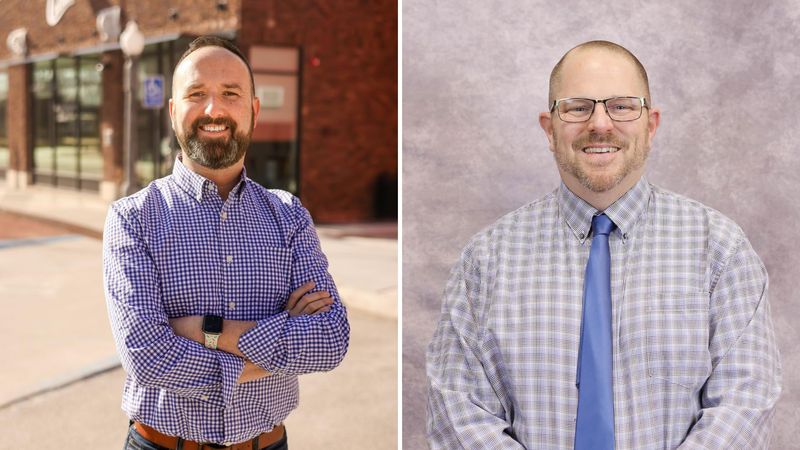
Two candidates are running to replace retiring Rep. Jon Dunwell in a Jasper County-based Iowa House seat.
Iowa House District 38 in includes Newton, Colfax, Mingo, Baxter, Kellogg and Lynnville.

Democrat Brad Magg is unopposed in the Democratic primary and Republican Matthew Oleson is unopposed in the Republican primary.
To help voters, the Des Moines Register sent questions to all federal and Des Moines area legislative candidates running for political office this year. Their answers have been lightly edited for length and clarity.
Iowa’s primary election is June 2.
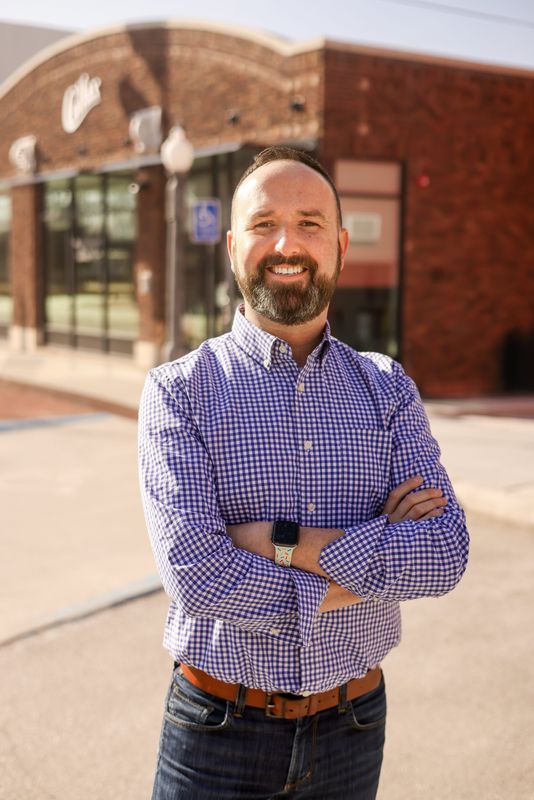
Who is Brad Magg?
Age: 39
Political party: Democratic Party
Current town of residence: Colfax
Occupation: Owner, Goldie’s Ice Cream Shoppe in Prairie City and Spring City Pharmacy in Colfax
Education: Associate’s degree in culinary arts, Iowa Culinary Institute at DMACC
Political experience: Five-term Colfax City Council member, 2009-present. Colfax Main Street, founding board member 18 plus years. United Way of Jasper County, board member, 12 years. Jasper County Judicial Nomination Commission
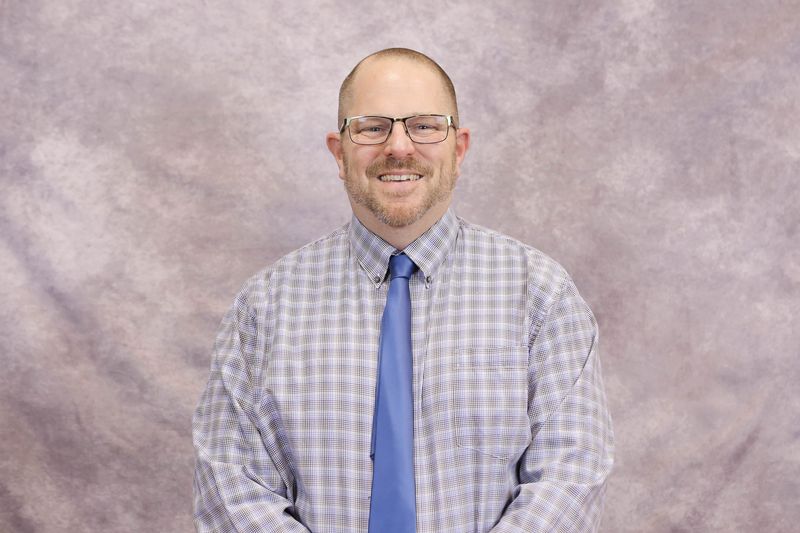
Who is Matthew Oleson?
Age: 53
Political party: Republican Party
Current town of residence: Grinnell
Occupation: Teacher at Newton Community School District
Education: Master’s, Viterbo University
Political experience: I’ve been active in my local community and party for many years, serving as a state delegate and volunteering whenever I can.
What would be your top issue if elected?
Magg: Iowa is a hollowed-out shell of what it was in my youth. Restoring many of our once best-of-the-nation amenities like education, health care, affordability, etc., that make life better for all of us, not just for those of a certain class or religion, is my biggest passion and reason for running.
Oleson: My top priority will be to strengthen Iowa’s education system by cutting through the red tape and eliminating wasteful bureaucracy. By streamlining processes and removing unnecessary layers of administration, we can free up more resources to support teachers and students directly. This will allow our schools to focus on what truly matters: providing a high-quality education that prepares our children for the future.
What policies would you support to improve Iowa’s education system?
Magg: Providing our public schools with the resources they need to educate our children successfully is crucial. Years of budget cuts or funding increases far below the rate of inflation is unacceptable. That, combined with burdensome and expensive regulations that apply to some schools but not others, has created a rigged system that must end. The dismantling of the AEA system has caused irreparable harm to Iowa’s education system, and we must immediately begin rebuilding it.
Oleson: To improve Iowa’s education system, we must give teachers the freedom to teach without over regulation. Set high expectations, hold students accountable and stop social promotion. Let’s empower teachers and focus on real learning by returning to the fundamentals that made Iowa No. 1 in education.
Do you support Iowa’s recent tax policy changes, including lowering income taxes, and what additional tax law changes would you support?
Magg: I fully support putting more money back into Iowans’ pockets and reducing the cost of living overall. However, doing so at the expense of those who are already struggling is wrong. As a state, we need to be competitive to attract and retain population and industries that create jobs and improve quality of life. But offering tax incentives to out-of-state billionaires who must have a presence here to provide their services, because they’ve already destroyed our locally owned business community, is insane.
Oleson: I support lowering income taxes, as they reduce the burden on families and encourage economic growth. Lower taxes create an environment where Iowans can thrive and businesses can grow. Moving forward, we must address lowering property taxes to ensure that Iowa remains an affordable and attractive place for families to live and for our children to stay and build their futures. It’s important we keep taxes low and make sure Iowa is a state where hard work is rewarded and opportunities are abundant.
What actions would you support to address Iowa’s high cancer rates?
Magg: Water quality monitoring and educating those with the power to make a difference are both a must. Pointing blame and making accusations does not accomplish anything. We must work together, across the aisle and across the state, to find reasonable solutions that don’t jeopardize one person or industry’s livelihood and can be put into practice by people at all levels. We also need to publicly condemn and possibly implement consequences for elected officials who give speeches filled with blatant lies like “eating spinach is the cause of high cancer rates in Iowa,” from the Capitol chambers.
Oleson: We need a comprehensive approach that looks at all contributing factors, including air and water quality, as well as the food we consume. This is a complex, long-term issue that will require significant research and funding. It’s crucial that those leading these studies are free from financial conflicts of interest to ensure unbiased, effective solutions. We must invest in this research, not just for today, but to protect our children, our future and the health of Iowa for generations to come.
When do you believe it is appropriate to use eminent domain, and should it be used to build carbon capture pipelines?
Magg: Eminent domain should be used when a project will improve the quality of life for Iowans. Example, the installation of natural gas pipelines brought significant economic development and increased access to lower-cost energy in the state, as well as electric power lines, phone, and fiber-optic. However, when massive utility projects don’t offer this kind of widespread benefit with minimal harm, it should be decided by a larger representation of our state. Perhaps bring it to a public vote, or require them to meet similar standards that communities must meet when annexing land.
Oleson: Eminent domain should never be used for private gain, period. While it will still be necessary for public projects like power lines and roads, it should never be applied to serve private interests, especially in cases like carbon capture pipelines, which benefit only private companies.
How would you remedy Iowa’s budget deficits driven by lost revenue? Are there certain services you would prioritize for cuts?
Magg: 1) Take advantage of federal funds, rather than denying them. 2) Funds given to private entities need to have oversight to ensure they have value. Beyond this there isn’t much left to be cut from our disparaging level of services. We should consider providing assistance programs in stages, such as Medicaid. Example, when a family makes $5 more than allowed income limits, they lose their benefits completely. Lets allow them to contribute to their benefits and build themselves up. Also, look at revenues neighboring states are capturing from Iowans and work to create policies so that we benefit.
Oleson: Iowa’s budget deficits are a result of overspending, not a lack of revenue. We need to go back to the drawing board with zero-based budgeting to ensure every dollar is spent efficiently. We should tackle the bloated bureaucracy and excessive administrative salaries that drain resources from essential services. By prioritizing what truly benefits Iowans and cutting unnecessary spending, we can balance the budget without compromising critical services.
This article originally appeared on Des Moines Register: Meet the candidates running for Jasper County’s Iowa House District 38
Reporting by Stephen Gruber-Miller, Des Moines Register / Des Moines Register
USA TODAY Network via Reuters Connect