This time, tenants at Parkside East Apartments believed they were safe.
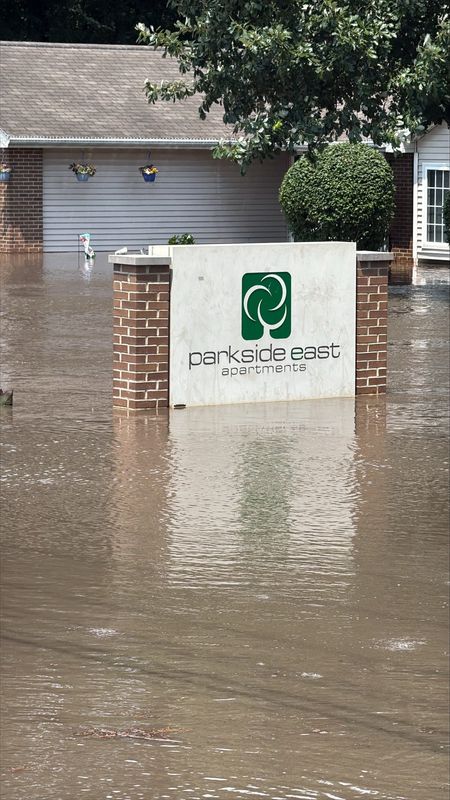
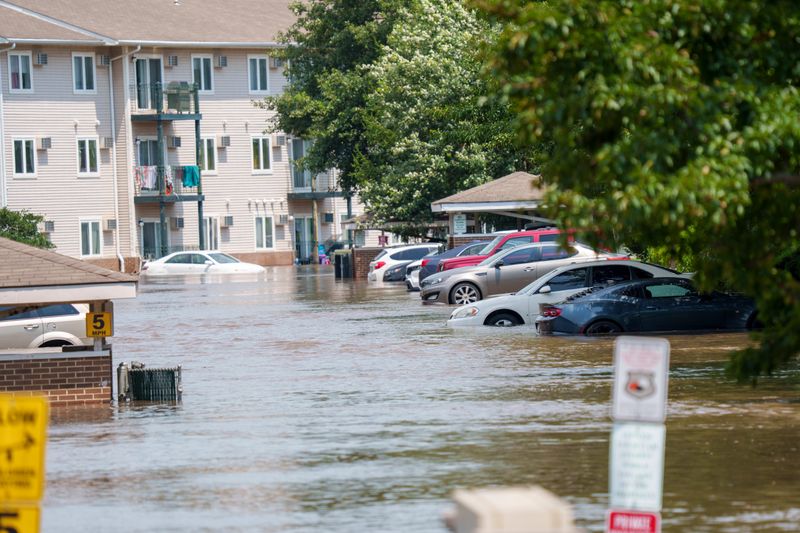
Rainwater had rushed into the rent-capped Des Moines complex in 2010. Water submerged units again eight years later, forcing some of the city’s poorest residents to bounce between hotels and makeshift shelters in public schools until repairs were made. Water, mildew and heat ruined their clothes, cars, furniture and family heirlooms. They scrambled and saved for years to rebuild their lives.

But after the 2018 floods, which damaged about 1,800 Des Moines metro homes, local government leaders allocated tens of millions of dollars to protect the community from neighboring Fourmile Creek. The federal government kicked in millions more.
At Parkside East, tenants signed waivers acknowledging that they were moving into a floodplain with at least a 1% chance each year of seeing water enter their homes. But they said managers told them the government had fixed the problems in the area.
“We thought it was going to be better,” acknowledged Conlin Properties CEO JB Conlin, whose company owns Parkside East. “But it was not.”
Now, a July 3 flood has forced the complex to close and repair some units for the third time in 16 years, leaving renters scrambling to find temporary housing and replace possessions. Conlin Properties and government leaders must once again ask themselves if they can protect Parkside East.
“That apartment complex, that’s awful,” Polk County Conservation Executive Director Rich Leopold said. “We need to do something about that.”
But what? Generally, city and county leaders have tried to solve the problem of flooding along Fourmile Creek by removing structures. They bought out homes and businesses in the most vulnerable areas. They tore down the buildings, removed the roads and extracted old pipes. They turned neighborhood blocks into wetlands, hoping to contain the water.
Some current and former tenants believe the city should do the same at Parkside East, located about 120 feet from the creek. But solving the problem of the apartments is complicated.
The federal government gave Conlin tax credits to build the complex and offer rent-capped housing to low-income residents. Legally, he doesn’t believe he can accept a buyout from the city.
Even if the federal government allowed Conlin to sell the property, a buyout would create a different headache for Des Moines leaders. Since the start of the COVID-19 pandemic six years ago, inflation has pushed up the cost to own or rent a home. The metro’s homeless population has increased, in turn. Removing an apartment complex serving the at-risk population would subtract from a supply of affordable housing for the area’s poorest residents that was inadequate even before the pandemic.
“Keeping people out of the flood zone, I think, is a wonderful goal,” Conlin said. “In a perfect world, if we all had a magic wand, we could wave it. It just doesn’t work like that.”
Des Moines City Manager Scott Sanders said in a statement that his office has never offered a buyout to Parkside East and “does not currently have plans to purchase this property.” The city has instead used its buyout money to take over smaller properties: houses and duplexes.
Even so, floodplain building codes that city leaders adopted in 2020 may present a challenge for Conlin Properties.
If the cost to repair Parkside East’s flood damage passes a certain threshold, according to the code, the owner may have to elevate the buildings to keep them above the danger zone. Conlin said he investigated such a project after the 2018 floods and concluded that doing so would be “catastrophic.” The cost was too high, given the limit on how much he can charge in rent.
If the city requires him to raise the buildings at the 144-unit complex, he said, “I have now permanently displaced all these people.”
Apartment was not in a FEMA flood zone until after 2010, 2018 floods
The Parkside East buildings are simple, brick-and-shingle structures, separated from the creek by a small stand of pine trees.
Located in the northeastern part of the city in the 3500 block of E Douglas Ave., the complex was not in a flood zone when Conlin Properties built the units from 2001 to 2005. In part, that may have been because government leaders were not adequately keeping track of floods.
At the time, the Federal Emergency Management Agency had not updated the Fourmile Creek flood map since the 1980s. Accurate projections about where flood waters will move shift over the years, as new neighborhoods and other developments change water flow patterns. At the same time, rising temperatures bring more frequent intense rainfall. That in turn makes rivers and creeks rise higher and their water flow faster and farther.
To keep up with those changes, FEMA officials were supposed to allocate revenue from the agency’s flood insurance program. But the program didn’t produce enough money to fund the necessary research, said Jason Conn, Iowa’s National Flood Insurance Program coordinator.
Recognizing the problem, Congress has allocated billions of dollars to flood mapping since 2000. Iowa leaders, meanwhile, provided money for mapping after a series of floods around the state in 2008.
But even with funding, updating a map takes a long time.
Researchers place sensors in and around water to track how high it rises. They visit rivers and creeks every six weeks to check how fast they run.
Using that data, they estimate how frequently water might spill into populated areas ― and how far that water might reach. If the researchers believe an area faces a 1% chance of annual flooding, they place it in what is known as a 100-year flood zone.
Even after researchers have made their estimates, government leaders must hold public meetings to get feedback from residents. In the case of Fourmile Creek, FEMA didn’t update the flood zone map until 2019, about a decade after researchers came up with their initial projections.
Seven years later, the map may be outdated.
“The problem is, they’re a snapshot in time,” Conn said. “We’re mapping the flood hazards at the time that maps are created. Flood hazards change with development, changing climate conditions.”
As the map around Fourmile Creek expanded, local leaders proposed solutions for the affected property owners. The Fourmile Creek Watershed Management Authority, a consortium of officials from Polk County and several cities, published plans to buy out property and convert about 1,300 acres into wetlands, parks and trails.
Des Moines and Polk County officials allocated money for buyouts after the 2018 floods. Since then, Leopold said, they have acquired about 300 homes and businesses. Polk County also added wetlands, basins and mud banks around the creek to slow waters after heavy rains.
While Parkside East remains a problem, Leopold said he was encouraged after this month’s flood. He said he believes the community would have suffered more damage had the governments not taken the measures they have since 2018.
“You’re going to flood,” he said. “But you’re going to flood less. And you’re going to have less damage.”
Buying out Parkside East would make affordable housing problem worse
Parkside East is the only apartment complex along Fourmile Creek in Des Moines, putting a neighborhood’s worth of people at risk in a compact space.
But even as city leaders began buying up property around Fourmile Creek after the 2018 floods, Conlin said they never asked to buy the complex. He told them he wasn’t interested, anyway.
“You can’t just give me money and my project goes away,” he said. “It’s much more complicated than a house.”
In exchange for tax credits to fund construction of the complex, Conlin committed to the federal government that his company would offer rent-capped apartments for 50 years.
Qualifications for living at Parkside East depend on the size of the family, as well as how much money the average worker in the region earns each year. Currently, a family of four can’t live at the complex unless they make less than $70,000 a year, about 60% of the metro’s median income for a household that size. Annual rent for a 2-bedroom unit at Parkside East is about $11,200.
Legally, Conlin’s commitment to provide rent-capped apartments runs through 2055 for the newest of the complex’s four buildings. Though the complex is now in a flood zone, he has not asked the federal government for a waiver to end the agreement early.
“Have you seen our federal government lately?” he said. “It is completely (expletive) broken. I could spend the rest of my life trying to do that, and it’s not going to happen.”
Meanwhile, Polk County already needs about 11,000 more affordable homes for low-income residents, according to the county’s affordable housing trust fund.
“The state and the government and everybody wants and needs this,” Conlin said. “They know how much affordable housing drives growth. Companies need people to have places to live that are safe and secure. That is becoming harder and harder and harder with inflation.”
In 2020, Des Moines updated its building codes for properties in flood zones. The FEMA map estimates how high the flood waters will reach in those zones. Under the city’s new code, contractors will need to construct any new buildings in those areas at least 3 feet above the height experts project a flood will reach.
Owners of properties that are already in a flood zone, like Parkside East, usually do not need to raise their buildings. But that can change when a natural disaster hits.
Once a storm damages a building, the owner has to report the cost of repairs to the local government. If the costs are more than 50% of the building’s market value, the owner has to bring the building up to the current flood zone requirement in the construction code.
The government can determine market value a couple different ways, Conn said. If Des Moines relies on the assessed value of the property, Parkside East will need to bring the property up to current code if the cost of repairs exceeds $1.4 million.
Conlin said he isn’t sure whether he will face that mandate, and after researching what it would cost to elevate Parkside East following the 2018 flooding, whether he could comply.
“This is a very complex and hard problem to solve,” he said. “It’s not as easy as going out there, pouring some concrete and putting our project on stilts.”
Former tenant who lived through two floods: ‘Just tear them down’
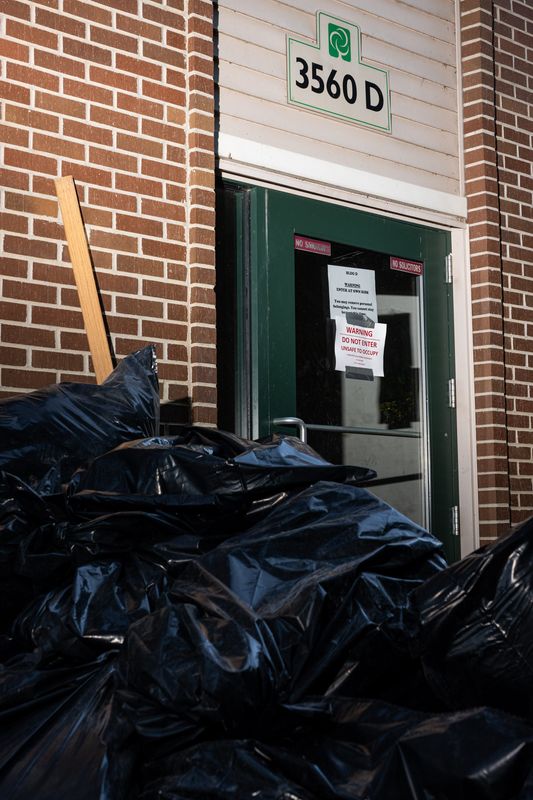
According to Conlin Properties, tenants won’t be able to return to 32 of the first-floor units for some time. Some tenants in some second- and third-floor units also can’t return at least through the end of July.
Company employees have offered to help tenants find new places to live, including at other Conlin Properties apartments. The company also gave $600 to families who lived in the ruined first-floor units, as well as $200 to the families who can’t return to the second- or third-floor units this month.
In the days after their latest relocation, some Parkside East tenants didn’t feel sentimental about preserving the buildings ― even if they are among the few properties where they can afford the rent.
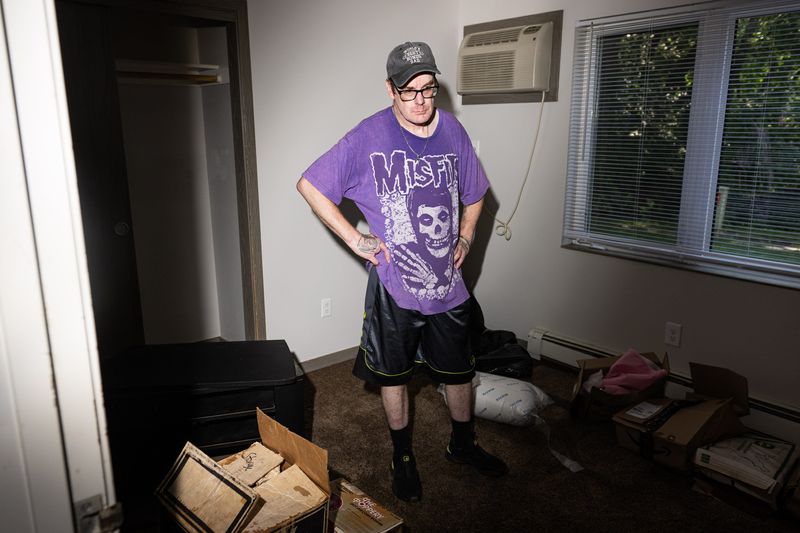
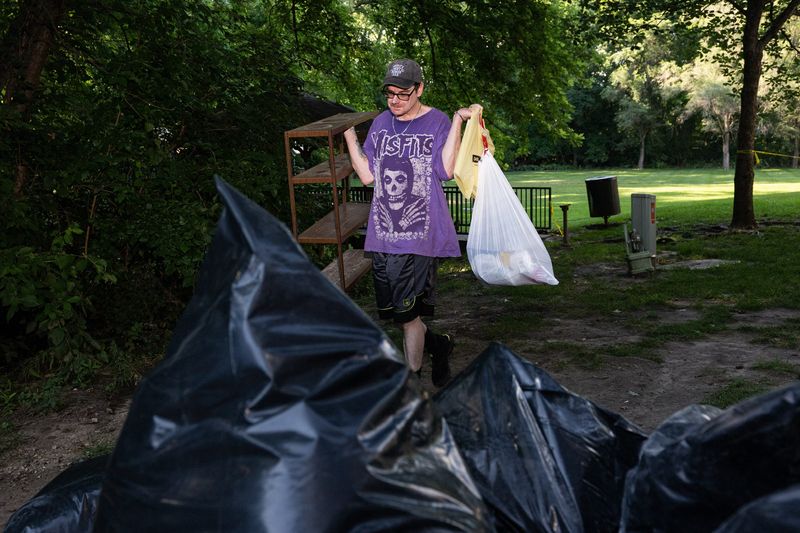
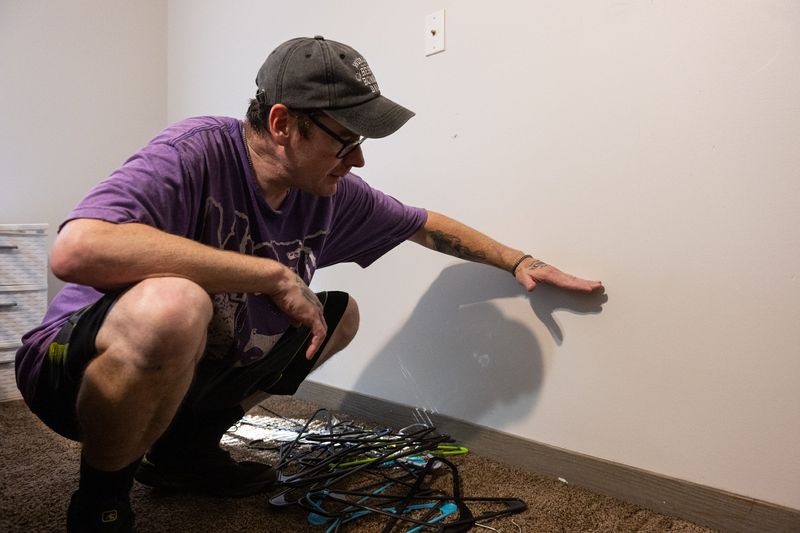
Jason Ackerman, who moved into a first-floor unit a month before the flood, said he found a film of sludge covering his floors when he returned to retrieve some belongings. Some of his boxes, still unpacked, were soaked. The water ruined the couch and recliners he had just purchased on credit.
Ackerman previously lived in a Polk City home owned by his fiancée’s father. But the man died, and Ackerman needed a new place. He looked at some other units in the region, but his credit score didn’t meet the owners’ standards. He said Parkside East was the only complex that accepted him, his fiancée and his daughter.
“People like us, we don’t have a whole lot of choices,” he said.
After the flood, he found a place to stay temporarily back in Polk City. He said Parkside East managers estimate he won’t be able to return for three or four months. Even if he returns, he believes the apartment will at some point flood again.
“This is going to happen again within the next two-three years,” he said. “If all you’re going to do is just rebuild and cross your fingers, that’s stupidity.”
A couple floors up from Ackerman, Teesha Barton said the apartment manager estimated her family won’t be able to live in their unit again for six weeks.
The Red Cross paid for Barton and her four children to stay at a Budget Inn for a week. But she doesn’t know where the family will go after that.
She said the motel room lacked a microwave, so the family had to eat out, an expense they can barely afford. Through a temp agency, Barton landed a job two weeks ago directing traffic around a construction site. But she took a day off after the flood to look at apartments. The units she saw were too expensive, more than the $1,140 she pays for a three-bedroom apartment at Parkside East. She was worried she could lose her job for taking the day off.
“Honey,” she said, “this is all the way crazy. I don’t even know what to do. I’m just going off instinct.”
Barton moved to Parkside East in November 2018, about five months after the last flood. She said Conlin Properties was remodeling first-floor units and she watched a construction crew working along the creek. She said an apartment employee told her they had fixed the problem.
Now, in her apartment, she could hear dehumidifiers whirring downstairs. The scent left by the flood overwhelmed her.
“Like a mildewy river water,” Barton said.
About a half mile to the southeast, Ellen James recalled the smell.
“Like an old river that had dried up,” she said.
James encountered it eight years ago, when she returned to her Parkside East apartment after the 2018 flood. She lost the spin top that her children played with as babies. She lost, too, their white silk blanket and the clothes they wore home from the hospital when they were born: a striped sweater dress and a blue onesie.
Outside, the waters had destroyed her Chevrolet Aveo, just as a flood at Parkside East destroyed her Ford Focus in 2010.
Living through two floods at Parkside East was enough, she said. After 2018, she moved to Hilltop Apartments, another Conlin Properties building about a half-mile away. As its name implies, the building sits above the waters.
On the morning of July 3, James watched the water rise on the road as sheets of rain poured. She knew what would come next at her old apartment.
“They’re not going to do what it takes to make them strong, make them water-resistant,” she said. “They need to just tear them down.”
Virginia Barreda is the Des Moines city government and Polk County reporter for the Register. She can be reached at vbarreda@dmreg.com.
Tyler Jett is an investigative reporter for the Des Moines Register. Reach him at tjett@registermedia.com, 515-284-8215, or on X at @LetsJett. He also accepts encrypted messages at tjett@proton.me.
This article originally appeared on Des Moines Register: Flooded again, low-income apartments pose complex challenge I Exclusive
Reporting by Tyler Jett and Virginia Barreda, Des Moines Register / Des Moines Register
USA TODAY Network via Reuters Connect
By Tyler Jett and Virginia Barreda, Des Moines Register | USA TODAY Network