Showing love and acceptance to everyone
Members of Collegiate United Methodist Church and Wesley Foundation (CUMC/WF) 2622 Lincoln Way in Ames, across from campus and next to Dunkin’, are committed to showing love and acceptance to everyone including our immigrant and refugee neighbors. We walk alongside them and advocate for their safety, dignity and freedom.

The Helping Our Neighbors Group at CUMC/WF wants all our neighbors, whether native Iowans or immigrants or refugees, to know we want to bring you hope and encouragement as members of our community. We want to show you love and kindness. This is vitally important in this time of uncertainty with changing governmental policies and attitudes toward our immigrant and refugee neighbors.
We welcome all and all means all.
Helping Our Neighbors
Collegiate United Methodist Church and Wesley Foundation
Betty Barton, Jim Cornette, Marti Elston, Bev Kruempel, Alan Vandehaar, Donna Vandehaar and Maureen Wilt
A careful rail merger review is important for Iowa
Iowa’s economy relies on freight rail. From grain and fertilizer to ethanol and machinery, reliable rail service supports jobs, stabilizes costs and keeps our state competitive in both national and global markets.
The proposed merger between Union Pacific (UP) and Norfolk Southern (NS) would combine two of the country’s largest freight rail carriers, a move that could reshape the freight system in Iowa and beyond. If not held to the highest scrutiny, a merger of this size could result in increased shipping costs, reduced competition and service disruptions for shippers and communities across America’s heartland.
Thankfully, the Surface Transportation Board (STB) is holding this merger to the highest standards of competition. Following the railways’ submission of their merger application on December 19, the STB deemed the merger application incomplete and insufficient for approval. I commend the board for prioritizing responsible oversight – a deal of this magnitude should meet a high bar, and the board’s deliberate review helps ensure that standard is upheld.
History has shown that massive mergers can carry real risks if approved without adequate safeguards. When rail service becomes less competitive or unreliable, the consequences extend beyond individual shippers – costs rise, supply chains are strained and local economies feel the pressure. That is why continued, careful evaluation of the UP-NS application is essential.
Regardless of its decision, the STB must continue to provide a clear example of responsible oversight by scrutinizing this merger’s potential impact on competition, service quality and market fairness. By upholding these standards, the Board can help preserve expectations for regulatory review and protect Iowa’s economy for years to come.”
Gannon Hendrick
McCallsburg
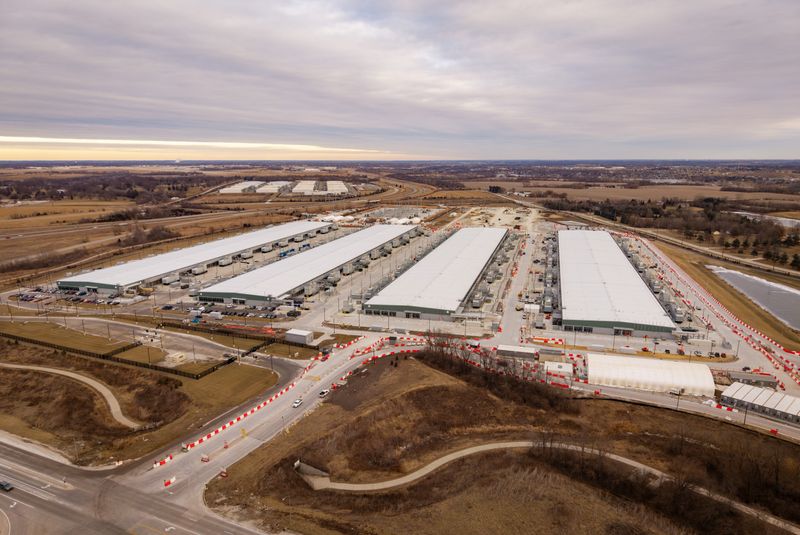
Data centers in Story County
As the Story County Board of Supervisors and its Planning and Zoning Commission preemptively act re: data center construction in our county, I and others urge the supervisors to enact a permanent moratorium on data center construction on our unincorporated county lands.
There are many examples of rosy public relations promises as to why we need to encourage these, i.e. the AI these data centers power will cure cancer.
Since it is the nitrates in water that are related to colorectal, bladder and breast cancer, we propose we clean up the water and prevent cancer.
As far as energy usage, The Times (of London) recently reported that the International Energy Agency predicts data centers in the United States will need more than triple their current power by 2035- that is less than 10 years away.
The same article cited Bloomberg analysis that in the past 5 years, cities near data centers have endured a 265% rise in energy bills. Not 50%, not 100%- 267%.
Add on to that, the real risk of dried up wells and contaminated groundwater in our state, too much of which is still classified as being in a drought.
There are more issues which could be used to argue the case for a moratorium but Americans are unifying in their opposition. Last year, instead of the 6 cancelled data centers in 2024, 25 were cancelled, due to common sense concerns of communities.
If you agree with a moratorium on data centers in Story County, please take a moment to email our supervisors.
Respectfully,
Brenda R. Brink
Huxley
The SAVE Act deserves careful scrutiny and discussion
Iowa has long taken pride in running elections that are both secure and accessible. That balance has earned the trust of voters across political parties and across generations. It is precisely because of that trust that the proposed SAVE Act deserves careful scrutiny and open public discussion. The practical impact of this legislation on eligible voters in Iowa is likely to be significant.
Nearly 60 percent of Iowans do not have a valid passport readily available. For many, the only alternative proof of citizenship would be a certified birth certificate, which may require time, fees, and additional documentation. More than 700,000 Iowa women have changed their names since birth, meaning the citizenship document required by this Act may not match their current legal identity without additional records. These are not rare or hypothetical situations. They reflect ordinary life.
Iowa’s election system already requires voter identification and maintains safeguards against ineligible voting. Recent state reviews found very few confirmed cases relative to millions of ballots cast. The SAVE Act would not change who is eligible to vote, but it could change how easily eligible citizens can maintain or update their registration. Iowans who move, marry, or update their records could encounter new administrative barriers that did not exist before.
The strength of our election system is not measured only by security, but by public confidence that lawful voters can participate without unnecessary obstacles. Policies that introduce complexity, confusion, or cost risk weakening that confidence rather than strengthening it.
This is not a partisan concern. It is a civic one. Any change affecting something as fundamental as voter participation should be examined through the lens of its real-world impact on the people who live and work in our communities.
The SAVE Act, as currently written, would create unintended barriers for eligible Iowa voters without strengthening the safeguards we already have in place. Secretary of State Paul Pate has regularly reminded Iowans that the state’s laws protect the integrity of the elections (AP 3/20/25).
We urge Iowans to contact our Senators Ernst and Grassley and ask them to vote no on the SAVE Act legislation.
Respectfully,
Carolyn KlausAnne KinzelCo-presidents, LWV Ames & Story County
This article originally appeared on Ames Tribune: Data centers in Story County | Letters
Reporting by Ames Tribune / Ames Tribune
USA TODAY Network via Reuters Connect