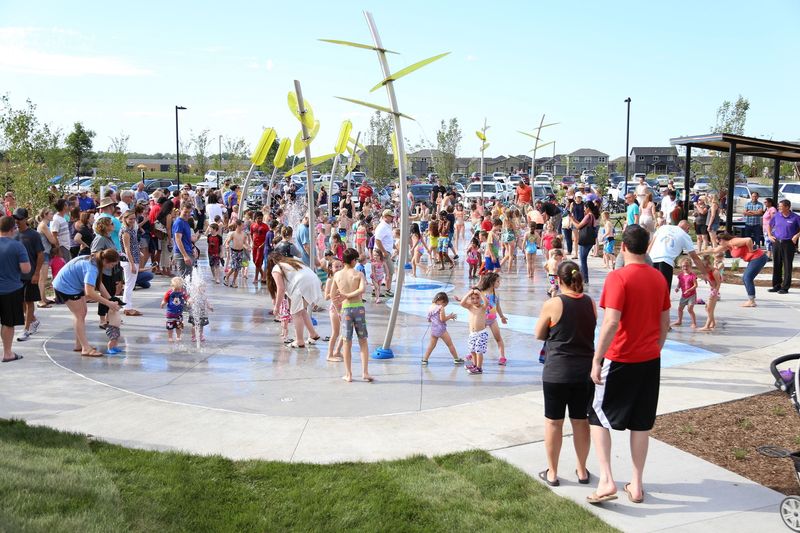
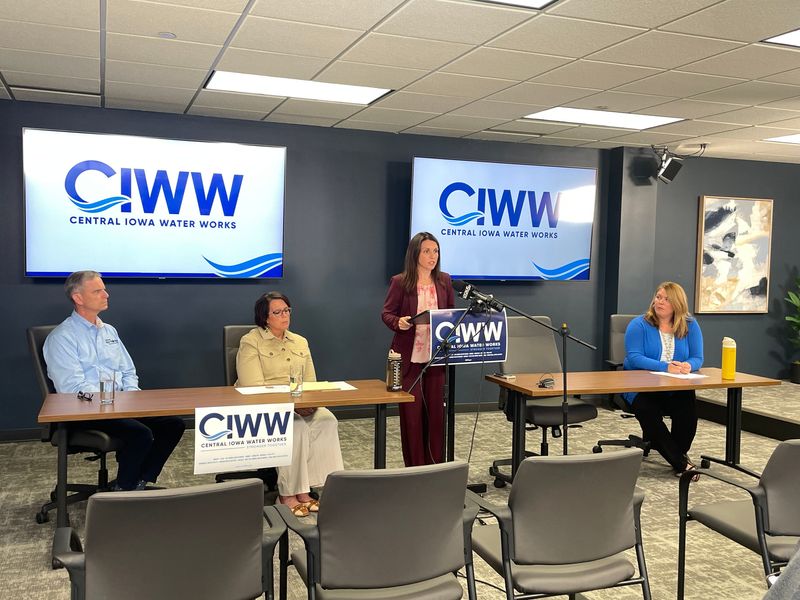
Central Iowa Water Works is inviting metro residents to spend what’s forecast to be a hot Fourth of July weekend to splash and play, even as it maintains an unprecedented lawn‐watering ban to preserve its capacity to treat source water with soaring nitrate levels.

“We want you to go play with your kids in your water, do slip‐and‐slides, your kiddie pools, your hoses,” Executive Director Tami Madsen told reporters at a briefing Tuesday, July 1, reiterating that “all water produced by Central Iowa Water Works continues to meet all safe drinking water standards.”
She called on residents to balance fun with restraint, thanking them for their “cooperation in helping us reduce demand to ensure our treatment system is effective.”
The appeal comes as Central Iowa Water Works largest member, Des Moines Water Works, has been force to run the nitrate removal system at its Fleur Drive treatment plant for more than 50 days, straining its ability to keep treated water below the U.S. Environmental Protection Agency’s maximum nitrate level of 10 milligrams per liter.
Nitrate is a form of nitrogen that can be released into water from manure and chemical fertilizers used on upstream farm fields. High levels of nitrates have been linked to asphyxia in infants, called blue baby syndrome, and even low nitrate levels have been tied to some cancers.
Summer lawn watering can increase demand by 40%. Central Iowa Water Works imposed the watering ban June 12 after briefly seeking a voluntary halt to watering. At the time, the Raccoon River’s nitrate levels were near record levels, rendering it too polluted to use.
The city of Des Moines responded to the ban by closing its 17 splash pads but reopened them with limited hours after CIWW calculated they use less than 2% of the system’s capacity. Splash pools and the city’s swimming pools also are open, and the Des Moines Fire Department still plans to offer a giant slip-and-slide at Nahas Aquatic Center from 1 to 3 p.m. July 4.
On Tuesday, CIWW reported that demand remains about 30% below pre‐ban levels, enabling it to keep treated water safely within regulatory limits even though nitrate levels in the Raccoon River are rising, reaching 15.93 milligrams per liter after a drop resulting from the dilution effect of heavy rain last week.
Nitrates in the Des Moines River registered 12.28. Treated water from Des Moines Water Works’ Fleur Drive plant measured 7.51 milligrams per liter and its McMullen plant’s finished water contained 7.25.
Polk County officially releases assessment finding heavy nitrate pollution
Madsen’s invitation to enjoy the water came as Polk County officially released a watershed assessment, previously obtained and reviewed by The Des Moines Register, that found the Des Moines and Raccoon rivers “often contain some of the highest nitrate levels in the U.S. and routinely exceed the health-based drinking water standard, threatening human health and increasing the cost and complexity of water treatment.”
The summary called for watershed-scale conservation measures to stem nitrate pollution at its source.
Asked at Tuesday’s briefing for comment on the report, Madsen said, “We are grateful that there are so many scientists involved in the discussion. But right now, we’re really focused on continuing to provide safe drinking water to all of our 600,000 water users. So if we continue to adhere to the lawn-watering ban, which is going to be very important as we enter the hot dry weekend, we can continue to produce that safe drinking water for our customers.”
When asked whether an exit strategy from the ban is in place, Madsen said “we need to see a sustained reduction in downward trend in our source water nitrates before we can exit any kind of ban. Warm, dry weather will help us determine whether there are any trends.” She added that the CIWW board and technical committee are discussing a “phased approach to lift restrictions.”
Madsen did not quantify how long the sustained decline must last or how far nitrate levels must fall, saying only that CIWW needs to see a “sustained, consistent downward trend in those nitrate levels in the river” below 10 milligrams per liter. She likewise did not elaborate on what a rollback would look like, saying the agency is “still working through the details.”
Nick El Hajj is a reporter for the Des Moines Register. Reach him at nelhajj@gannett.com.
This article originally appeared on Des Moines Register: Central Iowa Water Works says splash freely on 4th of July— but please don’t water lawns
Reporting by Nick El Hajj, Des Moines Register / Des Moines Register
USA TODAY Network via Reuters Connect