Iowa has long stood a force for American agriculture. From the scientific breakthroughs of Norman Borlaug to the public service legacy of Henry A. Wallace, the state has helped shape how we grow, produce, and protect our food. That legacy continues today, not only in fields and facilities, but in classrooms, laboratories and communities across the state.
That is why the U.S. Department of Agriculture’s Food Safety and Inspection Service (FSIS) is expanding its presence through the establishment of the new National Food Safety Center in Iowa.

This investment reflects a simple reality. Food safety is strongest when it is closely connected to the people, places, and knowledge systems that sustain American agriculture. Iowa offers all of that. It is home to world-class institutions like Iowa State University, the University of Iowa, and Drake University Agricultural Law Center, each of which plays a critical role in developing the next generation of scientists, veterinarians, inspectors, and policy leaders.
At FSIS, our mission is clear. We protect public health by ensuring the safety of the nation’s meat, poultry, and egg products. That mission does not change. But how we support it must continue to evolve.
The National Food Safety Center will serve as a hub for that evolution. It will bring together key support functions, including training, workforce development and operational support, in a location that is deeply connected to the agricultural systems. This proximity matters. It strengthens our ability to recruit talent with real-world experience and to prepare our workforce for the challenges they will face in the field.
A central component of this effort is the expansion of our training and workforce development capabilities, anchored by the new FSIS Division of Training and Innovation within the National Food Safety Center. Food safety is not static. It requires continuous learning, adaptation and investment in people. By building a stronger training presence in Iowa, we are creating new pathways for students and early-career professionals to enter public service and contribute to a mission that impacts every American household.
This is not just about filling positions. It is about building a workforce that reflects the full breadth of expertise needed to keep our food supply safe. That includes individuals trained in animal science, public health, food science, data analysis, and agricultural law. It also includes those who understand the realities of production agriculture and can translate that knowledge into effective oversight and policy.
As we make this transition, we remain fully committed to maintaining the strength and continuity of our mission. FSIS inspectors will continue their work across more than 7,000 establishments nationwide. Our scientists and analysts will continue to monitor emerging risks and support evidence-based decision-making. The establishment of the National Food Safety Center enhances that work. It does not replace it.
In fact, this moment presents an opportunity to strengthen how we deliver on our mission. By aligning our workforce more closely with the agricultural and academic communities that shape the food system, we are positioning FSIS to be more responsive, more innovative, and better equipped for the future.
Iowa has always been a place where agriculture and innovation come together. With the National Food Safety Center, we are building on that foundation to ensure that the next generation of food safety professionals is ready to meet the challenges ahead.
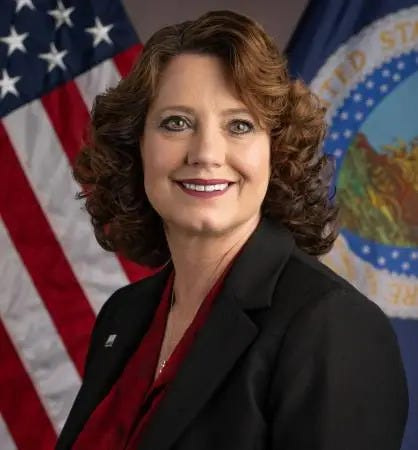
Mindy Brashears is Under Secretary for Food Safety for the United States Department of Agriculture.
This article originally appeared on Des Moines Register: Center will let Iowa build next generation of food safety | Opinion
Reporting by Mindy Brashears, Guest columnist / Des Moines Register
USA TODAY Network via Reuters Connect