Iowa’s 2026 property tax legislation sparked an important and overdue conversation across the state: How do communities continue funding essential services while reducing pressure on taxpayers?
For transit leaders, the takeaway is not simply whether the final bill was “good” or “bad” for systems like DART, the Des Moines Area Regional Transit Authority.

It is the growing public recognition of something we’ve known for years: Future transit funding cannot rely as heavily on property taxes — especially in a region like Greater Des Moines, which is approaching 1 million residents who expect essential services to grow with the population.
We appreciated lawmakers recognizing that regional transit systems operate differently than most local governments by establishing a 3% cap for transit systems rather than the broader 2% limit applied elsewhere. That distinction acknowledges the limited local funding tools available to systems like DART, even as operating costs continue to rise.
At the same time, this debate brought greater clarity to an uncomfortable truth: Regionalism is easier to champion when communities feel there is enough to go around.
When budgets tighten and taxpayers feel stretched, thinking collectively instead of individually becomes harder. Conversations about shared responsibility can quickly turn into debates over fairness, value and local priorities.
That tension is real.
But so is the reality that central Iowa functions as one connected economy. Workers commute throughout the metro. Employers recruit regionally. Economic growth is shared. Increasingly, communities are finding that some challenges — and opportunities — are larger than any one city or organization alone.
Regional transit is an essential service within that economy. Last year, DART provided 3.75 million rides across central Iowa, connecting people to jobs, healthcare, education and businesses throughout the metro. Nine out of 10 trips directly support economic activity. For many riders, transit is not a convenience — it is their only reliable way to get to work or meet daily needs. And investing in this system means that jobs we depend on are filled and more money is spent locally.
DART has a responsibility to continue evolving alongside the communities we serve. That responsibility includes continuously adapting how we operate and pursuing funding beyond local property taxes. It is also why our Board of Commissioners has made securing alternative forms of local revenue that can replace or reduce long-term reliance on property taxes one of the organization’s top priorities.
As part of our evolution, DART has redesigned its transit network through Reimagine DART — a systemwide, community-driven effort focused on sustainability while preserving access to essential services. Beginning in June, DART will move to a simplified network centered around 10 main bus routes with increased frequency all week along the busiest corridors, and three on-demand zones covering suburban areas. The redesigned network will operate with roughly 10% fewer service hours and avoid a property tax increase in the upcoming fiscal year.
DART is also pursuing outside funding opportunities that reduce reliance on local taxpayers. Earlier this year, DART secured a $20 million federal grant toward a new Operations and Maintenance Facility that will support more efficient and effective operations.
No single piece of legislation will solve the long-term challenge of funding essential regional services. But this year’s debate and outcome created greater clarity.
Clarity that taxpayers expect governments and public agencies to evolve. Clarity that yesterday’s funding models will not fully meet tomorrow’s needs. And clarity that regions like Greater Des Moines will be strongest when we choose collaboration.
That work is not always easy, especially when resources are constrained.
But the two sides of this funding coin are undeniable: Residents want relief from growing tax pressure while still expecting strong regional services that support economic growth and quality of life.
The challenge for growing regions will be finding ways to achieve both — together.
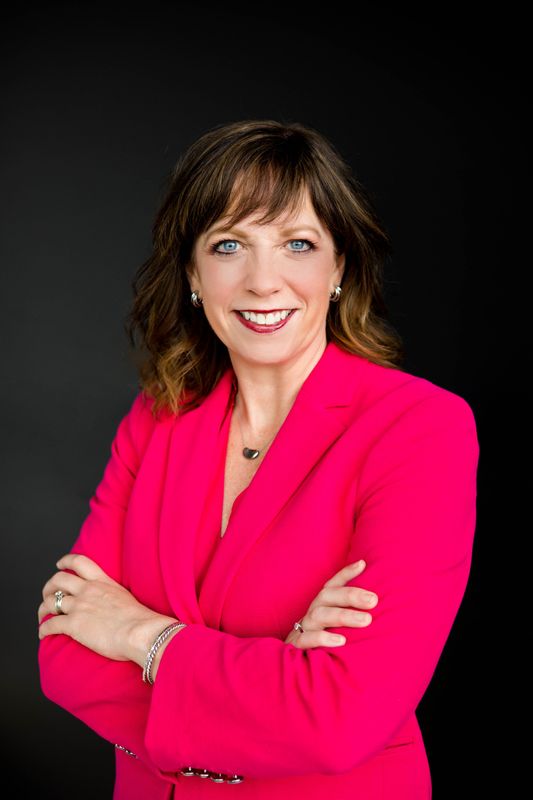
Erin Hockman was recently named CEO of DART. Amanda Wanke previously served as CEO of DART and is joining Metro Transit in the Twin Cities.
This article originally appeared on Des Moines Register: For Iowa property taxes, two sides of the same funding coin | Opinion
Reporting by Erin Hockman and Amanda Wanke, Guest columnists / Des Moines Register
USA TODAY Network via Reuters Connect