No one wants to talk about explosive diarrhea — but everyone wants to prevent it.
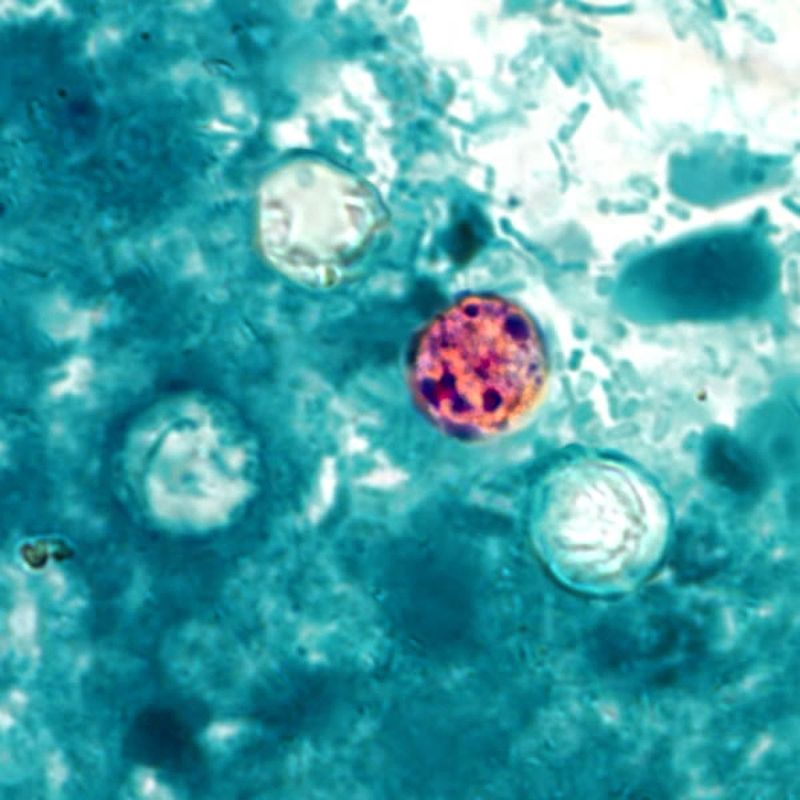
Cyclospora, a parasite causing severe gastrointestinal distress for hundreds of Americans, isn’t new. But according to the Centers for Disease Control and Prevention, the United States is seeing a major outbreak of more than 1,000 cyclosporiasis cases this year.

We didn’t want to have to publish the phrase “watery diarrhea with frequent and sometimes explosive bowel movements,” but unfortunately, that’s what some people who’ve caught this bug experience. The illness comes with a risk of dehydration, especially if it lingers − the CDC says symptoms can last from a few days to more than a month and pause, only to return.
According to the CDC, the cyclospora parasite spreads in food or water contaminated with feces. Patients usually become sick about a week after becoming infected, but symptoms could begin as soon as two days or as long as two weeks or more after exposure.
Is there cyclosporiasis in Indiana and surrounding states?
As of July 14, 206 cyclosporiasis cases have been reported in Indiana since May 1, an Indiana Department of Health representative said in an email. Cases so far are mostly concentrated in northwest, central and northeast Indiana, according to the email.
On Tuesday, the CDC said a cluster of 400 cases in Michigan, Ohio, West Virginia and Kentucky are likely linked.
How cyclospora spreads and how to prevent it
In a July 14 news conference, Gwen Biggerstaff, a CDC deputy director, said it’s not clear whether there’s a common source for the surge of cases.
Michigan officials said they’re looking at lettuce and other salad greens as the source of a larger outbreak in their state. As of July 14, Michigan’s health department had reported more than 3,000 cases. Taco Bell restaurants in the Detroit area stopped serving lettuce and cilantro, the Free Press reported, but Biggerstaff did not respond to a question about whether those menu items might be a source.
Thomas Duszynski, a professor at Indiana University’s Richard M. Fairbanks School of Public Health in Indianapolis, said it can be a challenge to identify where a parasite came from since you may not know you’re infected for a couple of weeks.For that reason, he recommended that people think twice before consuming fresh fruits and vegetables.”If you can’t cook it, wash it,” he recommended. “If you can cook it, that’s the best way to deal with this. … but you can’t cook lettuce.” So when you’re eating lettuce or other leafy greens, experts recommend you avoiding the bagged mixes and wash everything thoroughly.
“Peel off those outer layers, and then separate the under layers, use a produce brush and wash with cold, running water,” Duszynski said. “It’s not going to get it all, but it could reduce the amount.”
A parasite that’s difficult to track
Because people who develop symptoms don’t necessarily go to the doctor and doctors may be slow to test, tracking the exact number of cases and identifying a source can be difficult for public health officials.
“Is this cilantro? Is it basil? Is it even the water used to irrigate these fields? We don’t know yet,” Duszynski said. “The only way we can figure that out is if we get information from the public, especially those that are ill, that we can then trace back to where this is.”
Duszynski recommended that people who are very old or very young should see the doctor if they have a sudden onset of diarrhea, weight loss, cramping, vomiting, body aches and the symptoms don’t resolve.
“I think that’s part of our healthcare system here in the US,” he said. “We struggle with it because access isn’t easy; it isn’t cheap. So we tend to put these things off, which can then put us in trouble really, really quickly.”
Getting to the doctor may mean you prevent dehydration and also help health officials track the source of the parasite, Duszynski said.
How it’s different from other diseases
Cyclosporiasis has a few key differences from diseases caused by other sources, such as salmonella and E. coli. Those two infections, for example, affect a much larger number of people each year.
One distinction is that while the symptoms from salmonella and E. coli typically only last a week or less, cyclosporiasis symptoms can last days to a month or longer, according to the CDC.
Are you sick? Check out these resources
Our partners at USA TODAY have been tracking the cyclosporiasis outbreak nationwide. Read some of their coverage below.
CONTRIBUTING: USA TODAY reporters Janet Loehrke, George Petras and Ken Alltucker; Detroit Free Press reporter Kristen Jordan Shamus.
Contact digital editor Jenny Porter Tilley at jtilley@indystar.com.
This article originally appeared on Indianapolis Star: Sorry, but we have to talk about explosive diarrhea
Reporting by Jenny Porter Tilley, Indianapolis Star / Indianapolis Star
USA TODAY Network via Reuters Connect
By Jenny Porter Tilley, Indianapolis Star | USA TODAY Network