Florida death row inmates, their families, and the families of their victims often find that the trial and sentencing are just the beginning of a long, confusing legal journey. The legal back-and-forth can stretch out for many years, with new hearings and filings that can be hard to follow, even for lawyers.
The appeals process is an important part of the U.S. justice system. While it may seem like it’s dragging out the process for a convicted killer, Florida leads the nation in the number of death row defendants who have been acquitted of all capital-crime-related charges, had those charges dismissed, or been granted a pardon based on lack of evidence. The Death Penalty Information Center lists 30 cases since 1973.

Here’s a look at how the process works. Please consult a lawyer for any specific needs; this is meant to be a general guideline based on Florida criminal law.
What is a capital appeal?
A capital case in Florida is one where the defendant has been sentenced to death, such as for first-degree murder or murder accompanied by a variety of aggravating factors.
However, even after the sentencing, the case continues as state and sometimes federal courts review the conviction and sentence to ensure the law was followed, no mistakes or shortcuts were made, and the sentence was just. This review happens through multiple types of appeals and post‑conviction proceedings, each with its own rules and deadlines.
Step one: Direct appeal
Every person convicted of a crime has the right to appeal the conviction and the sentence. When they do, they enter the appellate process, which is when a higher court is asked to review, reverse, or uphold the decisions made by lower courts.
In capital cases, defendants sentenced to death receive an automatic appeal to the Florida Supreme Court. This appeal, called a direct appeal, is limited to trial issues such as legal errors. It can’t just attempt to re-argue the case again.
The Florida Supreme Court will review the direct appeal, a brief from the state attorney’s office defending the lower court’s results, and the court records. The higher court may affirm the conviction and the sentence, overturn the conviction and send it back to the lower court for a new trial, or affirm the conviction but remand the case to the lower court to be resentenced.
Step 2: The Supreme Court
If the Florida Supreme Court affirms the conviction and sentence. the defendant may petition the U.S. Supreme Court for a writ of certiorari (Latin for “to be more fully informed”). This orders the lower court to provide records of a case so the higher court can review it.
Four or more Supreme Court justices must agree to review the case, or else the writ is denied. Out of the more than 7,000 cases sent to the Supreme Court every year, the Court typically accepts only 100 to 150 of them, according to Cornell Law School’s Legal Information Institute.
Step 3: Post-conviction appeals
If the Supreme Court denies the writ of certiorari, the defendant may still file post-conviction appeals based on:
Post-conviction appeals that are turned down by trial courts can also be appealed to the Florida and U.S. Supreme Court. They can also be continued for years as new arguments are presented, new developments in forensics become available (such as advances in DNA testing), or new evidence or witness accounts are uncovered.
However, former Gov. Rick Scott signed the “Timely Justice Act of 2013,” which eliminated the state’s previous five-year deadline to resolve postconviction actions in capital cases and instead required them to be resolved “as quickly as possible.”
If the results of any of these appeals are found to be likely to result in a win for the defendant, the courts may call for an evidentiary hearing to evaluate the new information, which may or may not lead to an overturned conviction or reduced sentence.
Step 4: Appeals after the death warrant
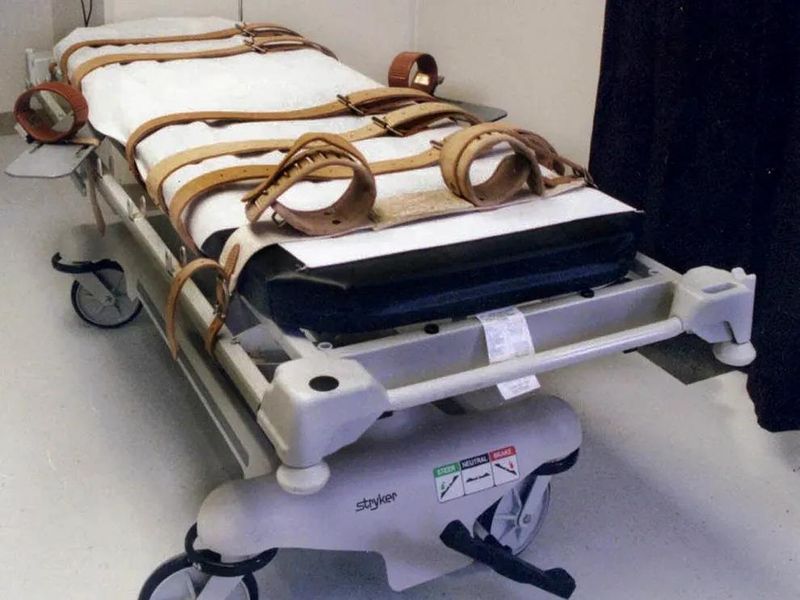
In Florida, after a suitable amount of time has passed and all appeals have been resolved or denied, the governor signs a death warrant for the inmate’s execution. The death warrant will include a period of time during which the execution can take place, and a date and time are chosen
During that time, defendants may appeal to trial courts, the Florida Supreme Court, and the U.S. Supreme Court again, but now there is a clock ticking. Florida law allows 180 days between a death warrant and when the execution must happen; in recent years, Gov. Ron DeSantis has allowed an average of a month.
Along with an appeal, defendants will petition the court for a stay of execution to get more time. The governor also has the power to delay an execution to allow more review, commute a death sentence to life imprisonment without parole, or even issue a full or conditional pardon if the state’s Executive Clemency Board recommends it.
Appeals at this point are not likely to succeed, as the defendant has had years to exhaust all the reasons the execution should not go on. But it can happen.
This year, James Aren Duckett, a former Lake County police officer convicted of the 1987 rape and murder of 11-year-old Teresa Mae McAbee, successfully requested a stay pending new DNA testing. The date for his scheduled execution came and went, but tests showed inconclusive results and the stay was lifted. Duckett may receive a new death warrant at any time.
C. A. Bridges is a journalist for the USA TODAY Network-Florida’s service journalism Connect team. You can get all of Florida’s best content directly in your inbox each weekday by signing up for the free newsletter, Florida TODAY.
This article originally appeared on Tallahassee Democrat: What is Florida’s appeal process for death row inmates?
Reporting by C. A. Bridges, USA TODAY NETWORK – Florida / Tallahassee Democrat
USA TODAY Network via Reuters Connect
By C. A. Bridges, USA TODAY NETWORK – Florida | USA TODAY Network