This story was produced by students in the University of Notre Dame’s Gallivan Program in Journalism, Ethics, and Democracy. The students spent about three months gathering data, interviewing dozens of sources and writing and editing stories under the guidance of a former Star reporter now teaching at Notre Dame.
When Helen Beristain went to the South Bend polls in 2016, she checked the box for Donald Trump’s name and walked out without hesitation. Despite being married to an undocumented immigrant, she believed a red vote was in her best interest.

“I did it for the economy,” she told the South Bend Tribune. “We needed a change.”
But just a few months later, her world turned upside down.
Her husband, who had no criminal record, was deported by the new administration she helped put in power. Immigration and Customs Enforcement (ICE) agents detained him in Indianapolis during a routine check-in required after obtaining a temporary deferral of deportation.
Beristain watched helplessly as they led her husband away to begin deportation proceedings. There was no undoing her vote. There was no rewinding time. The president she voted for to serve her family was now executing policies that tore it apart.
“I wish I didn’t vote at all,” she told the Tribune.
Her story went viral, becoming a symbol of how votes can have ripple effects citizens don’t anticipate when they cast them. It is a concept the internet would soon term “voter remorse.”
Beristain’s lament may sound like a song of the past, but eight years later, that rhythm is returning. With President Donald Trump back in power, many of his policies are again having adverse effects on a wide range of people in Indiana — including many who voted for him.
Nationally, the president’s tariffs have been accompanied by the highest egg prices the country has ever seen and a volatile stock market captive to erratic moves such as firing government statisticians. So it may not be a surprise that some Trump voters who wanted low grocery prices and a stable stock market are not thrilled.
Indiana may soon see a lot more Helen Beristains. Despite living in a red state that backed Trump in both 2016 and 2024, Indiana isn’t safe from the effects of Trump’s policies.
With a population of about 6.8 million, Indiana has been a Republican state for decades. Other than former President Barack Obama’s 2008 victory, the state has consistently voted red in every presidential election since 1968. The majority of Hoosiers supported President Trump in the 2024 election, when 58.6 percent of Indiana voters thought he was the best choice to lead, compared to just 39.7 percent who cast their ballots for former Vice-President Kamala Harris.
While Indiana likely remains a Trump-supporting stronghold, the president’s blitzkrieg of disruptive actions at the start of his second term raises questions about whether everyone who marked red on their ballot last November is standing by that decision today. After all, when Beristain cast her vote in 2016, she voted with a certain set of expectations just like Republican voters in the 2024 presidential election.
It wasn’t until President Trump’s policies impacted her in unanticipated ways that she became something of a poster woman for political buyer’s remorse. And the more people that Trump attacks with his aggressive policies of power expansion and retribution in 2025, the more potential there is for others to find themselves in that same position.
Some limited data backs up that possibility.
Opinion polls in early August found that President Trump’s approval ratings had dropped substantially since his Jan. 20 inauguration. A poll completed in April by PRRI identified voter remorse as a reason for changing opinions, finding 8 percent of Trump voters and 31 percent of nonvoters were not satisfied with their decision at the 2024 polls.
Though data specific to Indiana does not yet exist, many voters across the political spectrum are still being adversely affected whether they voted for Trump or not.
Medicaid recipients watched in fear as Republicans passed deep rollbacks. Higher education institutions are losing federal funding. Public school teachers are navigating the war against DEI programs and having to bend to new acceptable curriculum standards.
Federal workers are showing up to work only to find their key cards deactivated. Non-criminal immigrants are being deported and their ethnic communities feel threatened. Farmers are facing the effects of reciprocal tariffs and the elimination of humanitarian food exports.
While the national headlines capture individual policies and affected groups, it’s easy to miss the big picture: A significant percentage of Hoosiers are feeling the weight of decisions made by the administration their state helped elect.
A three month-investigation by students in the University of Notre Dame’s Gallivan Program in Journalism, Ethics, and Democracy found that nearly half of all Hoosiers — as many as 3 million — belong to groups negatively affected by the Trump administration’s recent policies.
Current population data suggest that as many as 45 percent of the state’s residents could see their interests put at risk under this new wave of administrative actions. These numbers could increase significantly if tariffs bring more inflation or if threats to Social Security or Medicare come to fruition.
Considering the even larger percentage of voters who helped put President Trump in office, there must be at least some overlap between those who voted red and those now grappling with the consequences.
Healthcare cuts will hit home
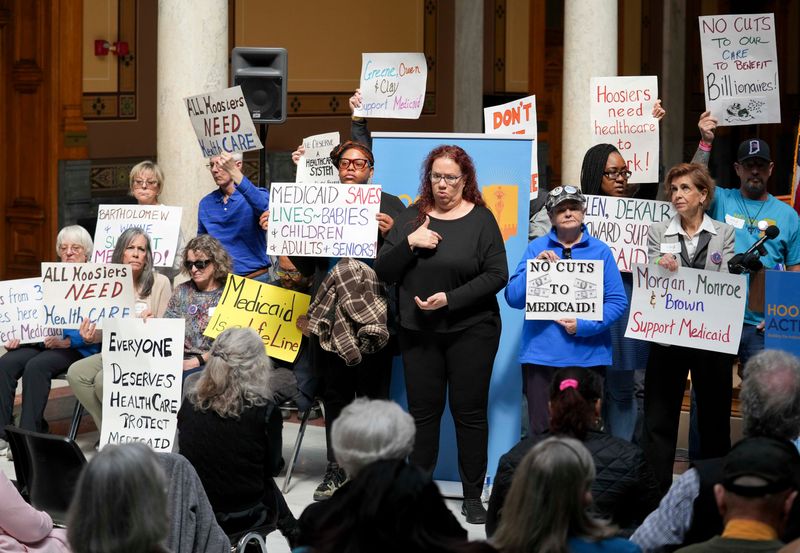
The largest group impacted by the Trump administration’s policies are those who rely on Medicaid as cuts are made to federal funding for states. Medicaid, funded jointly by the state of Indiana and the federal government, helps millions across the state by providing vital and sometimes life-saving health-insurance. According to federal records, nearly 2 million Hoosiers, or 30 percent of state residents, rely on Medicaid and could be directly affected by cuts.
Anne Whitesell, an associate professor of political science at the University of Miami Ohio who specializes in welfare policies, said she is watching the proposed cuts to health and human services, which have not taken effect yet but could cause reactions later.
“I think the cuts that are going to happen to Medicaid are really important because these are often people who are low income and are working Americans in red states,” Whitesell said. “There’s a lot of people who don’t understand all the assistance that the federal government gives in not just Medicaid but also in funding rural health clinics, and there’s millions of dollars put into maternal health and things like that. I do think that that’s going to be wide-reaching.”
Whitesell said Medicaid and medical research cuts would also have “trickle down” effects that affect the wider economy in the state. Also, most state health insurance programs have a name other than Medicaid, so voters may not know that’s the source of the funding.
“If you’re a voter, you don’t realize how much of that (funding) is tied to the federal government,” Whitesell said. “There’s this disconnect when you’re thinking about, ‘How does this affect me?’ and the federal government seems like this far-off entity that doesn’t really affect what I do on a day-to-day, but cuts to Health and Human Services are cuts that will affect people.”
Scott Johnson, state organizer for Indiana 50501, a political movement opposing the Trump administration, echoed Whitesell’s predictions. He said he thinks President Trump voters won’t fully understand the impact of their vote until it affects them personally.
“I think we’re going to get that regret but I think it’s going to be later than we want and it’s going to take actual personal pain like when mom’s Medicaid is cut,” Johnson predicted. “Indiana gets about 40% of its budget from the feds … my prediction is that when the new budget passes, people will stop getting their checks or their assistance. Some percentage of those poor people will actually be on the right … and that’s when we will see voter regret.”
The war on higher education
President Trump has threatened to withhold federal funding from universities that fail to comply with his administration’s demands. In several cases, he has followed through. Columbia University attempted to strike an appeasement deal, but Harvard University faced a freeze on $2.2 billion in federal grants after refusing to comply with new governance requirements it considered onerous.
Indiana University was among 60 institutions named by the Trump Administration last year for allegedly failing to counter antisemitism during campus protests. Cuts and threats to higher education contribute to the growing population of Hoosiers negatively affected by Trump’s policies, adding about 30,000 postsecondary faculty members to the pool, as well as a similar number of college and university staff employees.
Gabriel Filippelli, a research professor in earth sciences and the executive director of Environmental Resilience Institute at Indiana University in Bloomington, had recently secured funding for a major international partnership focused on climate resilience and air quality in Pakistan.
The project had been in the works for over a year and half: building partnerships, drafting the proposal, and planning workshops and equipment deployment across several major cities in Pakistan.
“I’ve never had this experience before of a federal grant simply terminated for no just cause,” Filippelli said. “We were doing that all with good faith that the U.S. government would always come through with their funding, as they have always done in the past.”
In late January, Filippelli received a suspension work order from the State Department, halting the project. Suspecting the delay was related to references to diversity, equity, and inclusion (DEI) in the grant materials, Filippelli and his team revised the language, but the project was still terminated a few weeks later. He said he was less surprised by the scrutiny over DEI language than by what he believes is the illegal removal of previously allocated funding.
“Congress has already determined funding levels for and allocated to universities and organizations around the country,” he said. “That’s what was highly unusual.”
Other effects are also taking shape. In response to funding cuts, the University of Notre Dame instituted a hiring freeze in March, and many schools are slashing the hiring of graduate students for research work. Notre Dame and IU are among the schools nationwide co-authoring a joint letter urging the Trump administration to reconsider the freezes and restore funding critical to their students and research.
Nearly 30,000 foreign students attend in-state universities on student visas, and many are unsure how much longer they’ll be able to attend school in the United States after the Trump Administration revoked more than 1,700 student visas across the country.
One Notre Dame international student spoke of the uncertainty they faced, asking to remain anonymous because the whole group fears reprisal if identified as a yet-to-be-removed student.
“I don’t know what’s going to happen to me,” he said. “If I go home this summer, I don’t know if I’ll even be able to come back.”
Dismantling DEI and public schools
Public K-12 schools are also beginning to feel a different strain. With President Trump dismantling the U.S. Department of Education and eliminating DEI programs, educators are raising their concerns, especially in public schools.
Muhammad Shabazz, an African-American social studies teacher at Pierre Moran Middle School in Elkhart, teaches seventh and eighth grade history.
“President Trump’s new policies make it difficult to teach certain topics,” he said. “ So what do you teach about America? What is America all about? It took so long for us to even get to this point, and now you have people talking about what we don’t want to learn now?”
Although he strives to leave his own political opinions out of the classroom, Shabazz said he refuses to teach that “everything was cool” after the Civil War ended slavery just because Barack Obama was elected 140 years later. Shabazz said he didn’t want to water down the causes of the Civil War or promote the widely spread myth that the war was about states’ rights instead of slavery.
“I need them to understand everything from the Constitution,” he said. “You could walk into my classroom and ask any one of those kids what the 13th amendment is and they’ll tell you. That’s my job.
“Now, mind you, my classes are probably 70 percent Black and Hispanic. Do you not want that 30 percent of White kids to know?”
Federal workers and LGBTQ+
Few groups have borne the brunt of President Trump’s executive orders more consequentially than federal workers. Elon Musk’s DOGE crew has fired thousands across the country, though some were later rehired and others are suing to regain their jobs.
Indiana federal worker Mack Schroder, who was employed by the U.S. Department of Health and Human Services helping people with disabilities and older Americans, claims he was “illegally fired” in February.
Schroder went to Washington, D.C., and approached Sen. Jim Banks, R-Ind., regarding the issue. Caught off guard entering an elevator, Banks responded by calling Schroder a “clown” and saying he “probably deserved it.”
Another group under attack from the Trump administration is the LGBTQ+ community. Among the first executive orders President Trump signed were those stating there are only two biological genders, preventing taxpayer funds for gender-transition health care, and implementing a ban on trans athletes in sports.
The American Civil Liberties Union of Indiana (ACLU), a non-profit organization, focuses on defending civil rights across the state, such as vulnerable groups like the LGBTQ+ community. The organization has taken initial steps towards lawsuits in defense of transgender rights.
Carter Barrett, senior communications associate at ACLU Indiana, said that while many Hoosiers might agree with “common-sense measures,” they often oppose more extreme agendas. “It is part of a collective effort to rid the U.S. society of people who don’t look or sound or are part of what is a Christian heterosexual group,” she said.
Farmers face twin challenges
Indiana farmers are facing twin challenges as the Trump administration’s trade policies and international aid rollbacks take hold.
The U.S. suspended nearly all international aid programs, which had previously bought billions of dollars of agricultural products such as wheat and soybeans from American farmers for global food assistance programs. Reciprocal tariffs on U.S. agricultural exports resulting from the ongoing trade war with China and other countries also make it more difficult for Indiana farmers to sell their products internationally.
Joseph Russell, a corn and soybean farmer from Muncie, has seen these effects firsthand. He points out half of all American soybean crops are consumed within the U.S., and the other half are sold internationally, with China as one of the biggest buyers.
However, rising competition from other countries has added uncertainty to the market as foreign crops now offer buyers lower prices. “Brazil probably loves this . . . it falls right in their hand,” Russell said. Still, he has voted Republican for five decades and views the tariffs as part of a long-term correction.
“I’ve always wanted fair trade. It hasn’t really been fair trade for years and years,” he said. “I don’t mind suffering a little pain in the short term if we can get some of the unfair trade policy out of the market. We might be in that phase right now.”
Russell did not explain what was unfair, or how he expects trade to become more fair. While farmers have been loyal Republican supporters, it’s not clear how many will demonstrate Russell’s patience if the loss of foreign buyers leads to farm foreclosures.
Russell credits Trump for supporting farmers with cash subsidies for their trade losses the last time he raised tariffs as president, but he emphasized that handouts are not a long-term solution.
“We prefer to get our income for selling crops and not from the mailbox,” Russell said. “We’re hoping we get it directly from exporting commodities.”
Scaring Latino voters
This past election cycle witnessed a dramatic increase in Hispanic and Latino support for President Trump, especially among Latino men. Trump won 43 percent of the overall Latino vote, an eight-point increase from 2020.
But since taking office, Trump’s policies have disproportionately harmed Latino communities. His administration has ramped up immigration enforcement, carried out mass ICE raids, and fueled widespread fear through rhetoric targeting undocumented immigrants and mixed-status families.
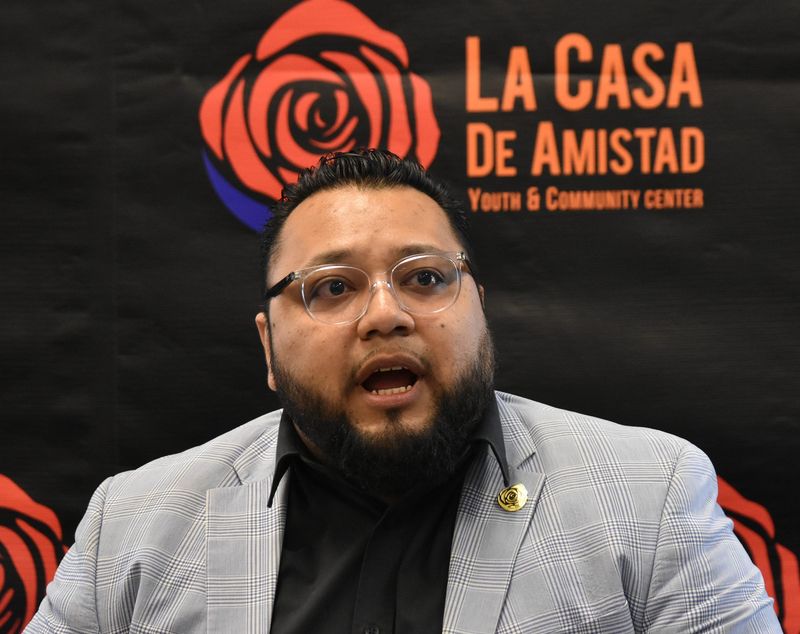
Juan Constantino, a South Bend community leader and CEO of La Casa de Amistad community center, said many Latino voters supported candidates based on campaign rhetoric, without fully realizing how those promises could play out once the new administration took office.
“Many times, when people are voting, they’re looking directly at themselves and not analyzing the entire ecosystem of or impact that a new administration has for the entire country,” he said. “Post-election, inauguration day, policies begin to change — and all of a sudden, you’re the one impacted. Then people have some of that ‘buyer’s remorse’ and go, ‘Well, this is not what I opted into. This is not what I wanted.’”
That remorse is already taking place in the immigrant-owned business sector. Paula Sours, president of Saint Joseph County’s Latin American Chamber of Commerce, said many immigrant-owned businesses are experiencing the compounded effects of rising tariffs and more aggressive immigration enforcement.
Latino businesses are suffering from the fear mongering surrounding President Trump’s policy of deporting people to a notorious El Salvadoran prison without due process, leading some to close their establishments, lose staff, or even leave the country altogether.
“People are not wanting to come out. They’re not wanting to go to celebrations,” Sours said. “They’re staying home. They see something on social media or see this car, so everybody freaks out. But you can’t blame people for wanting to be safe.”
Fear to speak out
While several Hoosiers across different professions spoke candidly about how recent policies have affected them, many groups were non-responsive or mentioned fear of speaking up because they feared further reprisal from the federal government.
One group in particular stood out for its silence: lawyers and judges.
Despite reaching out to multiple Indiana-based law firms, practicing attorneys, and the Indiana Bar Association, not one agreed to comment. Their hesitance comes in the wake of executive orders targeting some of the country’s most powerful law firms, which have split between fighting the orders and compliance agreements.
Another group that was hesitant to comment was media and broadcast workers. In July, Congress stripped funding for National Public Radio (NPR) and the Public Broadcasting Service (PBS), accusing these media companies of being biased and partisan. The Corporation for Public Broadcasting that funnels federal money to individual stations is now closing down.
Another executive order dismantled the U.S. Agency for Global Media, firing thousands of journalists who broadcast abroad in long standing American efforts to bring independent journalism to authoritarian countries where reliable information is often banned.
As with any post-election cycle, many voters continue to support their candidate, as does John Russell, the farmer from Muncie enduring short-term pain in the hopes his vote will bring about long-term benefits.
Other Trump voters may begin to question their decision, sooner or later. Johnson, the leader of the Indiana 50501 protest group, said his movement has already begun work with some disgruntled libertarians and conservatives.
“We have to talk to these people even if we don’t want to because they are our family, they are our cousins, they are our neighbors,” Johnson said.
Will he welcome Trump voters feeling a wave of remorse?
“Oh absolutely,” he said. “Without question and with a lot of joy.”
This article originally appeared on Indianapolis Star: Red state blues: Are Indiana Trump supporters feeling negative effects of their votes?
Reporting by Lluvia Gaucin, Paul Stevenson and Claire Watson / Indianapolis Star
USA TODAY Network via Reuters Connect