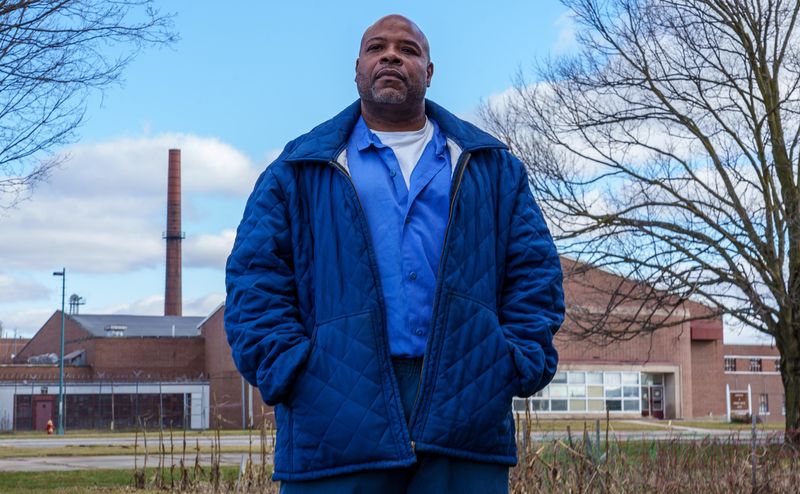
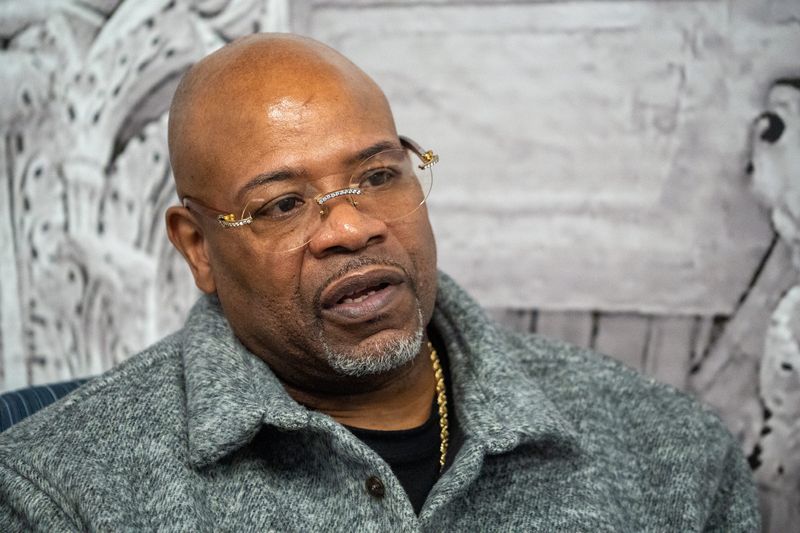
As he stood inside a Northern Indiana courtroom about to be sentenced, Reginald Dillard faced the family of the man who prosecutors said he and an accomplice murdered in cold blood.
“We didn’t kill the man. I didn’t kill nobody,” Dillard told the brothers of Christopher Thomas on Feb. 17, 2000.

A year and a half earlier, Thomas was gunned down outside an Elkhart motel room in what prosecutors described as a murder-for-hire scheme. They alleged that Dillard was one of two gunmen who were paid to kill Thomas, a confidential informant for the Elkhart County Drug Task Force. For months leading up to his death, Thomas helped the task force by conducting nearly 100 drug buys that incriminated dozens of cocaine dealers — including a local drug kingpin who, according to investigators, ordered the hit on Thomas.
Still, Dillard was adamant.
The police, the prosecutors and the witnesses they called to testify? They all lied, Dillard said in court that day, according to a transcript of the proceedings. The local kingpin who allegedly ordered them to kill Thomas? Dillard insisted he didn’t even know that man. The motel where he and his co-defendant supposedly carried out the murder? He said he didn’t even know how to get there.
But Dillard’s words did not change the inevitable. An Elkhart County judge sentenced him to 65 years in prison.
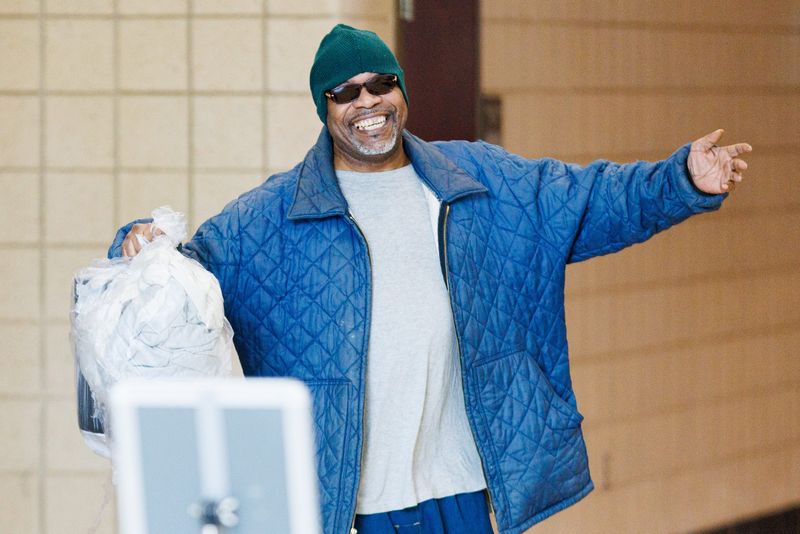
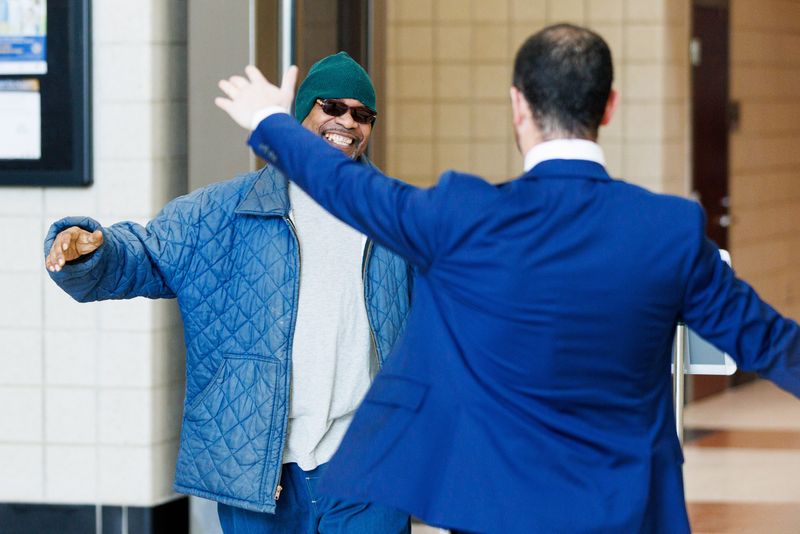
On Feb. 23, almost exactly 26 years later, a handcuff-free Dillard — declared innocent by a different judge appointed to examine a mountain of new evidence in the case — walked out of the Elkhart County Correctional Complex, a plastic bag stuffed with his belongings in one hand and a big smile on his face. The freezing wind hit his face as Dillard, for the first time in nearly 30 years, breathed air as a free man.
“It’s cold, but it’s a good cold,” he told IndyStar a few days later. “It could’ve been zero degrees. It wouldn’t have mattered.”
Dillard, who turns 58 next month, is the seventh person to be exonerated in Elkhart since 2006. That is the highest per capita in Indiana and one of the highest in the United States among cities with more than 40,000 residents. The cases have led to multimillion-dollar payouts to settle lawsuit claims that Elkhart police and prosecutors framed people for crimes they did not commit. Several of them, including Dillard’s, have alleged a similar pattern of misconduct: The use of fabricated testimonies from fake witnesses, like jailhouse informants, in exchange for plea deals.
A few of the cases, including Dillard’s, are tied to a group of police officers known for brutalizing and targeting Elkhart’s Black residents. An IndyStar investigation published last year revealed that the group, known as the Wolverines, abused their power for years, cloaking themselves in a code of silence and operating with impunity. The officers climbed the ranks. Some became detectives. One of them, Dillard alleged, helped harass and coerce a witness into testifying against him.
Including the year he spent in jail awaiting trial, Dillard was incarcerated for 27 years, nearly half his life. In that time, his children became parents. His grandchildren became teenagers. His co-defendant, Eddie Fredrick, died in prison in 2005. One of his sisters died in 2020. His elderly mother, who’d hoped to live long enough to see her son freed, died last fall.
And another family — Thomas’ — now faces the grim possibility that their loved one’s killers are still out there.
‘An innocent man’
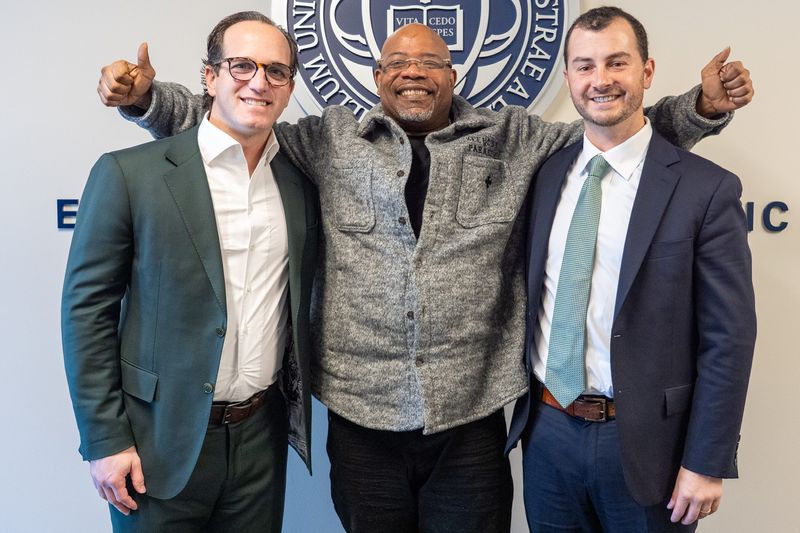
Elliot Slosar, a partner at the Chicago law firm Loevy & Loevy and one of Dillard’s attorneys, began reinvestigating the case almost a decade ago.
He said that at that time, there were clear red flags: There was no physical evidence linking Dillard and Fredrick to the crime. The prosecution’s star witness, a woman who claimed she was with the men the night they killed Thomas, made contradictory statements to police. And other eyewitnesses did not recount seeing a woman that night. The case also relied on jailhouse informants whom Slosar described as “incentivized liars.”
It took several more years of investigation to uncover more evidence, including letters in which one of the prosecutors arranged favorable plea deals for the witnesses in exchange for their testimonies and notes in which the same prosecutor listed 30 holes and inconsistencies in the star witness’ account of the murder.
A 273-page petition Dillard’s attorneys filed in 2021 laid out more troubling allegations. Among them: The prosecutors — one is now an Elkhart County judge and another later became Indiana’s attorney general — relied on a bogus star witness who had sexual relations with one of the detectives, an Elkhart police veteran with a long history of inappropriate behavior. Another witness has since said in an affidavit that he lied because detectives forced him to incriminate Dillard and Fredrick. Shortly after the two men were convicted, police received information from a woman who said she knew the real killers and she helped get rid of the murder weapon. Yet, this information was never disclosed.
The years-long legal battle went all the way to the Indiana Supreme Court, where attorneys for Dillard and three others successfully sought to have the cases heard by special judges. They argued that the Elkhart County judge initially assigned to hear the cases — a former deputy prosecutor who was married to a former Elkhart reserve officer — has deep entanglements with the very same law enforcement officials they’re accusing of misconduct.
In 2024, Dillard’s attorneys asked Elkhart Superior Court Judge Christopher Spataro, a special judge appointed to hear Dillard’s petition, to disqualify the Elkhart County Prosecutor’s Office from the case, arguing it’s the very same agency that’s been accused of misconduct. Spataro granted the request last summer, saying that appointing a special prosecutor “is the best way to ensure public confidence in the outcome of the proceedings.”
Kevin Murphy, one of Dillard’s attorneys and a lawyer at the Notre Dame Exoneration Justice Clinic, which has organized a GoFundMe to help Dillard rebuild his life, said the appointments of a special judge and a special prosecutor were “major turning points” in the case.
“I think if you presented any reasonable person with the facts of Reggie’s case,” Murphy said, “they’ll reach the same conclusion that this is an innocent man who is wrongfully convicted.”
Seeking a special judge and a special prosecutor added a few more years of litigation, but Slosar said “that time was valuable because it gave him the opportunity to end up before a fair judge, before a fair court.”
The two former prosecutors who tried Dillard and Fredrick nearly 30 years ago, Elkhart Circuit Court Judge Michael Christofeno and former Indiana Attorney General Curtis Hill, did not respond to requests for comment.
In a brief statement that called Thomas’ murder “a tragedy,” the Elkhart Police Department did not address Dillard’s release. But the agency said the Elkhart County Homicide Unit, a multi-agency team that investigates cold case homicides, “will determine the next steps.”
Former Elkhart Det. Steve Rezutko, whom Dillard accused of manufacturing the false star witness to frame him, died by suicide in 2019. That witness, Tricia Mock, died in 2022.
The legal fight to exonerate Dillard neared its end in February, when Spataro heard testimony that information pointing to other suspects was withheld, a violation of the Brady rule, which requires prosecutors to disclose evidence favorable to the defense. Toward the end of the three-day hearing, Marshall County Prosecutor Nelson Chipman, the appointed special prosecutor, filed a motion to dismiss. Elkhart County Prosecutor Vicki Becker filed a separate motion to dismiss, saying in a statement that her office is “unable to proceed with any further prosecution of the case.” Becker declined to comment further.
Spataro granted dismissal on Feb. 23, writing in his order that Dillard is “an innocent man” who remained in custody. Dillard was released shortly after.
‘Too much has been taken from me’
Janiece Dillard constantly worried she wouldn’t be around long enough to see her son come home. She was suffering several illnesses, including cancer.
“I just want to hug him. I want to kiss him. I want to hold his hands. I want to rub his face,” she told IndyStar in early 2025. “What mother do you know does not want to do that?”
Her Stage 4 lung cancer soon spread to her brain. On Oct. 17, 2025, as she was lying in a hospital bed surrounded by family, her son-in-law held a phone up to her ear so that Reginald Dillard, then still in prison, could talk to her.
“And I said,” Dillard recalled, ‘Momma, I need you Momma. I need you to stay with us.'”
Dillard had known his mother was sick, but he did not know she was dying. He said his family did not tell him to spare him from further pain.
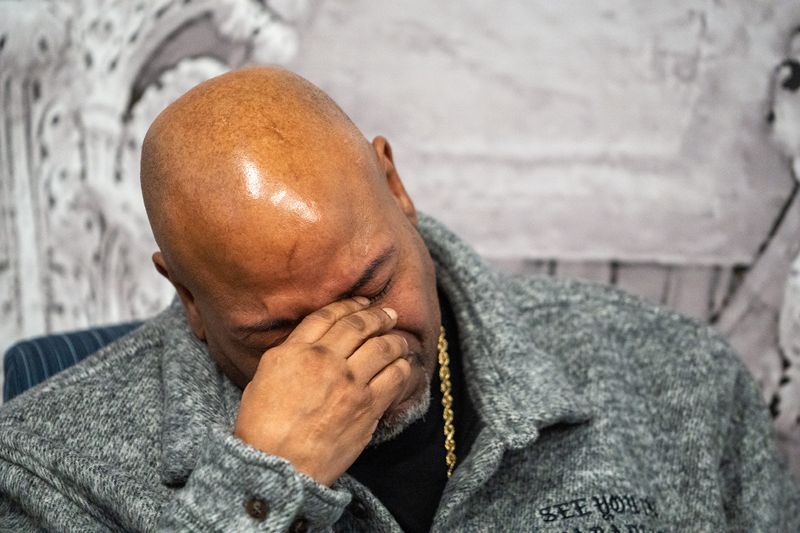
“I was thinking she’s going to be okay,” Dillard said as he began to cry. “She wasn’t okay.”
His mother died that day, just four months before he was released.
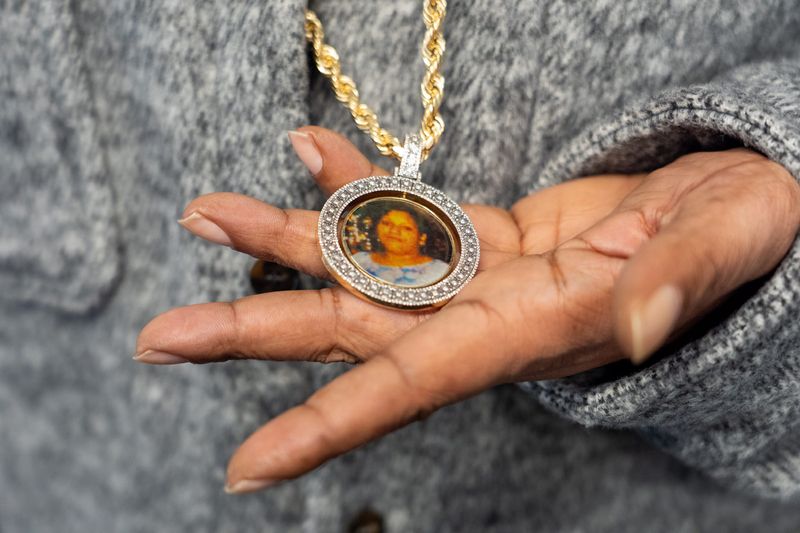
“I’m just trying to be a better man and a better father now. That’s it,” said Dillard, who wears a necklace with his mother and stepfather’s pictures. “Too much has been taken away from me.”
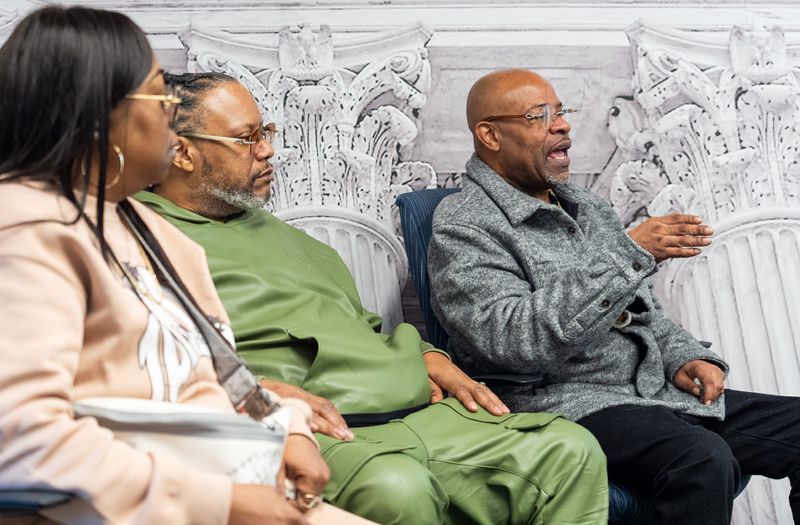
Dillard has six children. One of them is Chaneita Wilson, who was only 7 when her father was imprisoned. Now, she has three children, the oldest of whom will soon turn 18. Dillard, Wilson said, never got to hold his grandchildren when they were babies.
“We’ll never be able to experience that,” she said. “My children don’t know him.”
Wilson and Dillard saw each other in person for the first time in nearly 30 years after he was released. She said she immediately noticed how much she and her siblings look like him, at least “from the nose up.”
“We just kind of hugged each other,” Wilson said. “I recalled him telling me, ‘Don’t cry.’ I still cried like a baby.”
She took him to a mall near her home in Michigan. She recalled watching him walk really fast, as if he was in a hurry to get things done, to make up for lost time.
“I’m like, ‘Dad, just look around for a second. Have you ever seen anything like this or been to a place like this before? Just take it in for a second,'” Wilson recalled. “He took a second, he slowed down, he took it in. That’s what I want to see for my Dad.”
“I just want to see him at peace,” she added. “I don’t think he’s ever experienced it.”
‘I owe him a great apology’
Steven Thomas described his older brother as a man with a kind heart, a former U.S. Marine who spiraled into drug addiction. For years, he was convinced that his brother’s killers had been punished. He even testified at Dillard and Fredrick’s sentencing and pushed for the maximum punishment.
According to a transcript of the hearing, he called the men “vicious” and “coldhearted” killers.
Now, he said evidence that he and his family had been lied to is “overwhelming.”
“I owe him a great apology,” Thomas said of Dillard, “and that would not be enough.”
Thomas said Elkhart police should now work to hold the real killers accountable.
“To the police department,” he said, “do your job.”
Contact IndyStar reporter Kristine Phillips at (317) 444-3026 or at kphillips@indystar.com.
This article originally appeared on Indianapolis Star: He was falsely convicted of murder. It took 27 years to clear his name
Reporting by Kristine Phillips, Indianapolis Star / Indianapolis Star
USA TODAY Network via Reuters Connect