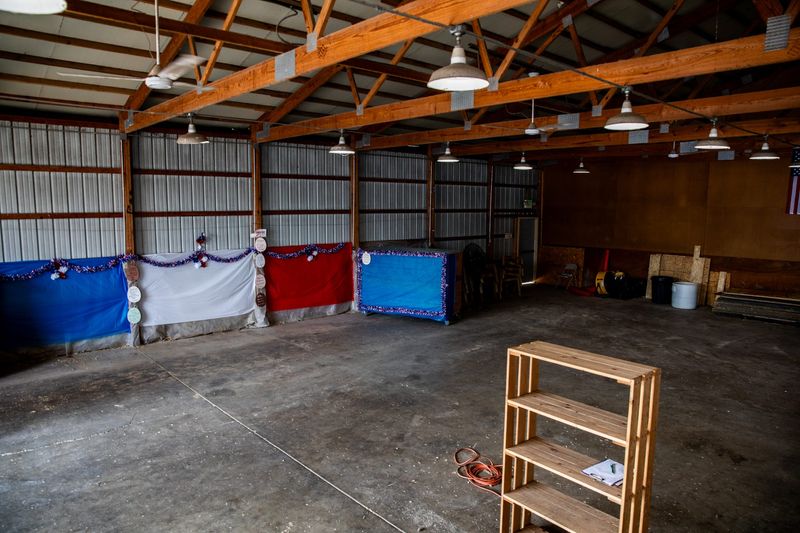
LAFAYETTE, IN — Dusty floors and fans blowing every which way in the Tippecanoe County poultry barn usually means one thing: The yearly 4-H exhibition is in full swing.

But as of July 18, multiple confirmed cases of the disease infectious coryza among the 250-odd birds in the barn ended this year’s poultry show before it could start. All birds were sent home to prevent further spread, and the July 21 poultry show was canceled, according to a post in the 4-H poultry Tippecanoe County Facebook group.
IC is a highly infectious respiratory bird illness with symptoms like lethargic birds, lots of nasal discharge and potential face swelling under the eye or in a bird’s wattle. Caused by bacterial infection, it can be transmitted through direct or indirect contact between birds, airborne droplets or contaminated drinking water, according to the Merck Veterinary Manual.
After Purdue Extension employees called the Indiana State Board of Animal Health over the weekend detailing bird symptoms consistent with avian influenza, a BOAH veterinarian was dispatched to test for diseases throughout the entire barn, BOAH Communications Director Denise Spears said.
“The feeling is that there was enough stress from the the birds moving because of the show, getting penned at the show and the different environment. Then you’ve got weather conditions on top of all of that, and some secondary infections. That’s what started making the birds get ill very quickly,” Spears said.
Although no avian influenza was found, five of the six test groups were positive for IC and a collection of several other common avian diseases. Because the fair had just started, the decision was made to pull the plug on the entire poultry operation for 2026 to mitigate the spread.
“The disease does not present a human health threat,” the Tippecanoe County 4-H Facebook page said in a post on July 19. “This decision that was made in tandem by project superintendents, Fair Board volunteers, 4-H Educators, and Indiana BOAH to send poultry exhibits home is an effort to deter further spread of illness and protect the health of the poultry.”
Requests for more information from Purdue Extension were not successful.
All 4-H exhibitors who show livestock are also required to pass the Youth for the Quality Care of Animals exam, which is focused on healthy practices for animal care. Although the exam covers many of the basics, Spears says the higher-level education on symptom identification for specific diseases like IC isn’t something explicitly taught; it’s picked up by being directly invested in learning about animal care across a 4-Her’s time in the project.
“Part of the process of learning to raise the animals and show them is watching for clinical signs (of disease),” Spears said. “That can be hard to do because depending on some of these diseases, it’s not always obvious. They may be fine at home, but once they get crated, they get driven over, they’re suddenly in a different environment with lots of other birds, and then the stress hits, and that’s when the diseases will start flaring up.”
Birds coming to the fair have to undergo mandatory blood testing to ensure they are negative for pullorum typhoid, but otherwise it is up to 4-Hers and their families to monitor the health of their birds and to work with veterinarians to ensure a healthy flock. And Spears said that can be more of an exception than the norm.
“We’re always trying to teach and encourage good biosecurity at a flock level,” Spears said. “A lot of these diseases, especially when you’re talking about backyard poultry, these birds don’t get seen by a veterinarian very often, if ever. There aren’t a lot of veterinarians out there who see poultry. It’s not something where (people say) ‘Oh, let’s go get them tested for everything under the sun before they go to the fair,’ because that’s just not a realistic option.”
One of the Tippecanoe County 4-H poultry club superintendents, Megan Lannert, stressed that despite adhering to every state-sanctioned health and safety measure, the situation was simply unavoidable in the end.
“I mean, there is literally nothing else that a could have been done to prevent it,” Lannert said. “We do our typhoid blood testing. We do everything that is asked of us (that is) state-mandatory. It’s just one of those things that unfortunately it’s a fluke, it happens and we’re just trying to make the best of it for the kids.”
Tanner Dunk, the lone 10-year poultry club member of this year’s fair, planned to show 15 bird exhibits over the coming week. Despite losing his final chance to show in the project, Dunk was happy to sacrifice it to look after his animals.
“The safety of my birds is the important thing to me; I don’t care about the show as much. It’s not a big deal,” Dunk said.
“One of the true spirits of 4-H right there is that you’re not worried about the winning,” Lannert said. “Does it suck that (Dunk’s) not going to get to show? Absolutely. But he was more worried about the safety of his birds and everybody else’s. And that goes to show the care that these kids have for their animals.”
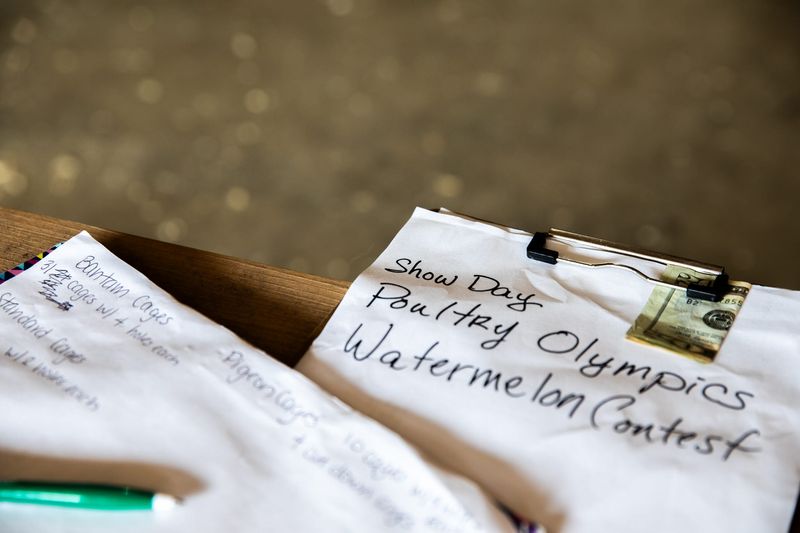
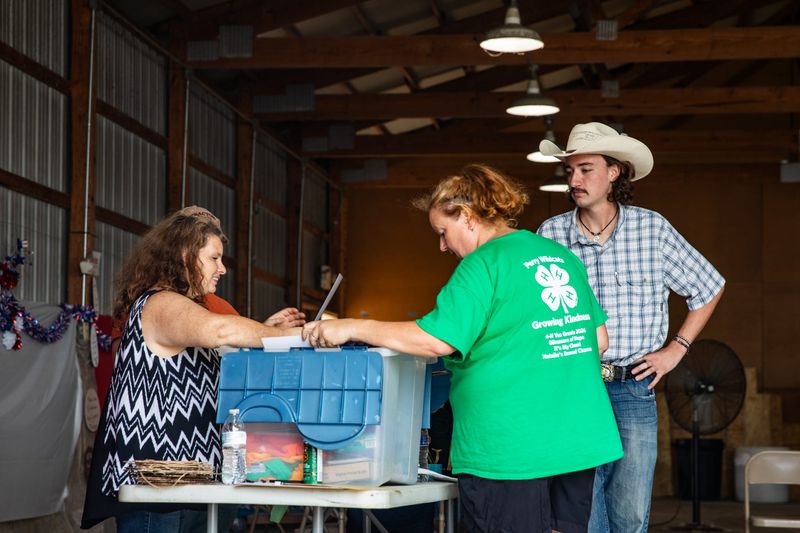
Despite the barn closure, the poultry club intends to still host events throughout the fair, including a Poultry Olympics event on July 21 at 9 a.m. and a greased watermelon contest later in the week, to boost morale and provide space for poultry 4-Hers to continue enjoying the community that fair week offers them.
This article originally appeared on Lafayette Journal & Courier: Bird disease infections close poultry barn at Tippecanoe County 4-H Fair
Reporting by Elijah Greene, Lafayette Journal & Courier / Lafayette Journal & Courier
USA TODAY Network via Reuters Connect
By Elijah Greene, Lafayette Journal & Courier | USA TODAY Network