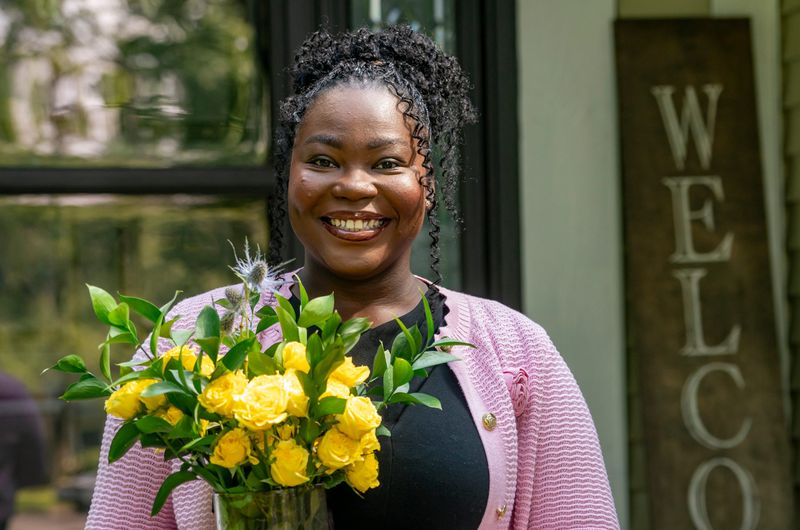
Weedberline Cetoute is leaning on her Christian faith.
After the Supreme Court ruled 6-3 on June 25 that President Donald Trump could end Temporary Protected Status, or TPS, for more than 350,000 Haitian and Syrian nationals, Cetoute is hoping Congress will intervene and provide a path for many in her community to stay in the United States.

After all, the ruling would impact her family. Cetoute’s father is a beneficiary of TPS.
Temporary Protected Status is a designation the U.S. government grants to countries facing political and economic instability, armed conflict and natural disasters. Beneficiaries can live and work to obtain their basic life needs in the United State without fear of deportation.
As with many families relying on TPS, Cetoute’s father is a provider for his family. Through his daughter, he declined to be interviewed.
“We’re not giving up the fight,” said Cetoute, a recent Ivy Tech Community College graduate and youth mentoring director for the Haitian Grassroots Coalition of Midwest. “We’re doing the best we can, spreading the word, asking people to reach out to the Congress, reach out to the representatives, asking them to look at the case, see what they can do.”
Congress granted Temporary Protected Status to Haiti in 2010 after a devastating earthquake. The designation has been renewed several times since then as social, economic and political conditions further deteriorated and spawned severe overlapping humanitarian crises in Haiti. Still, former U.S. Department of Homeland Security Secretary Kristi Noem determined that conditions in the country no longer met the requirements for TPS.
But Haitians, advocates and immigrant rights groups point out that the State Department still maintains a “Do Not Travel” advisory for the Caribbean nation. The federal agency warns that widespread armed gang violence, terrorism, kidnappings, carjackings, gender- and sexual-violence and unpredictable violent demonstrations as commonplace. Amid the violence, healthcare options are limited.
This is the nation Cetoute’s father would return to if he’s forced back home.
Cole Varga, CEO of Indianapolis-based Exodus Refugee Immigration, Inc, called the SCOTUS decision a disaster for Haitians.
“The cancelations of TPS were so clearly motivated by race rather than the humanitarian concerns within countries of origin,” he said in a statement. “This will further push immigrants from Haiti and other countries to the fringes of what used to be a welcoming country.”
Holding out hope
Haiti’s TPS designation is still valid for now, but the U.S. Citizenship and Immigration Services announced July 10 that Haitians with TPS will lose the authorization to work legally in the United States on July 24. The expiration date carries with it the risk of deportation.
Cetoute, who moved to the Dominican Republic before coming to Indianapolis in 2023, said Haitians are hoping Congress will take up their cause. She said many in her community have experienced whiplash regarding their status.
And while her legal status is not in dispute, uncertainty hangs over the lives Haitians with TPS have built in Central Indiana. Many sold everything in pursuit of the American dream, Cetoute said, adding that they pay taxes, started businesses and go to school.
“People are trying to live a better life and help those that were left behind in Haiti,” she said. “Just for them to disregard all of that contribution that we add to the government and to the country and just ask us to get out, it’s hurtful.”
Two bills have been introduced in Congress that could provide a path forward for Haitians. H.R. 1689 passed the House in April and is currently on the Senate calendar. The bipartisan bill directs the homeland security secretary to extend Haiti’s TPS designation.
On the Senate side, S.4814 does the same. It’s been referred to the judiciary committee.
In the aftermath of the SCOTUS ruling, advocates such as Faith in Action International, the umbrella for Faith in Indiana, have renewed calls for U.S. senators to publicly support the senate bill, though Trump is widely expected to veto any such legislation.
“The power to protect Haitian families now rests with Congress,” said Gary Alphonse, pastor of Jesus Christ Worship Center, said in a statement issued by the organization.
A fleeing flock
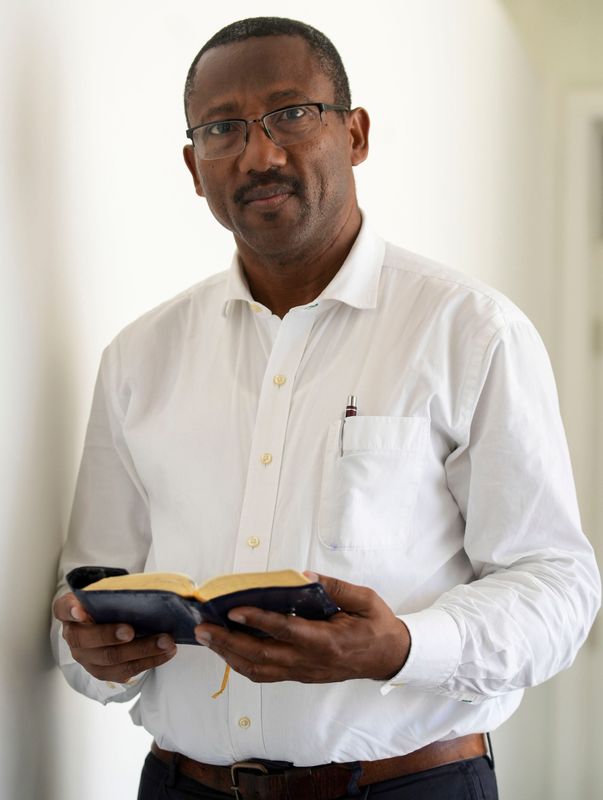
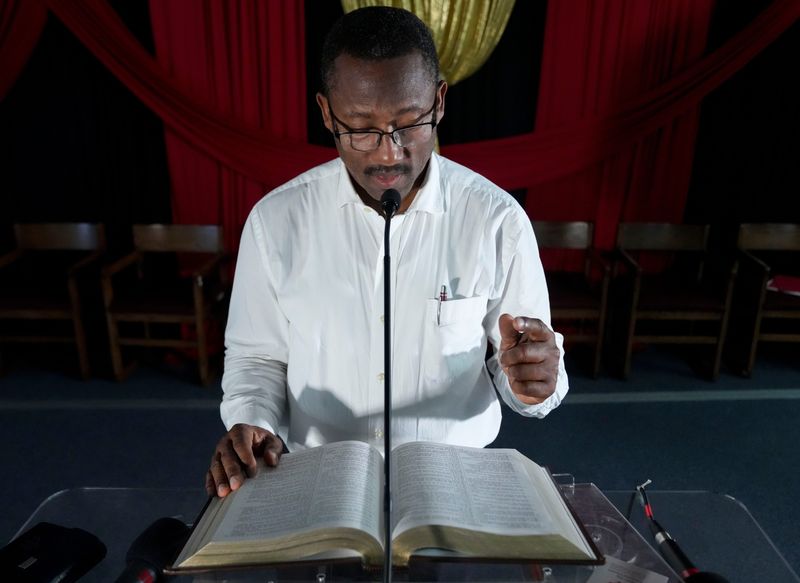
At times, Pastor Michelet William has had a crisis of faith.
The Seventh-day Adventist pastor leads three congregations of nearly 800 Haitian worshippers on the east and west sides Indianapolis. His congregations are comprised of people who are citizens, TPS beneficiaries and those with open asylum cases, humanitarian parole and other statuses. Many of his attendees are TPS holders.
But since Trump’s immigration crackdown began, William said he’s lost more than 60% of his worshippers.
As news of ICE agents appearing in the city spread last year, some parishioners stayed home, fearful the church would be targeted for deportation arrests. That’s because the Trump administration revoked a Biden-era humanitarian parole program that allowed Cubans, Haitians, Nicaraguans, and Venezuelans with a U.S. sponsor to reside and work in the States for a two-year period.
The ramped up immigration enforcement sparked panic, William said. Some parishioners left the city altogether, self-deporting or going to Canada, Mexico and Brazil, rather than returning to the violence, crumbling infrastructure and economic instability marring Haiti.
“This has created a fear among our members,” he said.
His largest congregation had less than 10 worshippers for more than a decade. As more and more Haitians moved to Indiana seeking work and a lower cost of living, the congregation grew to roughly 400 worshippers. Attendance now stands at 150.
The second largest, located on the east side, had about 300 attendees. There’s less than 100 now, William said. The smallest decreased from 100 to about 40-50 in-person during Saturday services.
The pastor has tried his best to accommodate those left, offering online services more consistently and increasing access for parishioners via WhatsApp or other social media. But because each church is supported by tithes and offerings, the decreasing attendance has caused financial instability. William said he can’t ask more from those who’ve stayed ― many have lost their jobs as employers anticipate changes to legal status.
“They’re unable to pay their rent. They’re unable to buy food,” he said. “So they will call their pastor and ask, ‘Can you help?'”
His church closed some ministries and struggles to pay two mortgages. The church is weighing whether to sell one of its sites.
The Supreme Court ruling on TPS will only make things worse, William said.
“The idea to give up sometimes passes through my mind,” he said.
To be more of use to his remaining flock, William learned how to be an electrician. He figured he could help those who’ve stayed home and can no longer afford ― or are too afraid to seek ― help with plumbing, electrical, or HVAC needs.
“Maybe I would be more useful doing that than just ―” he said, pausing before continuing his thoughts, “I pray with them, but sometimes you see that prayer is not really acting as fast as it could.”
Contact IndyStar investigative reporter Alexandria Burris at aburris@indystar.com. Follow her on X, formerly Twitter, at @allyburris and on Bluesky at@allymburris.bsky.social.
This article originally appeared on Indianapolis Star: A daughter prays, a pastor worries: Indiana Haitians brace for life after TPS
Reporting by Alexandria Burris, Indianapolis Star / Indianapolis Star
USA TODAY Network via Reuters Connect
By Alexandria Burris, Indianapolis Star | USA TODAY Network