Many Floridians who have already filed their tax returns are watching their bank accounts and wondering what the holdup is, especially those people for whom the annual refund is how they catch up on bills, delayed purchases, or hurricane-season prep. It doesn’t help that social media fills up with rumors, myths, and worst-case scenarios to make you fear the worst.
Here’s what to know about refund delays, how to track your money, and when it’s worth escalating.

Does a delayed refund mean I’m being audited?
No. The IRS says that most delayed refunds are due to math errors or missing information, such as mistyped Social Security numbers, the wrong direct deposit information, or a missing signature. If the IRS needs more information from you, it will reach out by letter, which can add more time as mail is sent and you respond.
Some filings also take more time to review, such as returns claiming the Additional Child Tax Credit, amended returns, and requests for injured spouse relief.
It also depends on how you filed. Most refunds are issued within 21 days when submitted electronically for direct deposit, the IRS said, but mailed returns take up to 6-8 weeks.
Will filing a second return or changing my info speed things up?
No, it will probably just add confusion and slow things down even more. If the IRS is already processing your return, filing another one can trigger additional review instead of a faster payment.
If you realize you truly made a significant mistake, the IRS has a separate process to correct or amend your return, and there is a specific tool to check the status of amended refunds. Amended returns can take up to 16 weeks to process, the IRS said.
For most people, your best bet is to track your existing return using official tools and wait until the IRS clearly indicates there is a problem before making changes.
Do I need to check ‘Where’s My Refund?’ all day?
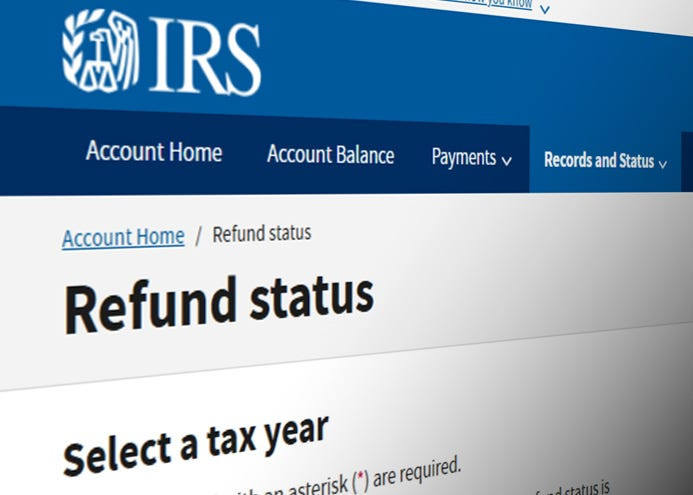
No. You can check the status of your return at irs.gov/wheres-my-refund or with the IRS2GO mobile app. Both tools update once a day, overnight. Refreshing the page over and over will not produce new information because the system is not updated in real time.
For electronic filers, status information is typically available within about 24 hours; for paper filers, it can take roughly four weeks before the first update appears. Once your refund is marked “sent,” it may still take several days for the money to land in your bank account or longer for a paper check to reach your mailbox.
If my refund is delayed, should I call the IRS right away?
Probably not. IRS phone reps will likely see the same status information that you can see. The agency sets thresholds for when a call is appropriate, such as when it has been at least 21 days since you e‑filed, six weeks since you mailed a paper return, or when the online status specifically tells you to contact the IRS.
Even then, you should be prepared for long waits, especially around deadline time, and the possibility that the representative cannot speed things up. For many Florida filers, the more practical step is to keep checking IRS.gov every day and watch the mail for any letter asking for more information or explaining a change in your refund amount.
You should only call the IRS if Where’s My Refund recommends it.
What are the most common reasons refunds are delayed?
There’s also timing to consider. Heavy return volume both early in the season and approaching the April 15 deadline can slow down even clean and perfect electronic returns. The IRS stresses that taxpayers should not rely on a refund arriving by a specific date to cover time‑sensitive bills.
How can Florida taxpayers safely track a delayed refund?
Stick to official IRS channels. Use the “Where’s My Refund?” tool on IRS.gov or the IRS2Go app. You’ll need your Social Security number or taxpayer ID, your filing status, and the exact refund amount from your return.
For Floridians who filed electronically and chose direct deposit, it is reasonable to start checking within a day of filing (or a few days longer if you e-filed a prior-year return) and then once daily from there.
If you filed a paper return or recently received an IRS letter asking for more information, expect the timeline to stretch and rely on those same status-checking tools to see when your refund finally moves.
What is the tax filing deadline?
The deadline to file your taxes is Wednesday, April 15, 2026.
C. A. Bridges is a journalist for the USA TODAY Network-Florida’s service journalism Connect team. You can get all of Florida’s best content directly in your inbox each weekday day by signing up for the free newsletter, Florida TODAY.
This article originally appeared on Tallahassee Democrat: Where’s my refund? Florida taxpayers’ biggest myths about delays answered
Reporting by C. A. Bridges, Daytona Beach News-Journal / Tallahassee Democrat
USA TODAY Network via Reuters Connect