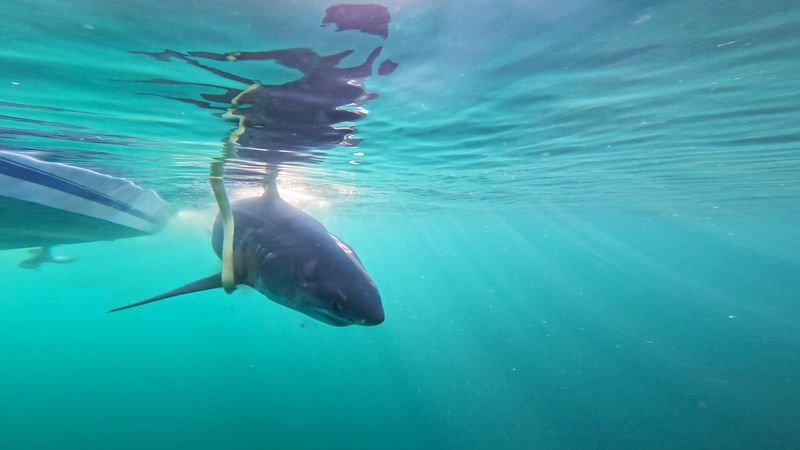
You’re 30 times more likely to be struck by lightning than be bitten by a shark in Florida, according to the Florida FWC, but that doesn’t mean it can’t happen.
There’s actually no beach in Florida where it’s impossible to come across a shark in the water. The Sunshine State is home to the “Shark Bite Capital of the World,” and to 13 different species of sharks who use Florida waters as nursery grounds for their “pups” (shark babies).

Although shark attacks are rare, they still happen every year in Florida’s oceans, particularly when the beaches are crowded in the summer. And it’s officially “shark bite season” — the time of year when shark activity in Florida waters is at its peak. Last year, 30% of the recorded unprovoked shark bites in the world were in Florida.
Here’s what months sharks are most active in Florida oceans, where the most shark bites happen in the state and safety tips for reducing your chance of a shark bite while swimming in Florida.
What months are sharks most active in Florida?
According to the Florida Fish and Wildlife Conservation Commission (FWC) “shark activity is at its peak in Florida waters during April through October, which coincidentally, is also the time period that humans are more likely to be in the water.”
“Sharks typically move inshore and north in the spring and summer, and offshore and south in fall and winter months.”
Which Florida beach has the most shark attacks? Shark bite capital of the world is in Florida
The only scientifically-verified source of its kind in the world, the International Shark Attack File (ISAF) is a worldwide database of shark attacks, and is kept by the Florida Museum of Natural History in Gainesville, Florida.
“The International Shark Attack File (ISAF) is the world’s only scientifically documented, comprehensive database of all known shark attacks,” the ISAF website says. “Initiated in 1958, there are now more than 6,800 individual investigations covering the period from the early 1500s to the present.”
According to the ISAF, the county with the most shark attacks in the state is Volusia County, which is the “Shark Bite Capital of the World” and home to beaches like Daytona, New Smyrna and Ormond Beach.
Safety tips for avoiding shark attacks: Do sharks attack without provocation?
The FWC’s guide to sharing the water with sharks says that there’s no surefire way to avoid a shark bite, but you can reduce your chances of being bitten. Most recorded shark bites are actually unprovoked, according to ISAF.
“Every year, millions of tourists and residents visit Florida’s beaches and waterways, and these beaches and waterways will more than likely contain sharks,” the FWC says.
“According to experts, while there are no guaranteed ways to avoid shark bites, understanding shark behavior could help you make better decisions on when and where to swim.”
Of the 88 shark-human interactions that ISAF investigated in 2024, 47 were unprovoked and 24 were provoked. The other 17 cases included boat bites, a shark-inflicted post-mortem bite (“scavenge”) and several others were unassigned or classified as “unconfirmed.”
ISAF defines unprovoked bites as incidents where a human who didn’t interact with or provoke a shark was bitten.
According to ISAF, provoked bites include “instances when divers are bitten after harassing or trying to touch sharks, bites on spearfisherman, bites on people attempting to feed sharks, bites occurring while unhooking or removing a shark from a fishing net and so forth.”
Here are some tips to reduce your chances of being bitten by a shark, from the FWC:
How many shark attacks were there in Florida in 2024?
Volusia County’s 47 miles of beach have seen 359 recorded unprovoked shark attacks from 1882 through present day, according to the ISAF.
From 2012 to 2021, there were 94 shark bites recorded in Volusia County. In 2024, Volusia County represented 57% of the shark bites in Florida that year, up from 50% in 2023. Of the 14 shark bites that took place in Florida last year, eight were in Volusia.
“Florida’s 14 cases represent 50% of the U.S. total and 30% of unprovoked bites worldwide. This is lower than Florida’s most recent five-year annual average of 19 incidents,” ISAF says.
Volusia’s shark bite count of eight bites last year was also slightly lower than the average of nine each year.
“Of the six remaining bites, two were in Walton County, and one each occurred in the Martin, Brevard, St. Johns and Indian River counties,” ISAF says. None of the 14 shark bite cases in Florida last year were fatal.
Here are the top 10 Florida counties with the most recorded shark bites and how many bites have occurred in each county since 1882, according to ISAF:
What beach in Florida has the least amount of shark bites?
Here are the Florida counties with the least recorded shark bites and how many bites have occurred in each county since 1882, according to ISAF:
What time of day are sharks most active in Florida?
According to the FWC, sharks are most active at night and the twilight hours (right before sunrise and right after sunset).
This article originally appeared on The Daytona Beach News-Journal: What month are sharks most active in Florida? What to know about shark bite season
Reporting by Lianna Norman, USA TODAY NETWORK – Florida / The Daytona Beach News-Journal
USA TODAY Network via Reuters Connect