Experts say the lettuce in your grocery store or fast food order is probably safe after thousands nationwide were sickened by cyclosporiasis, a parasitic infection known to cause frequent, “explosive” diarrhea as well as nausea and cramps that can last for weeks.
Iceberg lettuce from Taylor Farms, linked to the largest outbreak, was pulled from store shelves and distribution and is “likely” no longer available to consumers.

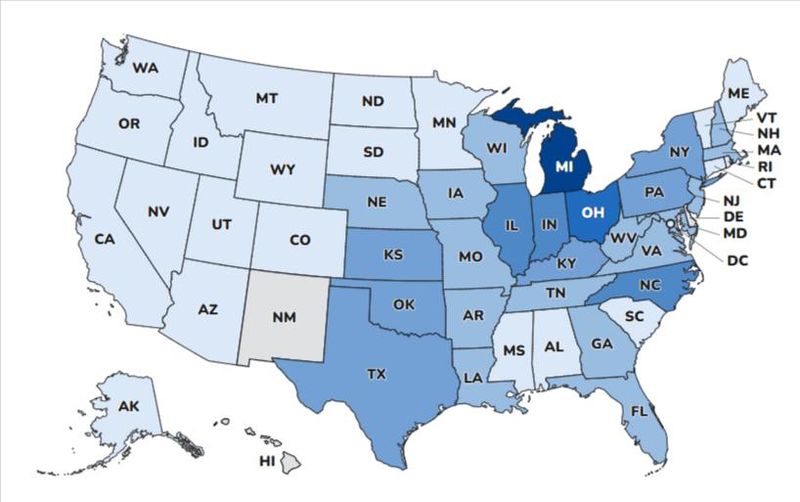
However, the number of cases is still rising rapidly as the Centers for Disease Control and Prevention (CDC) continues to confirm state reports. In an Aug. 11 update, the CDC reported 13,895 confirmed cases in 47 states, up from 10,468 the week before. Cases have now been reported in 47 states, Washington, D.C., and Puerto Rico.
In comparison, just 1,180 cases were reported in the United States between May 1 and August 31, 2025, the CDC said, adding that at least 10,455 additional cases this year have not yet been confirmed by laboratories.
Reported cases in the states are much higher than the CDC’s weekly update, especially in Ohio and Michigan, as state numbers include both probable and confirmed cases and have a faster reporting turnaround than the CDC’s six-week lag. As of Aug. 11, Ohio is reporting 5,023 cases, and Michigan is reporting 12,485 cases and two deaths.
No deaths have been reported in Florida, where 342 cases of the stomach-churning infection have been seen across 42 counties between May 1 and Aug. 1, according to the latest state update. Florida’s cases have not been linked to any specific outbreak.
Is lettuce safe to eat again?
Residents in Michigan, the state hit the hardest, were told on Aug. 6 that they “can resume routine guidance for consuming lettuce and salad greens,” according to the state’s health department. “The broad, precautionary recommendation to avoid bagged salad mixes during the Cyclospora outbreak is no longer in effect.
“Residents may resume their usual food handling practices and make choices based on their individual risk tolerance.”
The specific recalled lettuce products associated with the outbreak are indeed likely no longer on shelves or in restaurant kitchens, food scientist and food industry consultant Dr. Bryan Quoc Le told USA TODAY.
“In general cases, cyclospora doesn’t survive for much longer than a few weeks, although there are some rare cases in which it can remain on lettuce for longer. But by that time, the lettuce will have gone through spoilage and won’t be edible anyway,” he said.
That said, foodborne outbreaks have been traced to nearly every aisle of the grocery store, and no one precaution can guarantee a 100% success rate in avoiding illness. Experts like Dr. Sharon Nachman, chief of the Division of Pediatric Infectious Disease at Stony Brook Children’s Hospital, say it is not only reasonable, but probably a good idea, to keep some guardrails in place.
“(Washing produce) in a water-vinegar solution shakes the cyclospora off, and then a good rinse afterwards will really help cut down on any pathogen load,” she advised. “If you’re really thinking about keeping your family safe, it’s not unreasonable to continue to wash your lettuce at this time while we watch the numbers go down.”
To have as much control as possible over your produce, experts say you can source it from your local farmers’ market, choose fruits and vegetables with strong, smooth rinds that can easily be washed, or try growing it yourself.
The largest outbreak has been connected to iceberg lettuce grown in Mexico and distributed by California-based Taylor Farms in nine states, prompting recalls and warnings for consumers who bought certain packaged salad products. The Food and Drug Administration is also investigating smaller outbreaks around the country.
Cyclosporiasis by the numbers
Between May 1 and Aug. 11, the CDC has confirmed reports of:
Cyclosporiasis cases in Florida
Florida continues to see steady cyclosporiasis case activity, with state health officials reporting 342 cases between May 1 and Aug. 1, out of a total of 352 reported cases this year.
The Florida Department of Health has reported an average of 246 cases of cyclosporiasis every year from 2015 through 2025, with a notable rise in cases in the last few years. Cases surged over 500 in both 2019 and 2022.
The next state update will be released on Aug. 13.
What are the symptoms of cyclosporiasis?
Symptoms of cyclosporiasis may vary, according to the CDC, but watery diarrhea is the most common. Others include loss of appetite, weight loss, cramping, bloating, increased gas, nausea, and fatigue.
Some people may also experience vomiting, body aches, headaches, low-grade fever, and other flu-like symptoms. Others may show no symptoms at all.
For healthy adults, the illness can be miserable but manageable; for older residents, pregnant women, and people with weakened immune systems, the risk of dehydration and complications is significantly higher.
Symptoms can begin to show from two days to two weeks or more after infection, the CDC said. Without treatment, symptoms can last anywhere from a few days to a month or longer.
If symptoms persist, contact your health care provider.
C. A. Bridges is a journalist for the USA TODAY Network-Florida’s service journalism Connect team. You can get all of Florida’s best content directly in your inbox each weekday by signing up for the free newsletter, Florida TODAY.
This article originally appeared on Naples Daily News: US cyclosporiasis cases up to nearly 14,000. Is Florida lettuce safe?
Reporting by Mary Walrath-Holdridge and C. A. Bridges, USA TODAY NETWORK – Florida / Naples Daily News
USA TODAY Network via Reuters Connect
By Mary Walrath-Holdridge and C. A. Bridges, USA TODAY NETWORK – Florida | USA TODAY Network