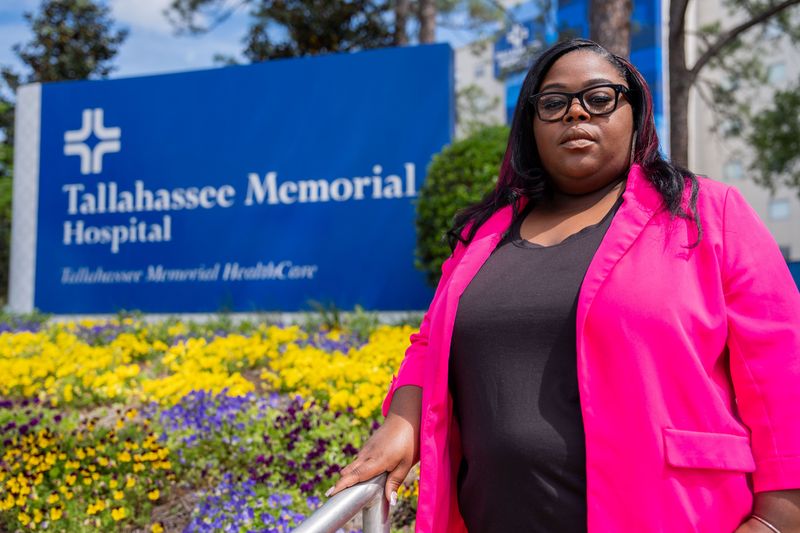
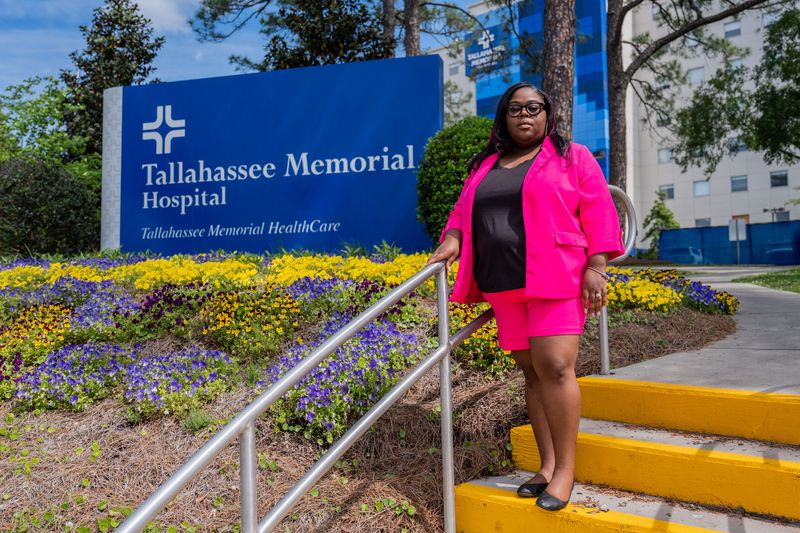
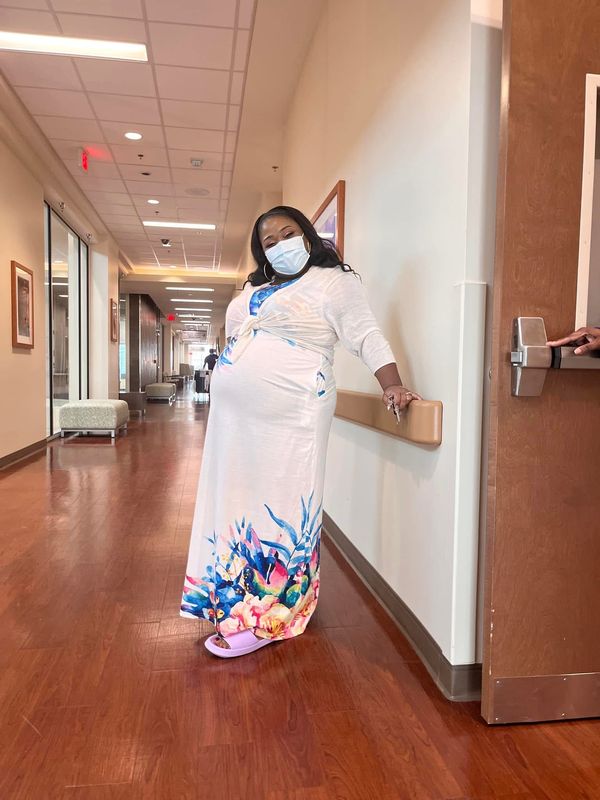
Brianna Bennett had three previous cesarean sections, with each one’s recovery more difficult than the last. So when it came time to have her fourth child, she knew she wanted this birth to be different.
She was prepared to labor for however long it took to have a vaginal birth, but after a day and a half of contractions, doctors started pressing her to schedule a C-section.

“I do not consent to a C-section,” Bennett told her doctors at Tallahassee Memorial HealthCare.
But her wishes didn’t matter.
“I’m going to call the court, and we’re going to get a court order for you to have this C-section,” the doctor said.
“Call whoever you need to,” Bennett said.
Before long, Bennett’s hospital room became a makeshift courtroom that decided her and her baby’s fate.
A tablet was rolled in with a judge and lawyers present over a Zoom call, and for two hours, Bennett tried to advocate for herself, amid her ongoing contractions, as her doctors and the TMH lawyers made their case.
The judge sided with the hospital, granting them permission to perform the procedure against Bennett’s will, and she was whisked away to surgery.
Now, three years later, Bennett is speaking out.
Her story — first reported by ProPublica — underscores the broader debate unfolding across the country where questions of bodily autonomy collide with growing assertions of fetal personhood.
There are only a few instances when a patient loses the right to refuse medical treatment — when a person is suffering mental illness or impairment from substance abuse.
But rare cases like Bennett’s show how autonomy can be overridden, even when mental faculties are intact, when hospitals and courts determine a fetus’ rights outweigh the mother’s wishes.
Bringing awareness to the reality of court-ordered C-sections through her story has become a personal mission for Bennett. She’s even taking legal steps to hopefully spark policy changes that will spare other expecting mothers from the same traumatic experience she endured.
“I don’t even know the words to help someone understand,” she said. “It’s unimaginable.”
She said no to surgery again and again – until the court stepped in
Throughout all her previous pregnancies, Bennett said her doctors rattled off lists of horrifying outcomes that they said were likely to happen if she tried to give birth vaginally. So, heeding the advice she thought was made in her best interest, she scheduled the C-sections.
But in 2023, when her youngest, Aubree, was on the way, Bennett didn’t think she could attend to her newborn, her three other children and her mother, who recently started requiring more help, while trying to recover from a surgery.
So she did her research, weighed the risks and chose what she felt was best for her and her baby.
Bennett’s OB-GYN discharged her as a patient after she refused to schedule the C-section when she was 37 weeks pregnant. When Bennett went into labor and arrived at TMH, she ended up being assigned the same doctor.
Her medical team would come and go while Bennett tried to labor according to her birth plan. Despite telling her that her vitals and the baby’s vitals all looked fine, they kept asking if she had set a goal for when she’d give up and opt for a C-section.
She continued to stand her ground.
“I told them, I’m perfectly fine laboring naturally,” Bennett said. “I don’t need anything, I would like to just labor in peace … is that too much to ask for?”
They told her they couldn’t support her choice knowing the risk of uterine rupture was high after having three prior C-sections, but Bennett wasn’t going to budge on her decision unless she or her baby showed signs of distress.
The morning after she was admitted into the hospital, she said her doctor came into her room and said, “Today’s a great day to have a C-section.”
Again, Bennett said no.
Hours later, when she still wouldn’t sign off on the surgery, the doctor said he was going to have a mental health team evaluate her.
“I said, ‘Wow, I find it quite ironic that as long as you saw me in triage, as long as it seemed I was going with whatever you wanted me to do … I was mentally competent,'” Bennett said. “But now that I’m advocating for my body and my rights, I’m mentally incapacitated or unstable.”
She said he stepped out of the room and came back five minutes later telling her the court would intervene.
How the justice system gets final say on delivery decisions
Bennett hired a doula a week before she went into labor. Ironically, she said, her doula had come across a story about a woman who’d been forced into a C-section and suggested in passing that Bennett might want to have a lawyer on standby.
Given that it was decades ago, Bennett didn’t believe this was a possibility she had to fear.
“Boy, was I wrong,” she said.
Bennett’s is one of three cases in which TMH requested an emergency court hearing to be permitted to perform a C-section against a laboring mother’s will, according to ProPublica’s report.
Records for these court hearings aren’t accessible, unlike other cases routinely logged on the clerk of courts’ website.
State Attorney Jack Campbell said he’s personally been involved in two: “It’s terrible, the whole thing,” he said in an interview.
A court ordered C-section is “very rare,” he said, but when they are initiated, it starts with him getting a call from the hospital telling him a mother is refusing a C-section, and by doing this, it could kill the mother and her unborn child.
He then files the petition to secure a circuit judge for the virtual hearing and calls the Public Defender’s Office so the mother can be represented. In Bennett’s case, Campbell said the public defender “refused to come.”
A spokesperson for Jessica Yeary, the elected Public Defender for the 2nd Judicial Circuit, has not responded to a request for comment to explain why no one came to represent Bennett.
In most instances, people have autonomy over their bodies and can refuse medical care, even if it’s to their own demise, Campbell said.
Typically, the only times the law forcibly steps in — as permitted under the Baker Act and Marchman Act — is when self-harm or suicide is on the line due to mental illness or severe impairment from substance abuse.
But in rare cases, like Bennett’s, pregnant women can also find themselves at the mercy of the state.
“It’s not just about you anymore,” Campbell said. “Under Florida law, your unborn child, past a certain point, has rights and has legal standing. They have a right to live.”
TMH argued risk; Bennett argued trust in her body
TMH laid out its case on the necessity of the C-section for the judge. Bennett said they spouted off risk factors such as obesity, her prior C-sections and that it was an emergency.
TMH spokesperson Sarah Cannon said the hospital doesn’t have a statement about Bennett’s case and declined to do an interview “in accordance with our policies around patient confidentiality.”
Bennett said when it was her turn to speak, she went down the list of her research, which was extensive enough for the judge to question whether she worked in the medical field. She even pointed out that during the entire hearing, the monitors she was attached to never once started beeping to alert them that there was an emergency.
Campbell said the specific risk factors make no difference to him as he’s not a doctor: “I’m totally deferring to the physician. I would never go there if the doctor didn’t say they’re going to die.”
In the two times he’s had to file a petition for a court-ordered C-section, he said the doctors have been “unequivocal about their decision.”
If a doctor’s giving him a choice between life and death, Campbell said, “I’m going to save you every time. That’s just the way I’m wired.”
“I understand that there are strong emotions on that, and I hate the fact that sometimes I have to hurt people to help them,” he added.
Bennett argues that mothers are born with instincts to know what’s right for her and her baby.
“I don’t know a woman who, in their right mind, will take care of a baby, nurture a baby from conception to nine months and then want the baby to die,” she said.
A traumatic delivery left Bennett with lasting scars
Bennett’s C-section took eight hours. None of the experiences — immediate skin-to-skin contact, breastfeeding — she was looking forward to happened.
It was the worst abdominal surgery she said she’s ever had.
Two days later, she was discharged from the hospital with her newborn and a wound vacuum for her incision — something she never needed after her other C-sections. The recovery was long and hard.
“I still needed help lifting my legs into bed after two months,” Bennett said.
She didn’t start to feel like herself again until three months later. But the scars are still there.
The experience left Bennett with post-traumatic stress disorder and a crippling fear of doctors that sent her to therapy after the birth of her now three-year-old.
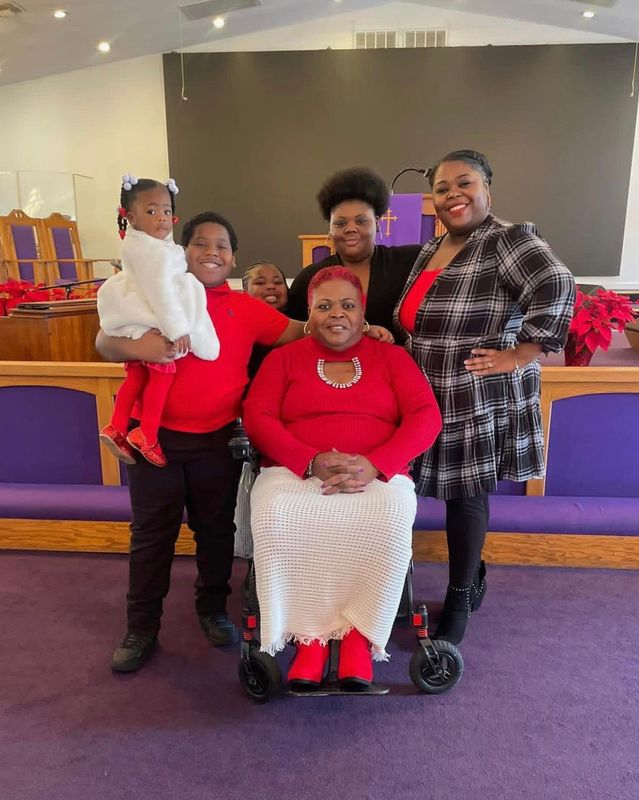
Her children and mother were her biggest support system in the aftermath, and when she learned of a woman in Jacksonville who had a story almost identical to hers, the shared experiences started to heal a part of her too.
“It’s more common than I thought,” Bennett said.
The women’s stories have made national headlines and sparked the launch of a petition seeking the end of forced C-sections. Bennett has also started a GoFundMe to help foot the bill for the costly legal battle she’s embarking upon because until there’re protections in place, this could happen to more people, she said.
“Once you walk through those (hospital) doors, the clock starts, and you’re on their time clock, not your own,” she said.
Elena Barrera can be reached at ebarrera@tallahassee.com. Follow her on X: @elenabarreraaa.
This article originally appeared on Tallahassee Democrat: ‘Unimaginable’: Court orders C-section against mother’s objections
Reporting by Elena Barrera, Tallahassee Democrat / Tallahassee Democrat
USA TODAY Network via Reuters Connect