Members of the community turned out Tuesday night to learn more about the academic medical center on the horizon and share their concerns about how quickly the proposed sale of Tallahassee Memorial HealthCare to Florida State University has unfolded.
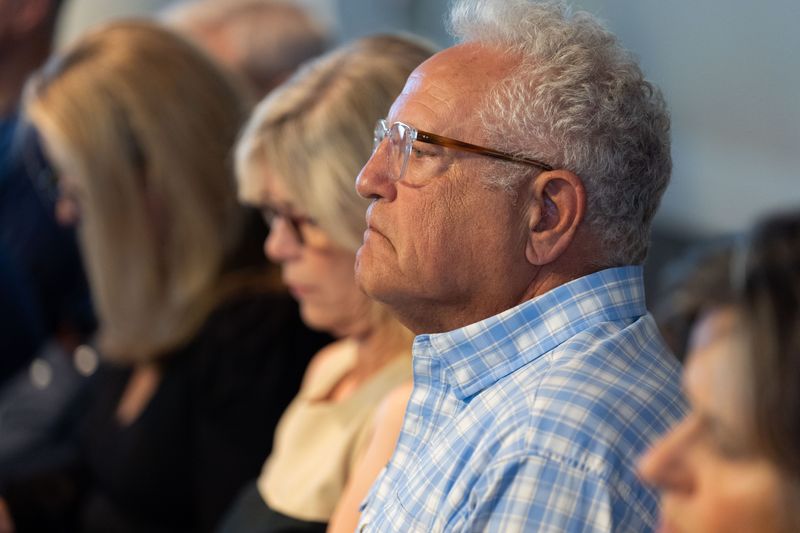
Roughly 70 residents filed into the sanctuary of Watson Temple Church of God in Christ Nov. 18 ready to listen to a panel of speakers that volunteered to share insight into the thorny partnership that is taking shape amid bursts of controversy.

TMH and FSU have spent the better part of a year negotiating a deal that would further the two entities’ partnership to create a full-blown academic medical center — similar to its Gainesville rival, UF Health.
They recently reached a standstill, however, when commissioners and community leaders called for Florida A&M University and Tallahassee State College to have a seat at the table. Now debates are underway about the governance of the hospital, as TMH has been adamant about community representatives having the majority over academic institutions that are subject to the political agenda of a governor who has reshaped higher education in Florida.
Gary Yordon, a political consultant who’s been hired to help TMH navigate the process, spoke at the town hall hosted by the Tallahassee Branch of the NAACP and Tallahassee ALERT. He reiterated TMH’s position and firm stance on keeping the community at the heart of the hospital.
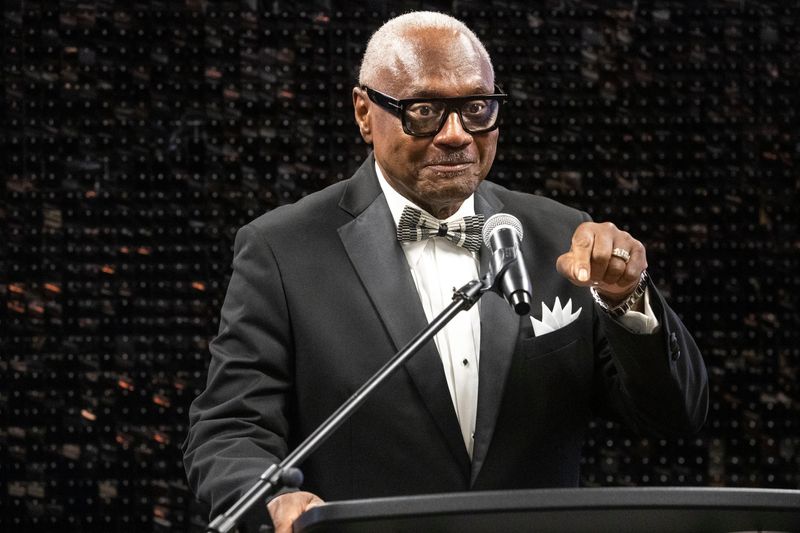
Dr. Henry Lewis, former dean of FAMU’s College of Pharmacy, a past interim FAMU president and former county commissioner, also spoke out at the gathering.
The proposed medical enterprise is being pitched as a gamechanger for Tallahassee healthcare, bringing jobs, lucrative government contracts and more specialists that could one day ensure capital city residents don’t have to travel to receive elevated care.
Still, Lewis expressed his deep reservations about the process, which many in the room shared.
Town hall attendees want to slow down hospital negotiations
Yordon said many of the concerns expressed during the town hall have been what TMH board members have been discussing: “It does not go unnoticed.”
The hospital found out about FSU’s interest in purchasing the city’s long-held hospital assets when the community did, he said. In general, the idea of an academic health center is supported, but where they’re running into issues is in the determination of what that looks like.
“One of the main issues for TMH is the transfer to Florida State University, the property, if the commission agrees that that’s the direction they want to go,” Yordon said.
There’s fear that this will happen before a deal is finalized, he added. While some have suggested a vote could happen as early as December, the hospital has been clear that it doesn’t want a transfer to happen until every question about how the partnership will unfold is answered.
“Don’t give away the hospital until we know what the contracts say,” Yordon said.
He acknowledged all the discussions about FAMU’s and TSC’s place on the board, but Yordon said that’s not TMH’s decision to make. The hospital is remaining committed to the community, and “any formula” that gives a majority of seats to academic institutions is a “non-starter” for them.
A hush came over the room when Lewis, who is widely respected in the FAMU community, took the lectern. He said his biggest issue was FAMU’s stake in the deal, and that it should be a concern for everyone at the city.
“This is not the first time that the potential for FAMU to come under the reaches of FSU,” Lewis said.
He listed several instances where progress for FAMU had been tabled, including the application for an engineering school and for the university’s pharmacy school to go from a bachelors program to a doctorate program, not to mention the loss of the original FAMU College of Law in 1968.
The current deal on the table is non-binding, Lewis said, so there’s no need to rush.
“Don’t get me wrong, an academic health science center I support,” Lewis said. “I do not support it as it’s constructed in this memorandum of understanding.”
He called for a lawsuit to stop the negotiations because “this is not right for us … the way they are doing it.”
“And that’s what we got to fight right now — the process,” he added.
He even suggested that the rush to sell may even come down to football. The university has long pursued one of it’s top goals of becoming a member of the prestigious Association of American Universities (AAU). The AAU is an invite-only association made up of America’s leading universities that are selected based on their preeminence in areas such as research, entrepreneurship and student success.
In 2023, the University of South Florida as well as the University of Miami got the invite but FSU did not. As FSU has sought to escape the clutches of the Atlantic Coast Conference (ACC), the Big Ten has only admitted universities that are AAU member institutions.
“Is this about football? Is this really about joining the Big Ten?” Lewis questioned. “This is about becoming an academic AAU University … because most, if not all, of AAU universities have an academic health science center, and most of them are in the Big Ten.”
However, at multiple points in the past, FSU President Richard McCullough has said the university wants to buy the city’s ownership stake in the hospital land and assets because it is motivated to help the community and improve healthcare options “for those that can afford it and those who can’t afford it.”
But he has also said the partnership may be one of necessity.
“This is a big deal. If this doesn’t get done then the healthcare will not probably improve and you will have others come into the city to try to get that hospital and turn it into a for-profit hospital and not a community hospital,” he told commissioners at a recent meeting. “That’s not a threat. It’s just a reality as I see it.”
‘The Dailey Plan’: County Commissioner Bill Proctor bashes TMH-FSU deal
While County Commissioner Bill Proctor was unable to attend the town hall he submitted a three page statement that was read aloud for the crowd. In it, he demanded the “merger be abandoned” while calling for an investigation of the negotiations and more.
He scolded the city — specifically Mayor John Dailey and City Manager Reese Goad — for what he said was secretly conspiring with FSU to push this deal through, calling it an act of “cowardice” for not orchestrating it in the “public sunshine.”
“The TMH CEO, initially, was frustrated and upset by the announcement of a pending merger between the hospital and the FSU Medical school,” Proctor wrote. “The TMH Board of Directors was surprised. The four city commissioners were surprised.”
In addition to his objections to the process, he detailed his concerns about the impact of this agreement on lower income individuals and minority groups.
Bond Community Health and Neighborhood Health, he noted, are not included in the arrangement between FSU and TMH: “It remains unclear how the patients at Bond and Neighborhood will be accommodated for hospitalization if the Dailey Plan for the merger occurs.”
Proctor said both entities have served “poor people religiously adhering to the words of Jesus,” and FSU will “seek to steal” patients from them to train doctors.
FSU’s adherence to the state’s elimination of DEI also alarmed Proctor, as this could threaten Black doctors, pharmacists, nurses and professionals with FSU as the “new overlords over the TMH medical experience.”
“It is very important that racism is not a driving force and a functional principle for a hospital to operate under,” he wrote.
McCullough has said that the idea of state control of FSU and by extension TMH is something of a “red herring.”
“Certainly, you could point to a few things that that the state has weighed in on for the whole state of Florida, right? But in general, we operate with full academic freedom to do what we want,” he told commissioners at a previous meeting. “We work hand in hand with the state and the legislative branch to talk to them about what our strategic initiatives look like and what we want to do, they’re all wrapped up in what’s good for the state, what’s good for the students.”
Local government watchdog reporter Elena Barrera can be reached at ebarrera@tallahassee.com. Follow her on X: @elenabarreraaa.
This article originally appeared on Tallahassee Democrat: NAACP town hall on TMH-FSU hospital deal draws concerned crowd. Here’s what they said
Reporting by Elena Barrera, Tallahassee Democrat / Tallahassee Democrat
USA TODAY Network via Reuters Connect