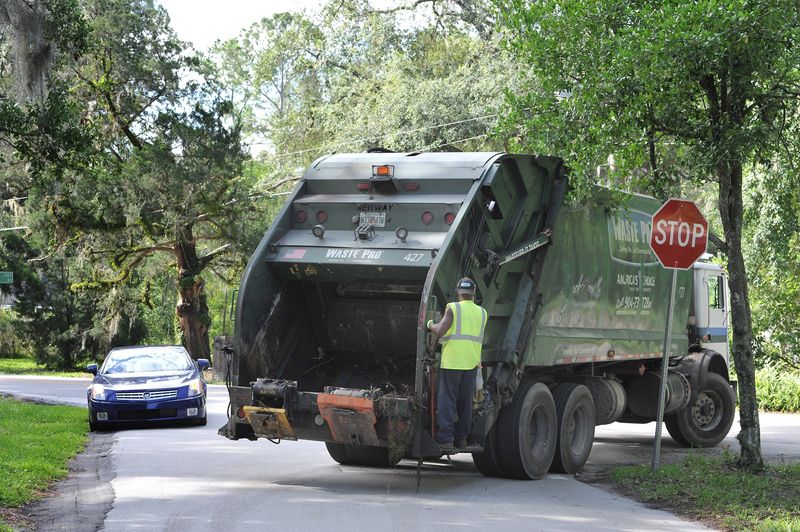
Many Jacksonville households eligible to get a break on a $172.20 jump in the residential garbage fee have not applied for the exemption, according to a Florida Times-Union review.
Through mid-December, the city’s Social Services Division had received 904 applications and approved 809 of them. The city had denied 48 applications and was reviewing 47.

While this is the first year of the low-income exemption for the garbage fee, it is based on the same income qualifications as a long-standing exemption for the city’s stormwater fee.
The highwater mark for that low-income exemption was in 2010 when the city approved 3,054 applications for the stormwater fee, according to city figures. Based on the number of approvals at that time, several thousand households still could be eligible the exemption this time around but have not applied for it.
City Council established the low-income exemption for homeowners least able to afford paying more for garbage collection service. Homeowners who qualify still have time to apply if their household income is within 150% of the federal poverty level. The application deadline is March 31.
Northside Coalition of Jacksonville President Kelly Frazier said she thinks many people who could benefit from the program just don’t know it’s an option for them.
“A lot of people are looking for ways to save and for many, every penny counts,” she said.
Garbage fee and stormwater fee covered by same application
City Council boosted the residential garbage fee to $324 per year, up from the $151.80 per year fee that had been in place since 2010. Mayor Donna Deegan supported the increase that brings fee revenue closer to the cost of the service.
Jacksonville residents who qualify for the low-income exemption can avoid the higher cost. They will continue to pay at the $151.80 annual rate rather than the new, higher fee.
Those who qualify for the exemption will not pay the city’s annual stormwater fee. The stormwater fee for an average residence is $60 per year. That adds up to a total savings of $232.20 on those two fees.
The city’s garbage fee and stormwater fee each show up as non-ad valorem assessments on the property tax bills that went out in November.
The city sent out mailers in early May 2025 about the increase in the garbage fee that included information on the exemption program.
Income criteria is based on poverty level and size of household
The application for the exemption is available online or residents also can call (904) 630-CITY to request the application.
Based on the current poverty level, a household with one person in it would get the exemption if the gross income is not more than $23,475.
For a two-person household, the gross income limit is $31,725, for a three-person household it’s $39,975, for a four-person household it is $48,225, for a five-person household it is $56,475, for a six-person household it is $64,725, for a seven-person household it is $72,975 and for an eight-person household it is $81,225.
Applicants must count all sources of income including job-related pay, disability, Social Security, unemployment benefits, child support and pensions, among other income streams.
About 24% of Jacksonville residents fall under 150% of the poverty level, which is higher than the state average of 20% and the national average of 19%, according to State of Jax data.
But the U.S. Census and other sources tracking income do not show how many people who own their residences have household incomes within 150% of the poverty level. That makes it impossible to put a figure on how many households in Jacksonville are eligible for the low-income exemption for the garbage fee and stormwater fee.
The exemption does not apply to rental property.
This article originally appeared on Florida Times-Union: Low-income residents can avoid garbage fee jump if they apply for break
Reporting by David Bauerlein, Jacksonville Florida Times-Union / Florida Times-Union
USA TODAY Network via Reuters Connect