One of the largest development projects in Tallahassee’s future could soon take a major step forward as plans begin to take shape for the Welaunee Arch, a 4,800-acre tract in the northeast part of the city slated for thousands of homes and extensive commercial growth.
Officials say no buyer or developer has been identified yet, and just over half of the area’s total acreage can be developed.

The property owner, Powerhouse Inc., is already organizing a public awareness effort to gauge support, field questions – and quell concerns.
The Arch is the last big swath of land that can be developed on the overall Welaunee property.
Once called Welaunee Plantation, it was a huge tract of land intended for quail hunting, having been assembled from former farms and cotton plantations. Records show it was owned for many years by the Fleischmann family and later other private owners.
Its entirety spans a little over 6,600 acres, divided into the Toe, the Heel and the Arch. The Arch land also will be home to the Northeast Park, a Blueprint-funded project on the southwest corner of the Arch’s borders.
Here’s a breakdown of the Welaunee Critical Area Plan first approved in 2020:
The Toe is south of Interstate 10 between Centerville Road and Miccosukee Road. This includes both Canopy and the Toe-East. The Heel is north of the I-10 interchange between Miccosukee Road and Mahan Drive. The Arch is north of I-10 between Miccosukee Road, Centerville Road, Roberts Road and Crump Road.
Already hundreds of homes are located within the Toe now that Canopy at Welaunee was built out, becoming one of Tallahassee’s newest master-planned communities.
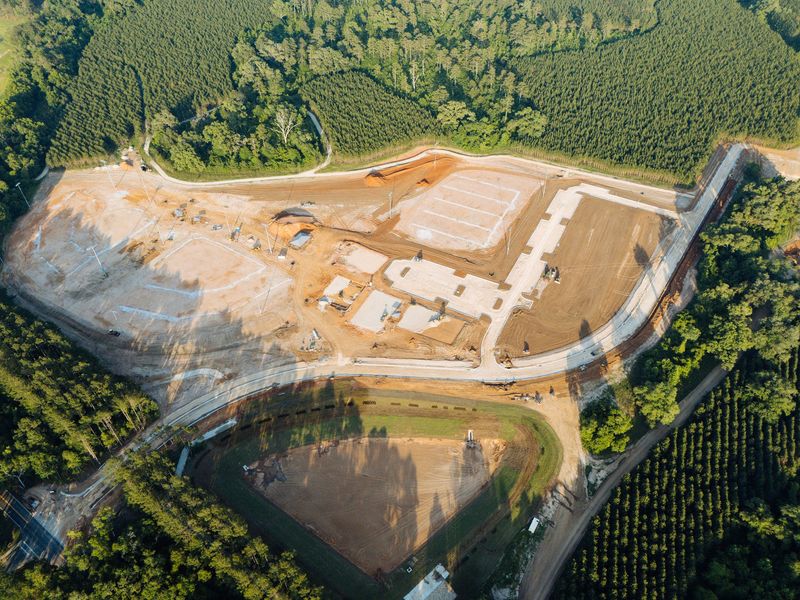
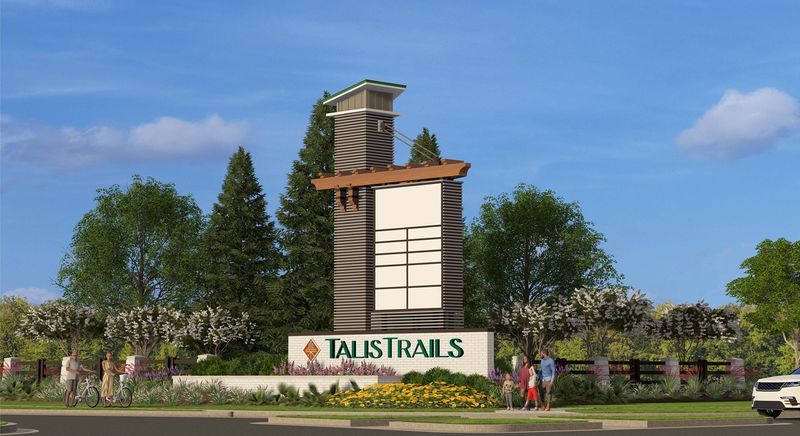
Now Jacksonville-based GreenPointe Holdings is building Talis Trails, spanning roughly 900 acres, within the Heel.
Environmentalists say this level of development is unnecessary, stripping the land of trees and creating traffic congestion to vex nearby neighborhoods.
“As you move people further out, the traffic is going to impact the roads all around it, and that’s going to extend more than just within Welaunee,” said Scott Hannahs, president of the Centerville Rural Community Association.
Hannahs, who’s also a board member for Keep It Rural, a grassroots groups advocating for environmentally conscious development, said he’s all for smart growth. The problem, he added, is that there’s plenty of options for urban infill, while development within Welaunee is classic urban sprawl.
“There’s actually studies and reviews and urban planning that is smart growth,” Hannahs said. “But, this isn’t it.”
In 2021, Keep it Rural joined a collection of neighborhood groups and advocates to support a master plan for the property. City and County Commissioners backed what was seen as a compromise, with only commissioners Jeremy Matlow and Bill Proctor voting no, after nine months of hard negotiations and amendments that set aside land for a wildlife habitat park and set traffic requirements for new development.
“Is this master plan perfect? Not on your life. But, it’s pretty good,” said County Commissioner Rick Minor at the time.
Welaunee Arch plan could be submitted in coming weeks
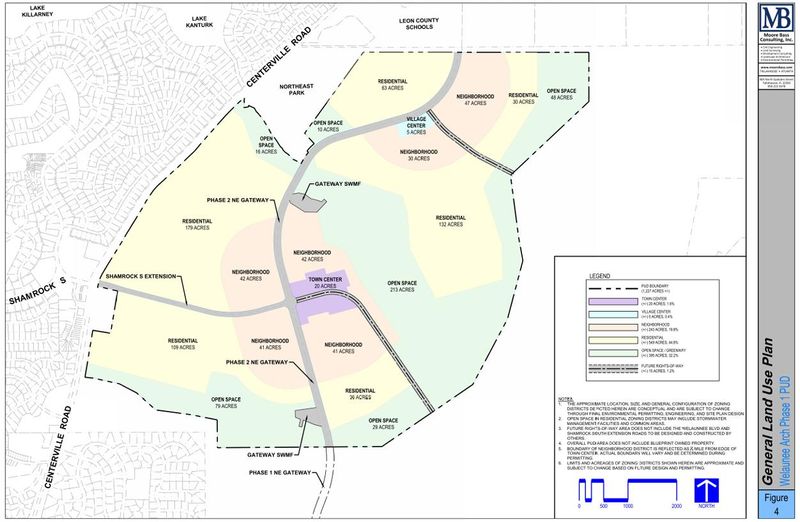
An open house organized by Powerhouse Inc. took place late last month and drew around 100 residents. The event, where engineers and others with Moore Base Consulting attended, featured maps with general plans.
The idea was to give people a sense of what’s possible. Attorney Gary Hunter, a partner at the Holtzman Vogel law firm’s Tallahassee office, is representing the Welaunee Arch property owner.
In an email to the Tallahassee Democrat, Hunter said a proposed Planned Unit Development, or PUD, application may be submitted to the city for permit review in the next few weeks.
A PUD is a special master plan for a large piece of land. Instead of following standard zoning rules lot by lot, a developer and local government agree on an overall vision that can mix different housing types (like single-family homes and townhomes) with shared amenities and sometimes even commercial areas.
“Importantly, the landowner has no buyers or current interest,” he said. “However, it appears more logical for all concerned to plan this as a large tract as opposed to having smaller PUDs with no connected vision for the area.”
He also said 40% of the Arch is reserved for conservation and no development will take place.
While Welaunee is inside the city limits, Leon County Commissioner Brian Welch posted about the open house on his Facebook page. He said it was his first opportunity to learn more about what’s planned.
“Like any PUD, it is the property owner’s intention to go ahead and get a PUD approved so that when a buyer comes along or a developer comes along to purchase and develop the property, then they’ve already got this step out of the way,” Welch said.
“That is essentially what they are doing … It’s just really the next step in the process of developing that property, which we all know is going to be developed.”
What happens when Welaunee Arch PUD gets submitted
The massive undertaking to transform the Welaunee property into Tallahassee’s future of growth involves both public and private investment.
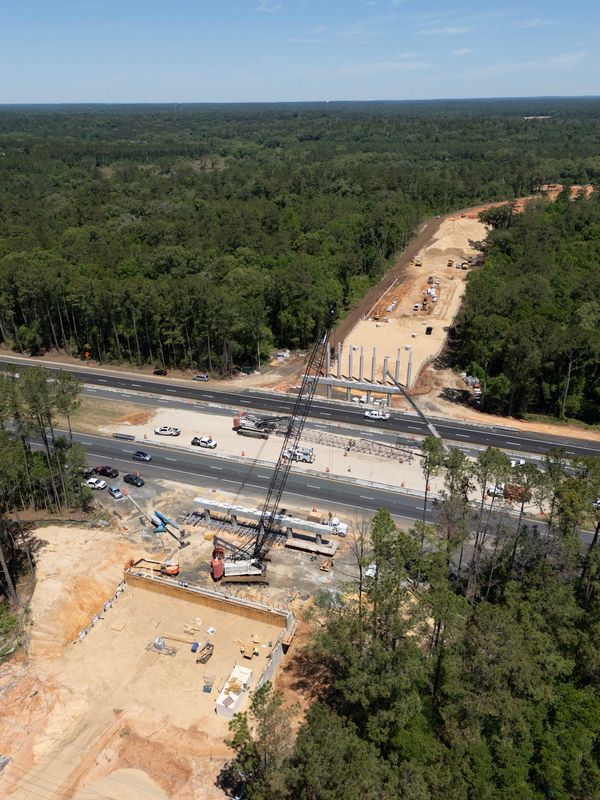
On the public side, millions in Blueprint-funded infrastructure projects are under construction as part of the Northeast Gateway, such as a bridge to Welaunee Boulevard that will connect to Interstate 10 and a planned interstate exit in about 10 to 15 years. The bridge is slated to be completed by mid-2027.
In addition, construction of the Northeast Gateway access road (Killimore Lane) began last year. It will provide access to the Northeast Park.
On the private side, Powerhouse Inc. is priming the land for a potential developer or multiple developers that will build within the Welaunee Arch. So the PUD application is the next step.
Once submitted, the city will kickstart the permit review process. John Reddick, who heads the city’s Growth Management Department, said there’s been no application submitted yet.
But any application would first be reviewed by the department’s staff and wind up ultimately before the City Commission for final approval, Reddick said, adding no city staffers attended the recent open house in an official capacity.
The Welaunee Critical Area Master Plan approved in 2021 was the final result that received community engagement and folded in the grand vision for the next wave of major growth in the state capital.
“Now, the next step for whatever comes forward in these planning developments will need to demonstrate that it is going to meet the expectations of those adopted critical areas,” Reddick said.
One feature mentioned in the critical area master plan is a designated habitat park, something Hannahs and other environmentalists want to see take place. Such a park protects wildlife habitat and natural resources, often with limited public access such as trails and spots for nature viewing.
It serves as “the best location for a larger conservation area and would be more beneficial than adding additional open space to the Welaunee Toe-East,” the plan said. It would require a developer, once one buys the land, to pull from conservation areas in each of the main parts of Welaunee to create the larger habitat park.
“The Welaunee Toe-East is centrally located in Welaunee where the Interstate-10 Interchange with Welaunee Boulevard is planned, but the proposed Welaunee Habitat Park area is on the edge of the Urban Services Area and would serve as a transition from more intense development in Welaunee to less intense development in rural areas,” the plan said.
Hannahs said this is an attractive option for conservation because a developer could get a reduction in open space and build denser where appropriate. This would create more connectivity and a more cohesive development.
“The unique thing about the habitat park is that it is upland,” he said. “It’s not swamp. Everybody makes the swamp their open space, and it’s nice and good, and building in the swamp would be bad. We have very little conserved upland forest in that the area that just doesn’t get conserved much.”
Contact Economic Development Reporter TaMaryn Waters at tlwaters@tallahassee.com and follow @TaMarynWaters on X.
This article originally appeared on Tallahassee Democrat: Last big piece of Welaunee coming into focus for development
Reporting by TaMaryn Waters, Tallahassee Democrat / Tallahassee Democrat
USA TODAY Network via Reuters Connect
By TaMaryn Waters, Tallahassee Democrat | USA TODAY Network