Lakeland Housing Authority is seeking to convert more than 200 public housing units to Section 8 housing in the upcoming year.
Ben Stevenson, executive director of Lakeland Housing Authority, said the agency will seek to convert approximately 225 public housing units across seven of its properties to the federal Housing Choice Voucher program, called Section 8 housing, under the U.S. Department of Housing and Urban Development.

“Housing authorities throughout the country have been facing reductions in public housing funds since the 1980s, but we still have to meet the need of our growing populations,” he told city commissioners at their July 20 meeting.
Currently, Stevenson said if an apartment rents for $1,000 and the tenant was expected to pay $100, then public housing program would offer a rebate of roughly $100, providing the housing agency with only $200 for upkeep and maintenance of the unit. That leaves a significant shortfall.
Under HUD’s Rental Assistance Demonstration program, housing authorities can apply to convert public housing units into Section 8 housing, Stevenson said, resulting in higher funding returns. If the same unit rented for $1,000, and the tenant still paid $100, the Section 8 voucher would cover the other $900 up to fair market value for the unit.
“Our reason for doing the RAD program is so we can maintain the properties we do have, so people have decent and sanitary living conditions,” Stevenson told The Ledger.
The housing authority will need file an application to HUD for approval, which identifies the properties where it wants to turn iunits into Section 8 housing. Stevenson gave a proposed list to city commissioners on July 20:
Most of the properties identified for conversation by Stevenson are tax-credit properties where the housing agency owns the land but the building is owned by a developer or investor.
LHA’s board of directors approved the conversion in July 2025, with the city conducting an environmental review to ensure the housing sites are safe in September. Stevenson sought and received a promise of a letter of support July 20 from the City Commission in a unanimous vote.
Stevenson said this conversion has been done by other area housing authorities, including Tampa, Orlando, Palm Beach, Miami-Dade and Jacksonville.
“It’s our turn,” he said.
What does this mean for tenants?
Stevenson said the conversion to Section 8 housing will not immediately impact the tenants.
If the agency’s plan is approved, tenants may receive new lease agreements, but their rights are protected under the federal RAD program to stay in their current homes. The current residents do not need to reapply, and their rent portion remains capped at 30% of their adjusted monthly income.
Under Section 8 housing, the properties can be privately managed or owned. The housing agency and its investors will continue to own the properties, according to Stevenson, and its associated private property management company, West Lake Management, will continue to manage the units through the conversion and after.
“Lakeland Housing Authority is unique in that we have a private property management company that manages all of our properties,” he said.
Stevenson said the increased funding may allow the agency to make repairs that are currently on a wait list for nine months to be done within a month.
Some housing authorities are using the federal conversion program, which generates more income for housing authorities, to carry out major renovations of the properties.
“We don’t have any immediate plans to do that,” Stevenson said, “The goal is to do maintenance and upkeep on the properties.”
Will it impact wait times or eligbility?
Commissioner Guy LaLonde asked Stevenson several questions about how the conversion may impact the current wait lists for public housing and Section 8 housing in Lakeland and Polk County.
As the units would remain occupied by their current tenants, there would be no immediate changes. Over the long term, it would increase the area’s availability of Section 8 housing, decreasing the overall number of public housing units.
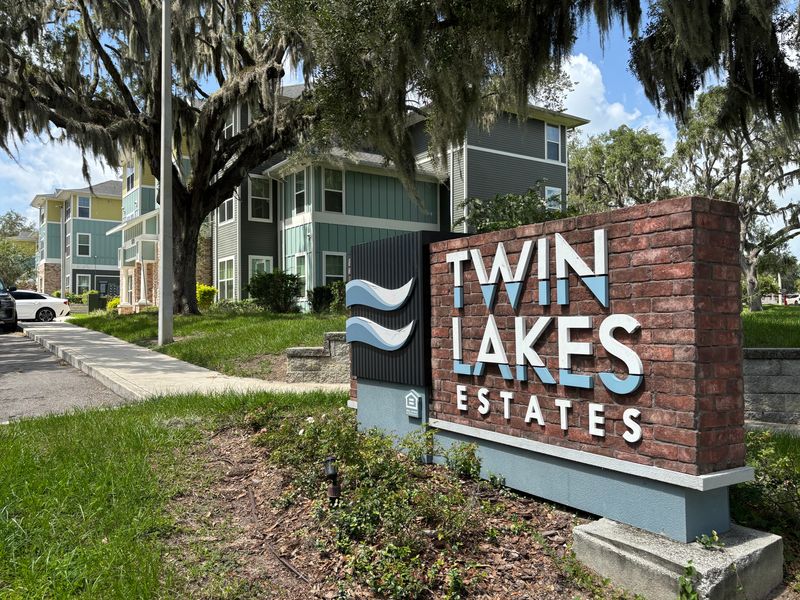
“We’ve been reducing the number of public housing units for years,” Stevenson told The Ledger. “When Twin Lakes Estates was built, there was originally 120 public housing units. Then we threw in units of affordable housing, mixing in public housing and tax credits.”
Stevenson said HUD’s RAD program offers more federal funding for the housing agencies than the public housing rental established in the 1940s.
As these are two separate federal programs, Stevenson said the wait list for public housing and Section 8 vouchers will remain separate. Those individuals in public housing should sign up for Section 8 if eligible. The wait list is not always open to new applications.
An individual or family may meet the criteria to request public housing if they make 80% or less of the average area median income, according to LHA’s website. This is a household income under $69,840 for a family of four, or $48,960 for a single individual, according to Florida Housing Data Clearinghouse’s website.
By comparison, Section 8 housing has stricter fiscal requirements limiting eligibility to those making 50% or less of the area’s average median income. By comparison, for 2026, this would be $43,650 for a family of four, or $30,600 for an individual, according to HUD.
Stevenson was not able to provide an estimate of how many individuals Lakeland Housing Authority currently has on both its public housing and Section 8 wait list, or the average length of time on the wait list before receiving an offer of housing.
This article originally appeared on The Ledger: Lakeland Housing Authority considers Section 8 conversion
Reporting by Sara-Megan Walsh, Lakeland Ledger / The Ledger
USA TODAY Network via Reuters Connect
By Sara-Megan Walsh, Lakeland Ledger | USA TODAY Network