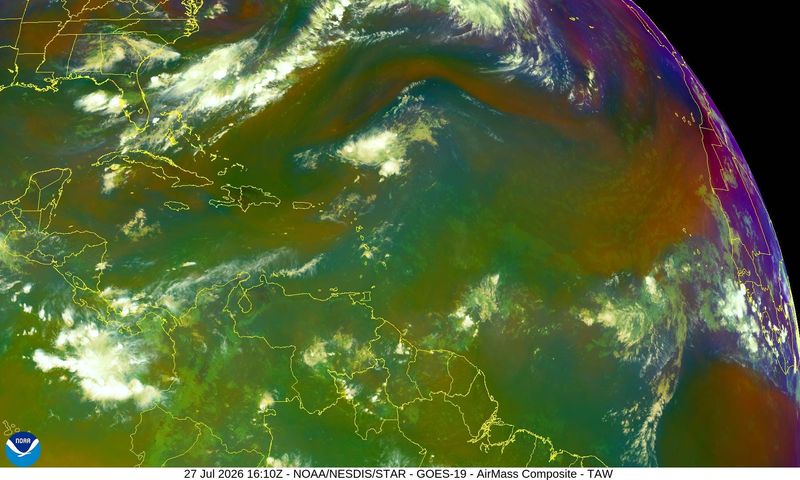
Saharan dust has been in the news for weeks, which isn’t unusual for this time of year.
More is coming.

Florida residents are expected to see another dust plume toward the end of the week and into the weekend, according to AccuWeather.
The dust, known officially as the Saharan Air Layer or SAL, forms over the Sahara Dessert in northern Africa during the late spring, summer and early fall, according to NOAA.
It doesn’t stay there.
Air purifiers available from Amazon
“This layer can travel and impact locations thousands of miles away,” according to NOAA.
While that dust helps prevent tropical cyclones from developing or strengthening, breathing in all that dust can cause problems, especially for some people.
Here’s what you should know as we wait for the latest dust to arrive in Florida.
What is the air quality right now in Florida?
What is Saharan dust?
“The Saharan Air Layer is a mass of very dry, dusty air that forms over the Sahara Desert during the late spring, summer and early fall,” NOAA said.
“SAL activity typically ramps up in mid-June and peaks from late June to mid-August, with new outbreaks occurring every three to five days.”
It can reach as far as Texas and can cover “extensive areas of the Atlantic, sometimes as large as the lower 48,” NOAA said.
“As the SAL crosses the Atlantic, it usually occupies a 2- to 2.5-mile-thick layer of the atmosphere with its base starting about 1 mile above the surface.”
More Saharan dust approaching Florida
“Another dust plume is expected to arrive in Florida at the very end of the week and into the weekend,” according to Alex DaSilva, AccuWeather lead hurricane expert, via email July 27.
“The dust is expected to increase in concentration late this weekend into early next week. It is still common at the start of August for large amounts of Saharan dust to move all the way across the Atlantic and even into the United States.
“Hazy sunshine and enhanced sunsets will be possible with this dust. This dust will also help to keep the main development region quiet for at least 10 days,” reducing the potential for tropical cyclone development.
Is it dangerous to breathe Saharan dust?
Saharan dust is “particle pollution,” which is a mixture of tiny solid and liquid particles in the air we breathe, according to the American Lung Association.
Commonly measured are PM10, which is larger particulate matter, and PM2.5,which is finer but very harmful to your health.
➤ Interactive map: See air quality, including PM10 and PM2.5 levels, where you live
“Though people with chronic lung disease are at higher risk for developing complications from the Saharan dust storm, everyone has the potential to experience symptoms related to dust exposure.”
What are health risks of breathing Saharan dust?
“Saharan dust particles are very small, which makes them easy to inhale into the lungs and potentially enter the bloodstream,” according to the American Lung Association.
“People living with chronic respiratory conditions, including asthma and chronic obstructive pulmonary disease, children and older adults are particularly vulnerable to the dust’s negative health effects.
“However, everyone has the potential to experience respiratory symptoms related to dust exposure.”
“Emerging research links dust episodes with increased incidence and exacerbation of lung diseases, including asthma and chronic obstructive pulmonary disease, especially during peak dust emission seasons,” according to the National Library of Medicine.
“Dust storms can elevate levels of particulate matter (PM) in the atmosphere, including coarse and fine particles capable of penetrating deep into the respiratory system. This can exacerbate respiratory conditions, trigger allergic reactions, and contribute to cardiovascular morbidity, posing risks to vulnerable populations, such as children, the elderly, and individuals with pre-existing respiratory diseases.
“Fine dust particles, with diameters <2.5 micrometers (PM2.5), are of particular concern due to their ability to penetrate deep into the lungs and potentially induce inflammation, oxidative stress and tissue damage.”
Who is most likely to be at risk from Saharan dust?
“Breathing in particle pollution can be harmful to your health. Larger particles, called PM10, irritate the eyes, nose, and throat,” according to the Centers for Disease Control. Dust from roads, farms, dry riverbeds, construction sites, and mines are types of PM10.
“Smaller particles, called PM2.5, are more dangerous because they can get into the deep parts of your lungs — or even into your blood.”
Particle pollution can affect anyone, but it bothers some people more than others. According to the CDC, people most likely to be bothered by particle pollution include:
If you have asthma, particle pollution can make your symptoms worse. Carefully follow your asthma action plan on days when pollution levels are high.
“Children, whose respiratory systems are still developing, may experience exacerbated symptoms of asthma and respiratory infections during dust storm episodes,” according to the National Library of Medicine.
“Elderly individuals, especially those with underlying cardiovascular diseases or compromised lung function, are at higher risk of experiencing respiratory symptoms and exacerbations of chronic conditions during dust events.
“Individuals with pre-existing respiratory diseases, such as asthma, COPD and allergic rhinitis, may experience worsened symptoms and decreased disease control during Saharan dust episodes,” the National Library of Medicine said.
What are symptoms of particle pollution, like Saharan dust?
According to the CDC, particle pollution has been linked to:
How can you protect yourself when Saharan dust is bad over Florida?
The American Lung Association offered five tips to protect yourself when Saharan dust is particularly bad:
The CDC added that if you have to be outside, choose easier outdoor activities — such as walking instead of running — so you don’t breathe as hard.
How else does Saharan dust affect Florida weather?
The warmth, dryness and strong winds associated with the Saharan Air Layer have been shown to suppress hurricane formation and intensification, NOAA said.
It also can affect Florida’s weather when it reaches the Sunshine State.
“The Saharan Air Layer can suppress clouds and thunderstorms when it reaches the U.S. coastline. Some areas will experience their hottest days of the summer when the SAL’s dry, dusty air is overhead and afternoon thunderstorms are being stifled.”
Can you see Saharan dust?
“Because of the special way Saharan dust scatters sunlight, the best times of day to spot it are usually a few hours after sunrise and in the late afternoon,” according to NOAA.
“During the day, the sky will have a hazy white look.”
Most people won’t see visible “dust” falling from the sky. Instead, the change will show up overhead.
The plume typically creates a milky or filtered look to the sky during the day while enhancing reds and oranges at sunrise and sunset. When concentrations are higher, visibility can be reduced, and fine particles may temporarily degrade air quality.
Saharan dust brings vivid sunrises, sunsets
Sunsets and sunrises take on more yellow and reddish hues because the low-angle sunlight passes through more of the atmosphere before it reaches your eyes, NOAA said.
“A heavy load of dust in the atmosphere can enhance this effect, leading to longer-lasting, duskier colors that cause vivid sunsets and sunrises.”
Cheryl McCloud is a journalist for the USA TODAY Network-Florida’s service journalism Connect team. You can get all of Florida’s best content directly in your inbox each weekday day by signing up for the free newsletter, Florida TODAY, at tcpalm.com/newsletters.
This article originally appeared on Treasure Coast Newspapers: Is it dangerous to breathe Saharan dust? New dust plume nearing Florida
Reporting by Cheryl McCloud, USA TODAY NETWORK – Florida / Treasure Coast Newspapers
USA TODAY Network via Reuters Connect
By Cheryl McCloud, USA TODAY NETWORK – Florida | USA TODAY Network