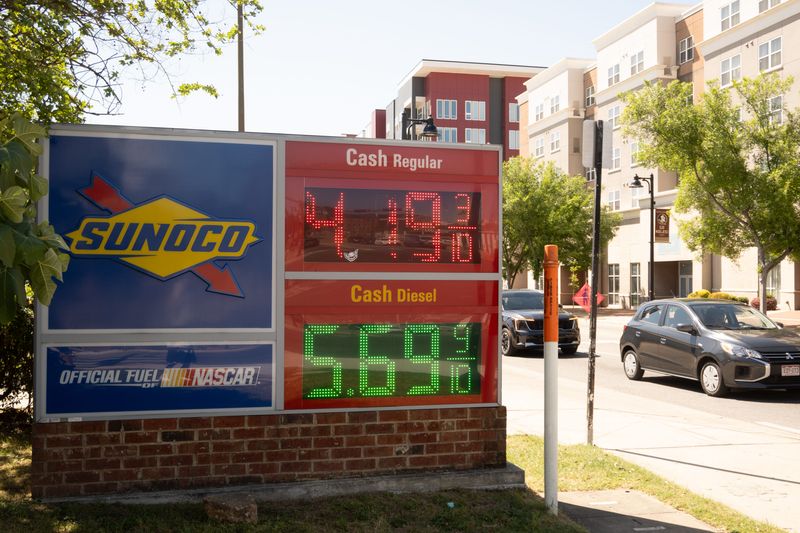
Gasoline prices in Florida and across the United States currently hold at their highest levels since 2022, pinning Florida State University students and Tallahassee families to a high-priced plateau. While a fragile Middle East ceasefire halted the rapid hikes seen in March, the seasonal switch to summer-blend fuel and lingering global tensions continue to anchor retail costs at multi-year highs.
The average price of regular fuel in Florida reached $4.034 per gallon as of April 12, according to AAA. This represents a significant jump from the $3.371 average recorded one month prior and the $2.949 average from last year.

These spikes coincide with a broader increase in local living expenses as Tallahassee grocery and utility prices climb steadily.
FSU student community battles with rising costs
FSU Economics Undergraduate Program Administrative Director Mike Hammock told the FSView that travelers will feel the impact of increased prices beyond the pump. Airfare prices are also expected to rise. Increased jet fuel costs may push airlines to hike baggage fees and ticket prices, adding a second expense for traveling students close to summer break.
“When less oil reaches refineries because of conflict in the Middle East, oil from other parts of the world must satisfy the demand. There’s not enough oil to do that at the old price, so the price rises and refineries buy less oil. The higher price is a signal that oil is scarcer,” Hammock said in a statement to the FSView.
Indirectly, higher gas and diesel prices drive up shipping costs, leading to price hikes at grocery and retail stores. These expenses can lower the standard of living as consumers buy less and businesses raise prices to offset their own rising costs. For the FSU community, these simultaneous increases mean a single commute now costs roughly 45% more than it did in January.
Nursing major Avery Pike told the FSView that these price increases are impacting his personal budget.
“A full tank of gas was around $50 for me in January, and it’s now close to $80,” Pike said. “Students are now having to adjust their budget to fit in this unreasonable and unnecessary cost. That could be money they planned on spending on food. Now, they have to choose between filling up their tank or having food.”
Environmental science major Audrey Miller said that the spike caused her to rethink her travel and avoid driving as much to save money.
“Filling up my tank used to cost around $25 if I got a good deal, and now it’s around $40,” Miller said in a statement. “I try to avoid driving as much; I have to drive eight hours to get home for breaks, and as you can imagine, it’s not fun financially, especially now after the major increases.”
Middle East conflict strains global supply
Crude oil prices have increased consistently since the U.S. and Israel launched joint strikes on Iran on Feb. 28. The Strait of Hormuz, which handles one-fifth of the world’s oil, remains a critical chokepoint where ship attacks slowed transport and drove crude oil prices over $100 per barrel.
The mandatory shift to cleaner summer-blend fuel and refinery maintenance also keeps prices from dropping. Tallahassee hit a peak of $4.129 on April 6.
“To make matters worse, over the next couple months some refineries in the U.S. will switch to the cleaner summer blend of gasoline, which sometimes requires temporary refinery shutdowns,” Hammock said. “The summer formulation is more costly to produce. This will mean even higher gasoline prices.”
Florida has also seen an increase in prices due to “price cycling,” according to AAA. In this pattern, gas stations lower prices to attract customers before eventually raising them again once those levels become unsustainable. Though many would like to know when this surge in prices may end, an exact timeline remains unlikely as global markets stabilize.
“The duration of high oil prices depends directly on how long the current policy regarding Iran persists, and no one knows that except those in the administration — and maybe not even them. If this persists long enough, we could suffer a period of stagflation, as in the 1970s,” Hammock said.
Brianna Christensen is a Staff Writer for the FSView & Florida Flambeau, the student-run, independent online news service for the FSU community. Email our staff at contact@fsview.com.
This article originally appeared on FSU News: Higher gas prices force FSU students to rethink spending
Reporting by Brianna Christensen, Staff Writer, FSView / FSU News
USA TODAY Network via Reuters Connect