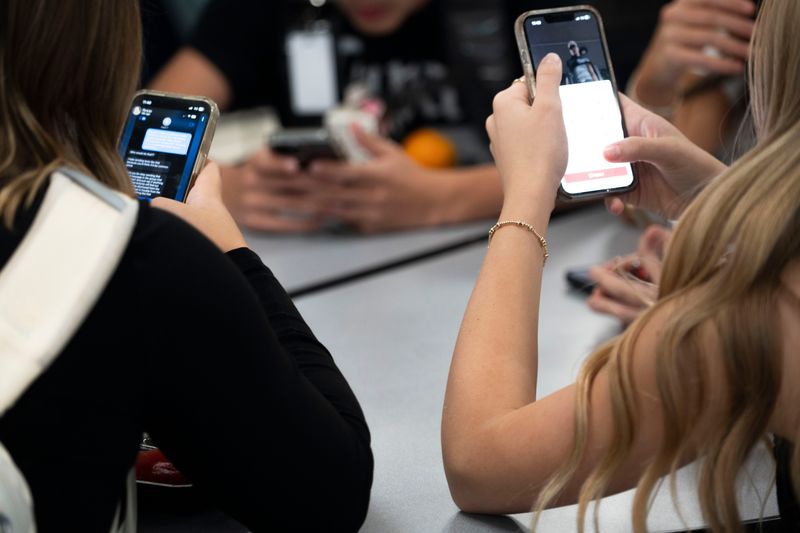
For a generation that grew up with the rise of social media, technology controls modern romance. Social media has introduced dating apps, which promise endless options and a new language of intimacy built on flippant, impersonal messages. With them come new forms of rejection, constant comparison and the unsettling sense that someone might be better.

Recent studies confirm the cost. Loneliness is no longer a vague cultural worry; it’s a defining crisis. A 2024 poll from the American Psychiatric Association found that one-third of adults report feeling lonely at least weekly, with significant effects on those aged 18-24.
Cigna’s Loneliness in America 2025 report adds that over half of U.S. adults say they feel lonely, with Gen Z and Millennials leading the numbers despite being the most digitally connected generations in history. These findings raise an unsettling question: has our digital upbringing made it harder to truly connect?
“I don’t think it matters whether you meet online or in person,” Florida State University student Sofia Binjaku said. “The real factor is accessibility. For many, the ability to connect with others online is what creates the opportunity for a relationship in the first place. Ultimately, though, the medium shouldn’t diminish the value of the relationship itself.”
Binjaku highlights a modern paradox: while technology makes it easier than ever to meet people, that very accessibility can complicate the depth of the connections we form. Online, we often present carefully curated versions of ourselves, which can blur trust and authenticity.
The relationships made possible by digital platforms are real, but they require extra care to move beyond surface-level interactions. In an article from Psychology Today, Psychologists remind us that intimacy requires vulnerability in the courage to show flaws and imperfections.
Yet social media often pushes us toward the opposite: a polished image that hides what makes us human. As former U.S. Surgeon General Dr. Vivek Murthy has noted, social media’s focus on the number of connections rather than the depth of relationships can intensify feelings of loneliness, turning genuine human connections into mere digital interactions.
Alternatively, technology has broadened opportunities for connection. Many modern long-distance couples rely on FaceTime communication, shared playlists, or voice memos to help bridge the miles apart. These tools prove that real relationships can survive a digital upbringing; they just require greater intentionality.
An article from Abundance Therapy Center highlighted how the key to deepening a relationship is quality over quantity. Quality time builds emotional bonds because it creates space to truly understand one another. While digital communication can maintain a sense of connection, it cannot fully replace the intimacy achieved through in-person connection.
Still, this doesn’t mean quality time is impossible across distance. In fact, technology can create new opportunities to connect in ways unique to our generation. Watching the same movie while video calling or sending short updates throughout the day can become small rituals of intimacy.
For many couples, these digitalized habits are not a complete substitute for in-person connection; rather, they are an extension of it. They exist as proof that with creativity and commitment, love can adapt to the technology increasingly between us.
Indeed, there is something remarkable in the resilience of those who build their intimacy on words, gestures and the patience to wait. In many ways, these relationships demand a deeper faith, because they exist as much in memory and imagination as they do in shared moments.
Ultimately, there are inherent challenges and possibilities presented from our digital upbringing that have reshaped the way we connect. Technology has made it easier than ever to meet people and find moments of shared experience, but it has also introduced new barriers to intimacy. The constant comparison to others and the pressures of presenting a more polished self can make vulnerability feel riskier and trust harder to earn.
Yet connection remains possible for those willing to be intentional and authentic. Screens may shape our interactions, but they cannot replace the human desire to be loved.
Perhaps the most important lesson of growing up online is that true intimacy requires effort and the courage to be vulnerable, no matter the platform. In a world designed for performance, choosing to show up as our imperfect selves may be the most meaningful way to connect.
“There is something quite beautiful about the fact that people will sacrifice the intimacy lost from not being physically together, for the pure sake of manifesting and hoping for a deeper connection, despite the distance,” FSU student Carson Mann said.
Reghan Chartrand is a marketing major at Florida State University and a Staff Writer for the Views section of the FSView & Florida Flambeau, the student-run, independent online news service for the FSU community. Email our staff at contact@fsview.com.
This article originally appeared on FSU News: Gen Z’s digital upbringing is changing modern love
Reporting by Reghan Chartrand, Staff Writer / FSU News
USA TODAY Network via Reuters Connect