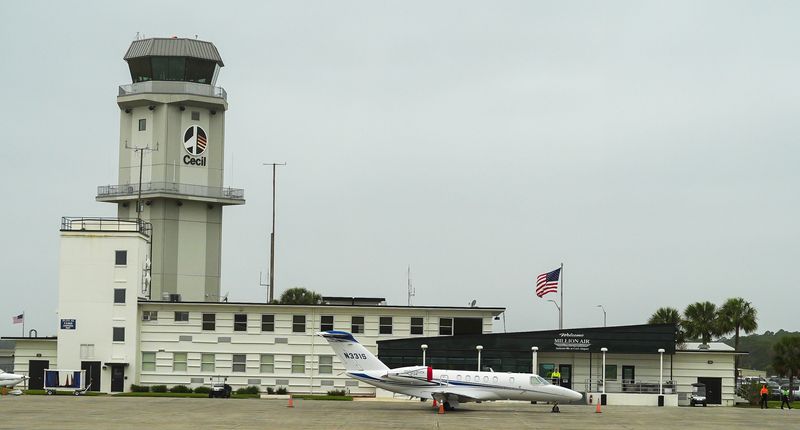
A Jacksonville Aviation Authority board member told City Council member Nick Howland earlier this month he “must stop harassing, bullying and threatening” airport officials, according to internal emails obtained by the Times-Union and The Florida Trib, the latest sign of behind-the-scenes acrimony over the agency’s future plans for Cecil Airport.
Howland wrote back he was “extremely surprised” to hear that characterization when he’s faced false accusations and pushback by the aviation authority about his efforts to expand an aviation mechanic training program at Cecil Airport, a former Navy base with one of the longest runways on the East Coast

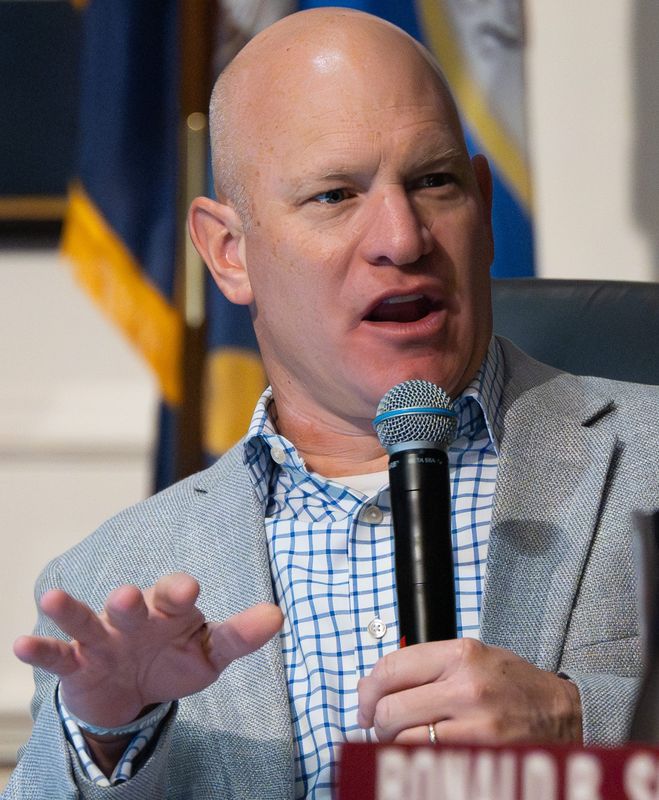
The exchange of emails in early May between Howland and aviation authority board member Andy Hofheimer reflects unusually pointed language and tension between public officials over disagreements that have unfolded for several years as Howland has forcefully sought to shape the aviation authority’s budget and economic development plans.
The aviation authority agreed in October to create the Committee for Jacksonville Aerospace Development as a forum for discussions between the authority and City Council about development of Cecil Airport and attracting nonstop international flights to Jacksonville International Airport.
For a time, that seemed to have cooled tensions, at least publicly.
Howland said the committee, which has met three times, would be a way for City Council and the aviation authority to move “in lockstep.” But he said in a recent email the authority continues to be an obstacle to expanding Florida State College at Jacksonville’s aviation mechanic program at Cecil Airport.
“We are stuck in the exact same position from last August’s budget meeting where I said ‘I don’t want to hear any more no’s,'” Howland wrote in an April 23 email to aviation authority administrators.
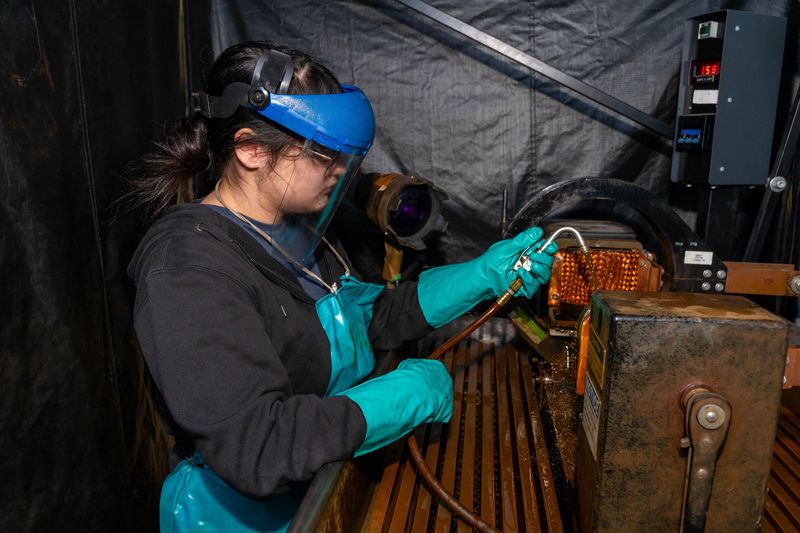
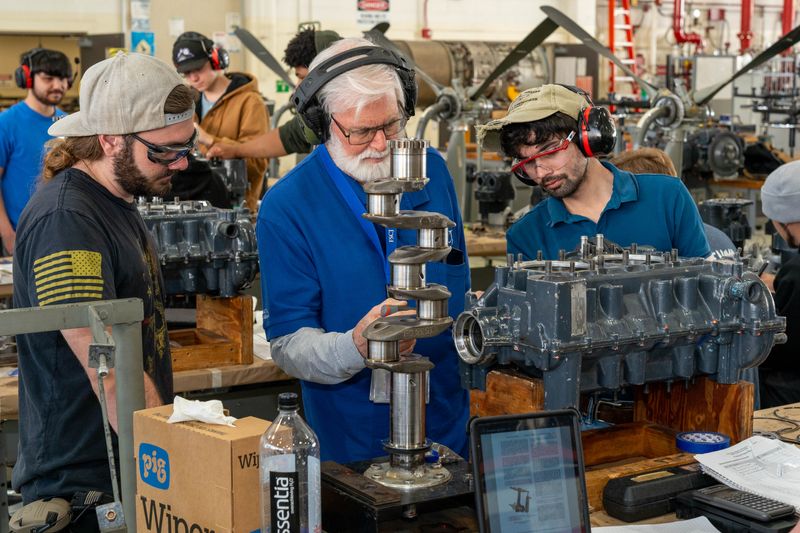
Howland says expanding the FSCJ program will create more slots for students to get high-demand, well-paying jobs and also benefit the aviation authority’s own tenants at Cecil Airport who need certified mechanics.
Howland, who is executive director of the nonprofit The Fire Watch, also is managing director of Great Bridge Capital Advisors, a firm he founded in 2017 to help companies in the aviation, marine and defense industries. He has previously said he in no way stands to benefit from any Cecil development plans.
Aviation authority officials have said they support economic development at Cecil Airport on the Westside but federal regulations prevent the authority from spending airport revenue on the FSCJ program.
Board member says Howland like “bull in a china shop”
Hofheimer wrote in a May 4 email he shares Howland’s goal of expanding aviation mechanic training.
“But Nick — you need to let more of JAA work continue without the overt intimidation and threats I’ve heard directly come out of your mouth, in public, and in private,” Hofhemier said. “At this point, it’s pervasive, and I hear it as harassment.”
He wrote he remains “unbelievably shocked and deeply dismayed at your consistent requests for JAA to divert revenue” in violation of federal regulations.
Howland emailed back that he has never demanded the authority spend money in violation of FAA requirements. He said he has been patiently waiting for the Jacksonville Aviation Authority to set up a meeting with the FAA so he can directly make a case for why he believes the aviation authority can legally use its money for the training program.
“It’s deeply disappointing that the Board has let JAA leadership ignore me … and also to continue to spread these false accusations that I am trying to force them to violate FAA revenue diversion law,” Howland said in his May 4 response to Hofheimer. “That’s incorrect.”
The emails between Howland and Hofhemier came three months after Hofheimer wrote in a Feb. 4 email to Devin Reed, chief compliance officer for the aviation authority, that he wanted to have an informal chat with Howland. Hofheimer’s email said that when he was talking with Howland, the council member had “said something ‘prickly’ as he always does at our meetings.”
“I want to have a cup of coffee with him and I’m the type of person that might be inclined to beg him to quit trying to be a bull in a china shop,” Hofheimer wrote. “I do believe some of his ideas about making airports better are good ideas.”
Reed wrote back that after a Feb. 4 meeting of the aerospace development committee, Howland “made a not-so-veiled threat” to him and Tony Cugno, chief operating officer for the authority, “in which he said, ‘If you keep undermining my economic development efforts, there will be hell to pay.'”
“Suffice to say I simply reiterated that we are more than willing to consider his ideas, as long as they are okay with FAA, our Board and the Procurement Code,” Reed wrote to Hofheimer.
Cecil Airport tenants would “hire even more” from FSCJ
Howland said in an interview he does not recall using the language that Reed quoted in his email. Howland said he has emphasized to aviation authority leaders they should be taking the lead on helping FSCJ expand its program because that’s what City Council and the state Legislature expect after unanimously adding workforce development to the authority’s mission in its charter.
At a November 2024 aviation authority board meeting, he made a presentation calling on the agency to pay the $30 million cost for laboratory equipment, hangar updates, furniture, personnel and equipment maintenance. He later scaled that back to a $10 million request.
Howland said FlightStar, a long-time tenant at Cecil Airport, told the aerospace development committee the biggest challenge for the business is filling aviation mechanic jobs.
“So I raised my hand and said, ‘Do you hire from FSCJ?'” Howland said. “And he said, ‘Every single one we can get.’ And I said, ‘What if they expanded it?’ He said, ‘We’d hire even more.'”
Howland said he’s heard the same message from Boeing and Otto Aviation, which plans to build an aircraft assembly plant at Cecil.
Aviation authority leaders have repeatedly said their hands are tied about spending any money on the FSCJ program.
Rebecca Henry, assistant manager for the FAA district office in Orlando, told the aviation authority last year that federal regulations would limit the aviation authority’s participation to providing hangar space at reduced rental rates for FSCJ.
She weighed in again this month when the aviation authority told her Howland continues to seek a meeting with FAA.
“As I have indicated in the past, this is a local issue and we typically do not meet with airports to collaborate on developments such as this,” she wrote in a May 1 email to Devin Reed, chief compliance officer for the aviation authority. “If you elect to develop a proposal, this office will review it in accordance with FAA Policy/Guidance and federal law.”
Aviation authority and FSCJ leaders meet about Cecil Airport
The aviation authority says it has no formal proposal in the works for FAA consideration, but it did meet May 11 with FSCJ about its aviation mechanic program.
FSCJ was represented at the meeting by college President John Avendano, Provost and Vice President of Academic Affairs John Wall and aviation maintenance program manager Tommy Dutrieux.
The aviation authority, which initiated the meeting, was represented by Reed and Cugno along with Cecil Airport and Spaceport Director Matt Bocchino and board member Solomon Brotman, who is chair of the aerospace development committee.
Aviation authority spokesman Greg Willis said the agency offered to help FSCJ apply for FAA grants that colleges and universities can use for aviation workforce programs. FSCJ would submit the applications and receive any grant award from FAA or other agencies.
“These funding sources do not conflict with JAA’s obligations to remain consistent with FAA grant assurances and therefore appear to be the best course of action for partnering with FSCJ currently,” Willis said.
He said FSCJ has not “formally indicated” it needs more hangar space to expand the aviation mechanics program. Cecil Airport’s hangars are all occupied except for one hangar where the authority has an agreement with a potential tenant.
Willis said FSCJ has a campus on the other side of Normandy Boulevard from Cecil Airport and the area around that campus “could represent a potential avenue for expansion” of the aviation mechanic program.
But FSCJ spokeswoman Jill Johnson said having more hangar space at Cecil Airport is essential for adding more aircraft and training equipment that a bigger program would need.
Johnson said the school has about 120 students enrolled in the program, it graduates around 60 students per academic year and its earliest openings for new students are in the spring 2027 semester.
She said FSCJ put together the proposal that Howland presented to the aviation authority board in November 2024. FSCJ leaders repeated at the May 11 meeting they want to expand the aviation program and noted the school received a letter of support from Boeing for a job growth grant and has been engaged with the Florida Department of Commerce, Johnson said.
“While grants were mentioned briefly, the conversation centered far more on our long-term expansion needs at Cecil,” she said.
Howland said the meeting between airport leaders and FSCJ is a start and he hopes it’s followed by a meeting among him, the aviation authority and FAA instead of the authority passing on his requests via email.
“They can say all they want about me in the emails to each other,” he said. “I don’t really care. What I care about is growing Cecil Airport and Spaceport as a job growth engine for Jacksonville.”
“
This article originally appeared on Florida Times-Union: Friction flares between aviation authority and City Council member
Reporting by David Bauerlein, Jacksonville Florida Times-Union / Florida Times-Union
USA TODAY Network via Reuters Connect