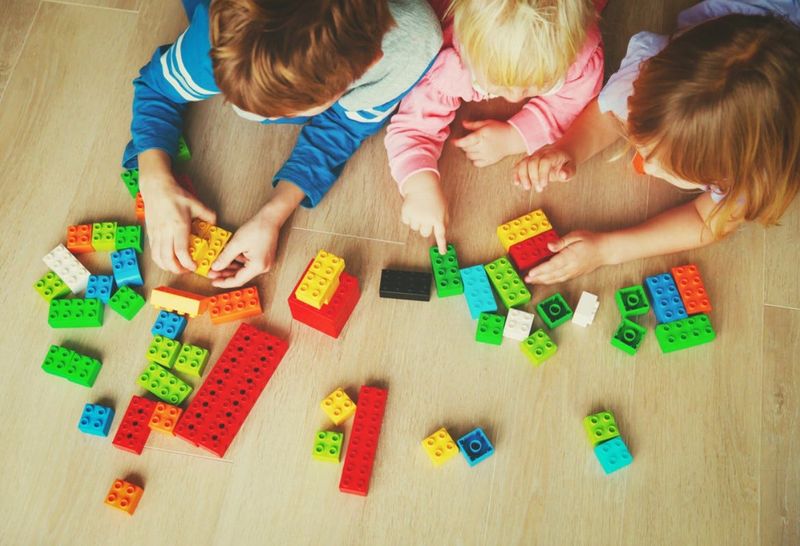
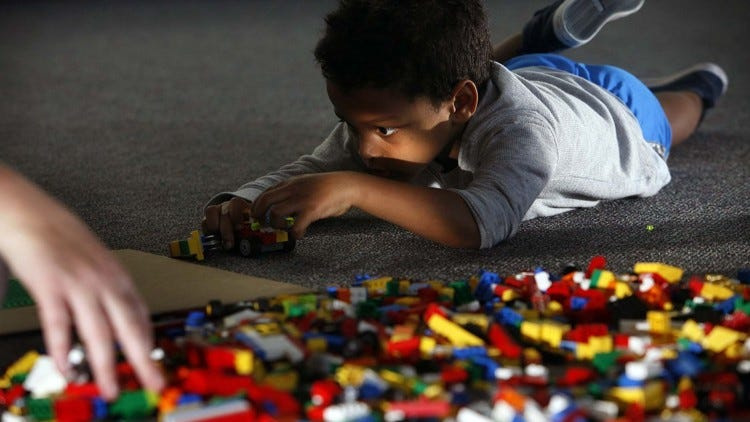
In an era during which artificial intelligence and digital learning have increasingly become go-to platforms for early childhood education, experts are urging parents and educators to remember there’s an iconic analog toy — one that perhaps they played with during their own childhoods — that is still among the most effective ways for youngsters to learn and problem-solve in a fun, creative way: Legos.
Last month on International Lego Day (Jan. 28), Florida State University hosted a workshop showing how Lego bricks are vital tools for STEM learning, creative collaboration and teamwork — all of which are vital learning and life skills.

“Lego bricks are a powerful tool for teaching foundational academic concepts, fostering positive attitudes and building interest in STEM,” said Dina Vyortkina, FSU assistant dean of innovation and instructional technology enhancement in the Anne Spencer Daves College of Education, Health, and Human Sciences.
“As in any science field, a lot of exploration and inquiry is involved with ‘what if?’ scenarios and sequencing steps.”
How Legos help develop young minds
Because 90% of the brain’s physical development happens by age 5, it’s critical for parents to take seriously their children’s need to play.
And over the decades since Legos were first patented in 1958, they have been enormously effective in providing developmental play and skill-building to untold millions of youngsters worldwide.
Among the ways that Vyortkina believes that playing with Lego bricks benefits kids:
Cognitive skills. Building with Legos is like a mental workout for little learners. Children develop problem-solving, spatial awareness, and critical thinking skills as they experiment and build with different combinations of bricks. This also helps improve memory, focus, and attention span as they plan and build different structures.
Plus, Lego play is a great way to introduce kids to concepts like counting, sorting, and pattern recognition. As they build and create, they are also naturally learning about sizes, shapes, and colors.
“Through hands-on activities, young children learn counting, sorting and object-grouping skills, which are often strategies for learning mathematics,” explained Vyortkina. “Playing with Lego bricks hones their spatial reasoning and even helps them begin to learn geometry, mechanics and physics. They do this through exploring shapes, proportions, symmetry, alignment, balancing, gravity and recognizing spatial relationships.”
She said there’s even a way in which Lego play can help youngsters prepare to eventually understand concepts like computer coding: “If children are using robotics kits or ‘smart’ versions of Legos that connect to sensors and motors, they learn how to follow instructions and create quasi ‘algorithms.’”
Creativity, language, and imagination. Because Lego play is inherently open-ended and free of rules, children can build whatever their developing brains can dream of. What’s more, the process of building may naturally lead them to role-play characters and invent elaborate adventures.
“They can explore their own made-up worlds and scenarios, further fueling their unique self-expression,” said Vyortkina.
Vyortkina also noted that Legos can serve as a powerful tool for vocabulary development.
As children describe their creations or the scenarios they’re enacting, they “naturally expand their descriptive language, learn new words, and practice articulating complex ideas. This verbal expression is a critical component of literacy, reinforcing understanding and communication skills.”
In addition, when children play with Legos collaboratively with other children, they all develop crucial social skills — including how to communicate, compromise and work as a team.
“They also get to practice their negotiation and storytelling skills,” said Vyortkina.
Legos is good for mental health too
And then there are some of the other, often-overlooked ways that Lego play benefits the overall health, well-being and personality development of young people:
More self-confidence. After completing a Lego build, children can experience a sense of accomplishment, pride and self-belief — which can then motivate them to challenge themselves with more complex tasks when they feel ready.
Reduced anxiety and stress. Vyortkina has found that for many children — especially those who have had a chaotic day or are going through a rough patch in their home life — playing with Legos “can bring a feeling of order when life feels out of their control and can also provide huge therapeutic benefits.”
Increased patience, focus, and concentration. There’s no instant gratification when it comes to playing with Legos. Rather, kids must practice patience and diligence — and in turn they learn that to get the satisfying results they want requires spending sufficient time and effort on a given task.
Which, come to think of it, folks of all ages should be reminded of when we encourage the youngsters in our lives to explore their potential via the timeless joy of playing with Legos.
Steve Dorfman is a journalist for The Palm Beach Post, part of the USA Today Network of Florida. He writes about all aspects of health, fitness and wellness. If you have news tips, please send them to sdorfman@pbpost.com. Help support our local journalism, subscribe today.
This article originally appeared on Palm Beach Post: Forget AI: Experts say Legos are still vital for kids’ brain development
Reporting by Steve Dorfman, Palm Beach Post / Palm Beach Post
USA TODAY Network via Reuters Connect