After sitting in an eviction hearing the other day and hearing the defendant or a state official testify waste leaks in her bathroom after toilet flushes, a propane tank is used in the kitchen to cook and there’s possibly mold and other hazards in the home, onlooker Jerusha Stewart summed things up.
“America is turning 250 and there are people living under conditions so abhorrent and inconsistent with (our founders’ vision of) life, liberty and the pursuit of happiness,” said Stewart, perhaps best known locally as founder of the Vero Beach Film Festival.

The testimony Stewart, consulting director of the growing Indian River Legal Aid program, and I heard June 22 regarding a home at 8425 22nd St., Vero Beach, didn’t surprise me.
Many people know about the Treasure Coast’s lack of affordable housing. I’d bet fewer think about the condition of some affordable homes.
In 2022, I started looking into substandard housing complaints in Indian River County after speaking to the renter of a home in the Vero Highlands the county claimed was “unsafe.”
What I learned then from renters and Jane Snead, then crisis-stabilization manager at United Against Poverty, was some people were so desperate for housing, they’d move into almost anything. The recurring story was there’d be no written lease, but the landlord would agree to make repairs or deduct tenant-made repairs from future rent payments.
Often, however, those deals didn’t work out ― especially if the renter complained about conditions to county officials. At that point, the renter was evicted and the cycle began again.
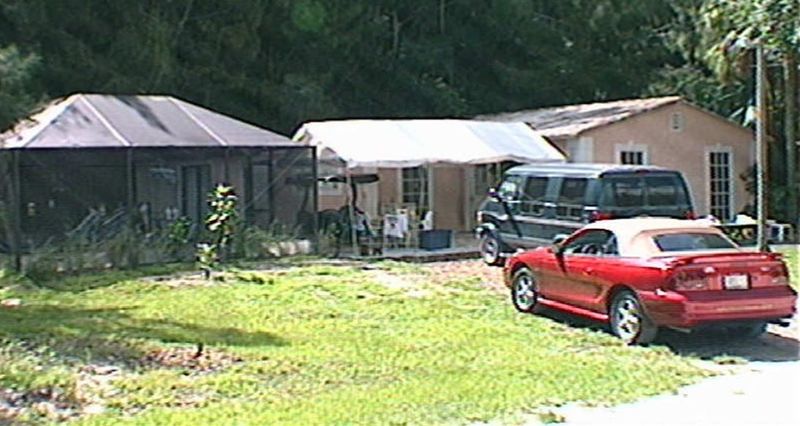
Which is one reason I was interested in the unusual eviction proceedings against Albert Stout and Cassey McDermott, who, with her two teenagers, lived in the 1,278-square-foot home built in 1981 and owned by landlord Reza Torkaman.
Vero Beach case takes unusual twist
He bought the home for $35,000 in 2003. It was worth $182,000 in 2025, according to the Indian River County Property Appraiser’s Office.
I recognized Torkaman ― who owns dozens of rentals in Indian River County and has filed for several evictions a year — as the landlord of the Highlands home from 2022 and some others I reviewed at the time.
Perhaps the most unusual element of the June 22 case was McDermott’s legal aid team, led by John Moore, helped her understand that to fight the eviction and pursue a counterclaim against Torkaman, she had to deposit with the court the equivalent of a month’s rent, $1,500. That opened the door to a hearing in which testimony was taken about conditions of the rental.
That rarely happens, since folks barely getting by financially do not have what can be thousands of dollars to give the court and hire an attorney to argue they’ve been wronged by their landlord.
The legal aid team’s hope is a jury eventually would see Stout and McDermott as the victims. They’d hope to get damages and their security deposit returned for having to live in conditions they thought would be fixed.
The scene was set in a letter to Torkaman May 7. McDermott’s other attorney, Iola Mosley, demanded problems noted in an inspection by the Healthy Homes program of the Florida Department of Health be fixed in seven days.
Among the items on Mosley’s list:
Florida health official offers independent assessment
The letter did not include some items McDermott or Gamil Castro, health educator consultant for the Department of Health, cited in the eviction hearing.
How did Torkaman respond to the May 7 letter? He served the couple with an eviction notice May 18, claiming rent was not paid when he said it was due May 1.
The eviction was “retaliatory,” according to McDermott’s counterclaim, expected to be heard by County Judge Robyn Stone within the next several months.
The June 22 hearing — to determine how much rent the tenants would be required to pay Torkaman for June before a potential eviction would be ruled on ― offered some insight.
Under oath, Castro offered his independent assessment:
“The house is haphazardly built,” he said. “The house has some serious conditions. I understand that some people really are in a tight bind, but that is not a safe place to live.”
Representing himself, Torkaman frequently offered his own opinion while cross-examining witnesses, drawing objections from Moore.
“When I rented the house (last fall), it was in perfect condition,” Torkaman told the judge, alleging his renters, when they could not pay the rent, called county Code Enforcement, forcing him to pay fines of $250 a day. “They destroyed my house. They made another junk yard.”
McDermott denied calling Code Enforcement or damaging the home.
Vero Beach couple’s counterclaim will continue
Castro said there was no way such damage could have occurred in the short time the couple rented.
Later, Moore and Snead pointed to records showing that on Jan 14, 2008, a county building inspector said the home was “not fit for human occupancy” for some of the same issues alleged to exist today.
Torkaman suggested it made no sense for anyone to rent a home in as bad shape as was claimed. So he asked McDermott why she would have done so.
“Because you said you would supply the things we would need to fix it,” she said, adding she fixed some items and bought lighting fixtures and paddle fans she knew how to hook up. “And we needed a house to live in for me and my kids.”
Torkaman said he went to the house several times to repair things she said were broken, but McDermott would not answer the door. She said he did not make an appointment and did not feel comfortable in such a situation.
Torkaman testified her claims were outrageous.
“I maintain these properties,” he said, noting he will make repairs at any hour. “When people complain, I go fix things.
“I’ve got beautiful tenants. We’re like a family. We live together. We never have problems.”
Moore didn’t buy it, but Stone demanded he stick to the issue: How much rent should McDermott pay for June?
Stone ruled she didn’t have to pay any. After that, Moore gave the keys back to Torkaman and said the couple had left the home.
But the counterclaim against Torkaman will continue.
Indian River Legal Aid was founded by Moore and attorney Sam Block in 2002, but began operating full time in 2023 as the Gifford Legal Services Clinic with more than 50 local volunteer lawyers.
It recently changed its name to reflect a countywide mission, and received a grant to expand its legal team.
One of its roles is to make sure tenants are treated fairly.
“It’s sad,” Stewart said later. “In a way, we should all be ashamed that we let our fellow human beings live like this.”
It will be interesting to see if the agency’s efforts in cases like this will improve local living conditions.
This column reflects the opinion of Laurence Reisman. Contact him via email at larry.reisman@tcpalm.com, phone at 772-978-2223, Facebook.com/larryreisman or Twitter @LaurenceReisman.
If you are a subscriber, thank you. If not, become a subscriber to get the latest local news on the latest local news on the Treasure Coast.
This article originally appeared on Treasure Coast Newspapers: Florida group targets safe housing in eviction lawsuit | Opinion
Reporting by Laurence Reisman, Treasure Coast Newspapers / Treasure Coast Newspapers
USA TODAY Network via Reuters Connect
By Laurence Reisman, Treasure Coast Newspapers | USA TODAY Network