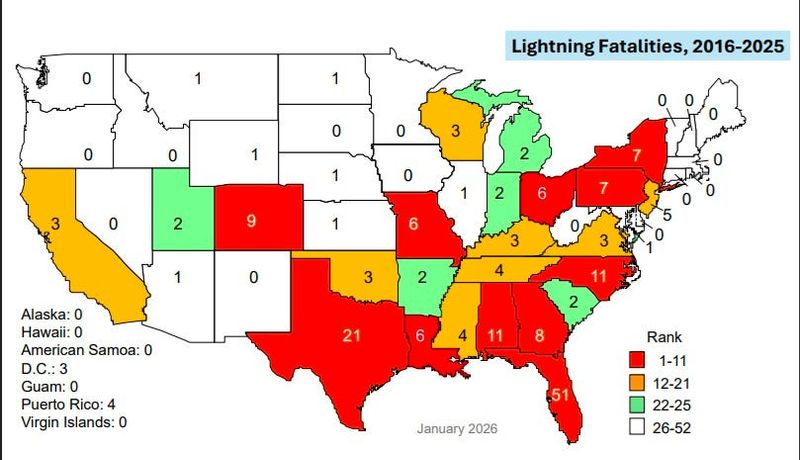
Florida may have lost its “title” as the lightning capital of the United States, but the Sunshine State is No. 1 when it comes to lightning fatalities.
There have been 51 deaths associated with lightning in Florida between 2016 and 2025, according to the Lightning Safety Council.

➤ Weather alerts via text: Sign up to get updates about current storms and weather events by location
That is more than double the total fatalities reported in Texas, coming in as No. 2 with 21 deaths.
With the peak months for lightning in the U.S. upon us, how can you stay safe?
Shop Amazon Prime Day deals today
Oklahoma dethrones Florida as ‘lightning capital of US’
Oklahoma dethroned Florida to become the nation’s lightning capital, according to a report released in January 2026 from the environmental consulting firm AEM.
➤ There’s a new lightning capital of the US and it’s not Florida
That may just be a fluke.
Florida had a drier than average year in 2025, driven in part by most Atlantic hurricanes staying out to sea, said Elizabeth DiGangi, a lightning scientist with AEM.
Oklahoma, on the other hand, had a very active year for severe weather.
Florida leads US for lightning fatalities
According to the Lightning Safety Council, Florida leads the U.S. when it comes to lightning fatalities — with 51 deaths — between 2016 and 2025.
Top five states were:
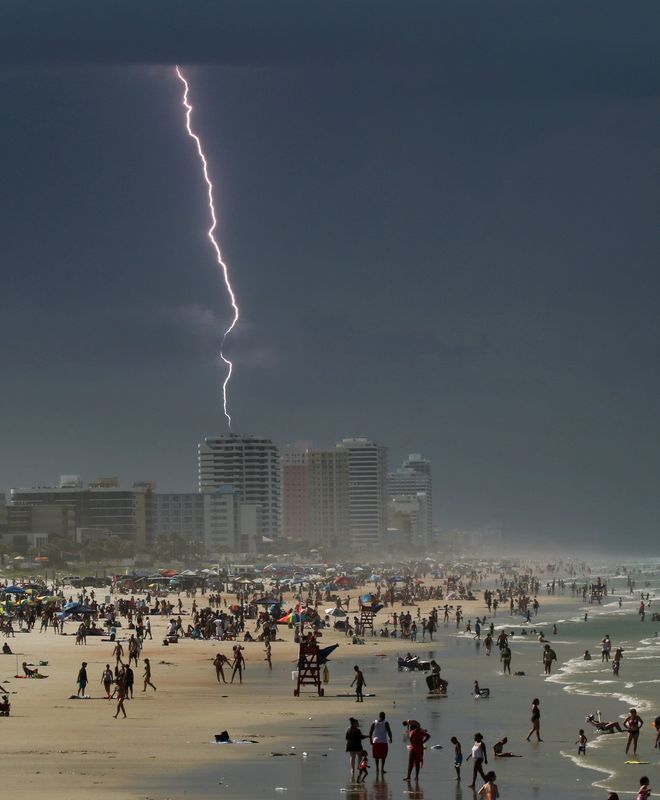
What were people doing in Florida before being hit by lightning?
According to data from the Lightning Safety Council, most Florida deaths between 2006 and 2025 occurred during these activities:
Beach activities, including being in or around the water, also ranked high.
Deaths on golf courses ranked toward the bottom.
When are peak months for lightning deaths in US?
“June, July, and August are the peak months for lightning activity across the United States and the peak months for outdoor summer activities,” according to the Lightning Safety Council.
“As a result, more than 72% of the lightning deaths occurred in the months of June, July, and August, with Saturdays and Sundays having slightly more deaths than other days of the week.”
What are odds of being hit by lightning?
Odds depend on what you do when there are thunderstorms in the area.
“If you take the lightning threat seriously and always get inside before lightning becomes a threat, your personal odds of being struck are near zero,” according to the Lightning Safety Council.
“However, if you ignore the lightning threat or take chances when thunderstorms are in the area, your odds of being struck are much higher.
“Lightning not only affects the person that is struck, but also the person’s family and relatives. Lightning injuries can be lifelong, devastating and very costly.”
By the numbers, based on averages from 2016-2025:
‘The deadly dozen’: 12 activities contributing to lightning fatalities in US
The 12 activities that contributed to the 517 lightning fatalities in the U.S. between 2006 and 2025 were:
Are some activities more dangerous in Florida when it comes to lightning?
See breakdown of lightning deaths reported in Florida — compared to total in the U.S. —over the past five years:
How can you stay safe if there’s a thunderstorm?
“No place outside is safe when a thunderstorm is in the area,” the National Weather Service said.
“Get inside as soon as you hear thunder. If you hear thunder, lightning is close enough to pose an immediate threat.
“All thunderstorms produce lightning and are dangerous. Lightning often strikes outside the area of heavy rainand may strike as far as 10 miles from any rainfall.
“Many lightning deaths occur ahead of storms before any rain arrives or after storms have seemingly passed andthe rain has ended.”
What can you do if you can’t get inside and lightning is near?
If you can’t get to a safe building or vehicle, here’s what you should do, the National Weather Service advised:
Lightning myths, facts
The National Weather Service offers this guidance to separate myths from facts when it comes to lightning:
Weather alerts issued in Florida
Why are lightning deaths studied?
The National Lightning Safety Council and National Weather Service document lightning deaths in the United States and make the information available in online databases.
The information in the databases is used to study lightning-related fatalities to understand how deaths are occurring and to find ways to reduce the number of lightning casualties.
Stay informed. Get weather alerts via text
What’s next?
We will continue to update our weather coverage as conditions warrant. Download your local site’s app to ensure you’re always connected to the news. And look for our special subscription offers here.
Cheryl McCloud is a journalist for the USA TODAY Network-Florida’s service journalism Connect team. You can get all of Florida’s best content directly in your inbox each weekday day by signing up for the free newsletter, Florida TODAY, at https://tallahassee.com/newsletters.
This article originally appeared on The Daytona Beach News-Journal: Shocking truth behind Florida’s rank as No.1 in US for lightning deaths
Reporting by Cheryl McCloud, USA TODAY NETWORK – Florida / The Daytona Beach News-Journal
USA TODAY Network via Reuters Connect
By Cheryl McCloud, USA TODAY NETWORK – Florida | USA TODAY Network